


How Real-Time Travel Advisories Help You Navigate Unexpected Travel Disruptions
Written with AI assistance under our editorial guidelines
By 2026, real-time travel advisories powered by AI analyze thousands of global alerts instantly, enabling travelers to dodge disruptions like political protests, border closures, and disease outbreaks before they impact plans. Traditional overnight updates now put travelers at risk; those accessing live, AI-driven alerts can make informed decisions within minutes, outsmarting chaos while competitors remain stuck refreshing outdated information.
Welcome to the age of ceaseless turbulence—where the ground shifts under your feet, and travel plans unravel in the time it takes to glance at your phone. Borders slam shut, protests ignite, viruses leap continents, and the only constant is chaos. In the vortex of 2025, "real-time travel advisories" aren’t just another app notification—they’re the razor’s edge between seamless adventure and travel nightmare. Forget the old playbook. Yesterday’s information is the enemy. If you want to dodge disruptions, scuttle border closures, and keep your cool while others panic, you need to tap into the fast-evolving world of live, AI-powered travel alerts. This isn’t just about playing it safe; it’s about seizing an edge, reading the signals in the noise before the rest of the herd catches up, and making your moves with confidence. Buckle up. You’re about to unpack the reality behind real-time travel advisories—the tools, the tricks, the hard truths—and learn how to outsmart the chaos while everyone else is still refreshing their screens.
The new reality of real-time travel advisories
Why yesterday’s info is useless today
It’s not hyperbole—travel conditions in 2025 change at breakneck speed. Picture this: you’re sipping coffee at Heathrow, prepping for a weekend in Istanbul. Suddenly, news breaks—an unexpected political protest erupts near Taksim Square. Check your phone: the Turkish government just imposed a citywide curfew. That green light you saw on last night’s advisory? Ancient history. According to Riskline, over 34,000 real-time travel risk alerts are issued globally each year, covering everything from security and health to political turmoil and natural disasters. The world has become a labyrinth of shifting threats and opportunities, where the difference between a safe arrival and being stranded is often measured in minutes, not hours.

Outdated advisories are more than inconvenient—they’re dangerous. In January 2025, dozens of travelers heading to Southeast Asia were blindsided when a sudden dengue outbreak shuttered border crossings overnight. The official government site updated hours after the closure—too late for those already en route. Relying on stale information leaves you exposed to missed connections, lockdowns, and even personal safety risks. The brutal lesson: travel is now a real-time game, and those who lag behind pay the price.
How AI and LLMs changed the game
Travel advisory technology didn’t evolve quietly. For decades, it was strictly the domain of slow-moving government agencies: websites updated on bureaucratic schedules, cryptic language, and warnings so vague they bordered on useless. Then came the avalanche—artificial intelligence and Large Language Models (LLMs) crashed the party, devouring data at planetary scale and spitting out actionable alerts faster than humanly possible. Services like futureflights.ai blend AI with user personalization, turning static warnings into dynamic, tailored intelligence. Now, real-time travel advisories are curated by machines that never sleep, cross-referencing social media, airline databases, weather satellites, and on-the-ground sensors—pushing live alerts before official channels even blink.
Consider the transformation:
| Year | Milestone | Description |
|---|---|---|
| 2010 | Government web bulletins | Manual updates, often days after incidents |
| 2015 | SMS/email alerts | Slightly faster, but not location-specific |
| 2020 | App-based notifications | Mobile alerts, limited by data source scope |
| 2023 | AI aggregation platforms | First AI-curated, multi-source systems |
| 2025 | LLM-powered personalization | Real-time, hyper-local, fully tailored advisories |
Table 1: Timeline of travel advisory technology evolution. Source: Original analysis based on Riskline, CDC, and Delta Air Lines, 2025.
“If you’re not getting live updates, you’re not really getting advisories.”
— Ella, seasoned international traveler, 2025
Who really needs real-time travel advisories?
Forget the stereotype of the anxious, risk-averse traveler glued to their phone. The truth? Every traveler—business nomad or spring break rookie, solo wanderer or family clan—stands to gain. Business travelers dodge last-minute meeting cancellations, digital nomads pick safe havens as unrest flares, and families adjust routes in real-time to avoid illness hotspots. Even seasoned adventurers, who thrive on unpredictability, use live alerts as their secret weapon for calculated risk-taking.
Hidden benefits of real-time travel advisories:
- Business continuity for remote teams and executives navigating cross-border regulations
- Smarter event planning, from music festivals to conferences, with instant crowd and safety updates
- Risk management for supply chain managers rerouting cargo as bottlenecks emerge
- Family safety by flagging kid-friendly zones and health advisories
- Last-minute bookers who pivot instantly as deals and safe routes appear
- Digital nomads leveraging local Wi-Fi and safety analytics to choose the next city
Still think alerts are for the paranoid? The harsh reality: it’s not about being nervous—it’s about being informed, adaptive, and a step ahead. Anyone who values time, money, or personal safety should care about real-time advisories.
How real-time travel advisories are made (and why you should care)
Data sources: more than just government warnings
Peel back the curtain on a live travel alert and you’ll find a spiderweb of data sources: not just government advisories, but a relentless stream of social media scraping, airline operational updates, crowd-sourced incident reports, IoT sensors tracking weather and traffic, and even regional news in a dozen languages. Platforms like futureflights.ai and Riskline ingest, analyze, and cross-reference these feeds in real time, triangulating anomalies and delivering hyper-specific alerts.

However, the complexity has a downside. Aggregated data can be biased, incomplete, or even manipulated—think of a viral hoax sparking unnecessary panic, or local governments downplaying unrest for tourism dollars. Reliability hinges on verifying cross-source signals and deploying machine learning models that can sniff out noise from signal—a process that is never perfect but improving rapidly.
Inside the black box: AI, algorithms, and human oversight
So how does the sausage get made? AI engines and advanced LLMs (the same kind powering futureflights.ai) process an avalanche of data points each second, scoring risk, filtering for relevance, and flagging anomalies. Yet, as powerful as automation is, it’s still susceptible to "algorithmic blindness"—missing context, nuance, or human intent. That’s why leading services maintain a layer of human oversight: analysts who sanity-check automated outputs, inject local expertise, and sometimes override the system entirely when the stakes are high.
“Algorithms are lightning fast, but it takes a human to spot what really matters.”
— Marcus, risk analyst, 2025
The blend of machine and human insight is what separates genuine, actionable alerts from digital noise—a fact that becomes painfully clear when the system fails (as you’ll see in coming case studies).
Debunking myths about real-time advisories
It’s tempting to believe that all travel advisories are created equal, but reality is messier. Myths abound: that advisories always exaggerate risk (they often don’t), or that you can trust any notification with an official logo (not all sources are independent). In fact, advisory quality varies wildly, and even government warnings can be slow or politically motivated.
Red flags when evaluating travel advisory sources:
- Vague language with no specific actionable advice
- Lack of real-time updates or delayed timestamps
- Over-reliance on a single data source
- No transparency about data origins
- Overtly political or fear-mongering tone
Why do some countries’ advisories outperform others? It comes down to investment in technology, transparency, and willingness to share information—even if it hurts their bottom line. The best advisories are multi-source, independently verified, and responsive to local context, not just global headlines.
The psychological cost of alert fatigue
When too much information becomes a threat
Here’s the dirty secret: more isn’t always better. In the age of push notifications, travelers face a relentless barrage of updates—every gate change, every street protest, every cough in a crowded terminal. The cognitive overload can be paralyzing. Instead of clarity, you get anxiety; instead of action, inertia.

Distinguishing between a life-saving update and a trivial inconvenience becomes a mental minefield. Alert fatigue isn’t just annoying—it’s a real threat to decision-making. According to a 2024 report from TravelPerk, 62% of Gen Z travelers reported feeling overwhelmed by travel alerts, and over a third admitted to ignoring critical notifications as a result.
How to filter out noise and act on what matters
Cutting through the static requires a smarter approach—not just more alerts, but better, tailored ones. Here’s how to reclaim control:
- Audit your notification sources: Only enable push alerts from services with proven, multi-source credibility (such as CDC Travel Notices or AI-powered platforms like futureflights.ai).
- Set personal risk profiles: Use advisory apps that let you customize alerts by region, trip type, or risk threshold—don’t settle for one-size-fits-all.
- Schedule quiet hours: Temporarily mute non-urgent notifications to avoid exhaustion.
- Prioritize actionable alerts: Configure your settings to elevate only those advisories that require immediate action, such as border closures or severe weather.
- Cross-reference before reacting: Always double-check major disruptions with at least two independent sources before changing plans.
AI-driven platforms increasingly allow travelers to fine-tune notification streams to match their personal risk tolerance—a major leap forward in cutting down on psychological clutter.
Case studies: When real-time advisories saved (or ruined) the trip
Dodging disaster with a single push notification
In March 2025, Lana Chen, an American digital nomad, was en route from Madrid to Casablanca when a real-time alert from her travel advisory app buzzed: Moroccan authorities were closing the border in four hours due to an escalating security scare. Acting fast, Lana rerouted to Lisbon, missing the closure by minutes. Her spontaneity wasn’t luck—it was timing, powered by live data. Without that nudge, she’d have been stranded for days, facing mounting visa and accommodation headaches.
Timing is everything. The difference between a close call and a catastrophe? Sometimes, it’s a single, well-timed push notification.
When ‘real-time’ wasn’t fast enough
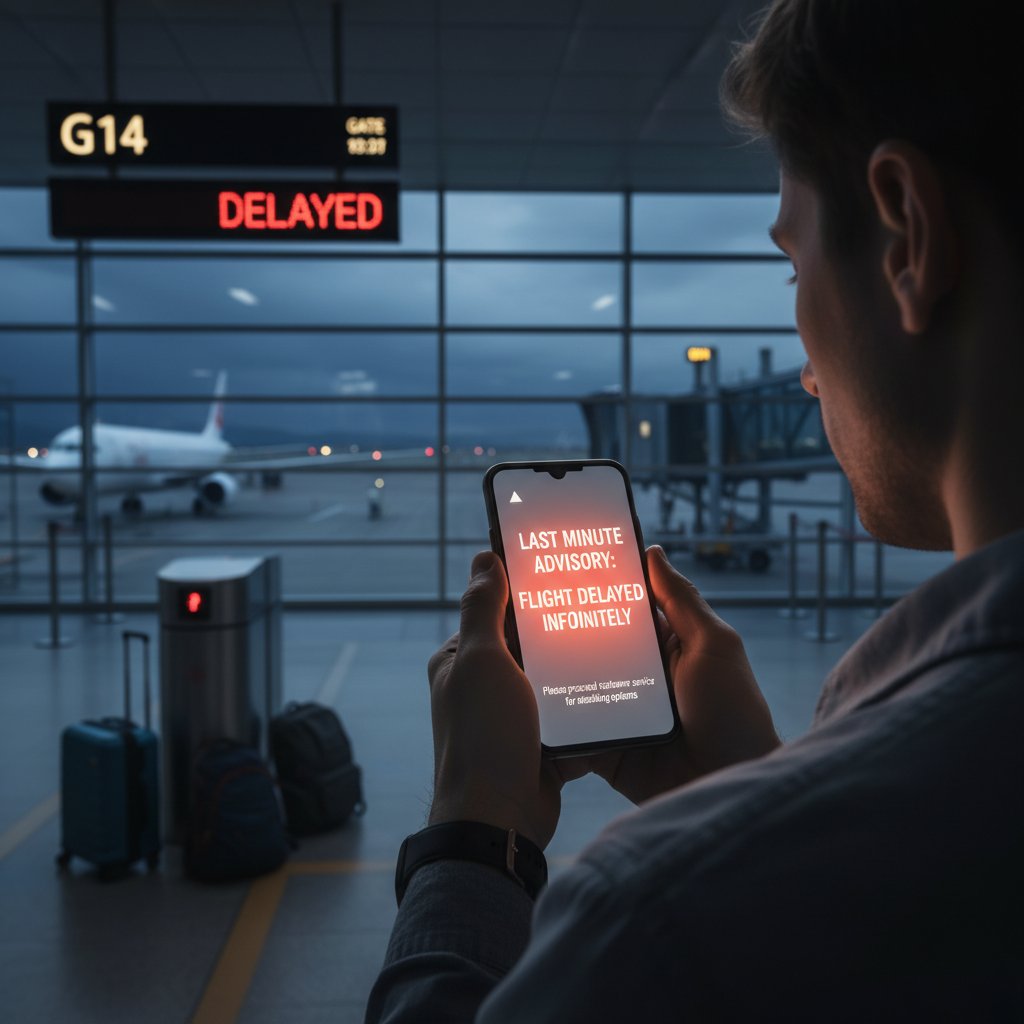
But not every story ends well. In early 2024, a group of British backpackers in Papua New Guinea learned the limits of technology when a cyclone struck hours before their app notified them. By the time the advisory arrived, local infrastructure was shattered and evacuation options vanished.
“We got the alert, but by then it was way too late.”
— Alex, traveler caught in cyclone, 2024
The lag wasn’t just a technical glitch—it was a cascade of translation delays, limited local reporting, and algorithmic misfires. Even the best systems have blind spots, especially in regions with patchy connectivity or opaque reporting.
Unconventional wins: Unexpected uses for travel advisories
Real-time advisories aren’t just for leisure travelers. In the business world, they’re vital for everything from supply chain rerouting to crisis management. Event planners dodge logistical nightmares by monitoring crowd alerts; NGOs use live health warnings to deploy rapid response teams; even artists and athletes use real-time data to pivot around sudden venue or border changes.
Unexpected uses for real-time travel advisories:
- Corporate risk management and traveler duty of care
- Event logistics for large-scale gatherings and sports tournaments
- Supply chain planning to avoid geopolitical hotspots
- Education sector safety for student exchanges
- Humanitarian logistics in disaster-prone zones
Comparing the best real-time travel advisory tools in 2025
What sets leading platforms apart?
Speed, accuracy, personalization, and global coverage are the new battlegrounds. Leading platforms leverage AI to scrape, analyze, and deliver alerts within seconds. But not all are created equal. Some, like futureflights.ai, offer hyper-local, LLM-driven personalization, while others rely on slower, government-issued updates.
| Platform | Speed | Accuracy | Personalization | Global Coverage | AI-Driven | Human Oversight |
|---|---|---|---|---|---|---|
| futureflights.ai | <1 min | High | Advanced | 190+ countries | Yes | Yes |
| Riskline | <2 min | High | Moderate | 200+ countries | Yes | Yes |
| CDC Travel Notices | 15 min | High | None | Global | No | Yes |
| Delta Advisories | <10 min | Moderate | Low | Major hubs | No | Yes |
Table 2: Feature matrix comparing top real-time travel advisory platforms in 2025. Source: Original analysis based on Riskline, CDC, Delta Air Lines, and futureflights.ai, 2025.
AI and user customization are the game changers: tailored notifications, predictive analytics, and intuitive interfaces are setting new standards.
Government vs. private vs. AI-driven advisories
Traditional government advisories remain vital for official warnings—think US State Department or CDC—but lack the granularity and speed of private and AI-powered services. Private platforms often aggregate multiple sources, filter out noise, and deliver more actionable intelligence. AI-driven platforms take it a step further, customizing alerts to individual preferences and real-world movement.
Priority checklist for evaluating travel advisory sources:
- Does it aggregate from multiple, independent sources?
- How frequent and recent are the updates?
- Is there a clear method for verifying data accuracy?
- Can you tailor the alerts to your personal needs?
- Is there a track record of reliable, timely alerts?
Each type has its trade-offs—government advisories offer authority but lag in dynamism; private and AI-powered services excel in speed but must be vetted for accuracy and transparency.
Are real-time advisories ever truly unbiased?
Bias is baked into data collection: national interests, political pressures, and algorithmic blind spots all shape what gets flagged and when. Even the best AI can only work with the data it’s fed. Some countries are notorious for downplaying threats to protect tourism revenue, while others err on the side of caution for liability.
“Every alert has a perspective—know whose it is.”
— Priya, travel journalist, 2025
Pro tip: always cross-reference advisories, note the source country, and recognize that every alert is filtered through someone’s lens.
Practical guide: How to use real-time travel advisories before and during your trip
Setting up: What to do before you go
Getting ahead starts before you board. Set up your advisory ecosystem for maximum relevance and speed.
Step-by-step guide to mastering real-time travel advisories prep:
- Register for alerts with reputable platforms: Opt in to real-time notifications from trusted sources (CDC Travel Notices, futureflights.ai).
- Define your travel profile: Specify risk tolerance, destinations, and preferences for customized alerts.
- Schedule test alerts: Run a test notification to ensure delivery and responsiveness.
- Bookmark fallback sources: Save links to manual advisory updates for double-checking.
- Pack smart: Based on likely scenarios (political unrest, health risk), prepare backup documents and digital copies.

On the move: Staying ahead of the chaos
While on the road, your priorities shift to responsiveness and flexibility. Internalize a few key strategies:
- Monitor high-priority notifications and act decisively
- Use mobile-friendly advisory platforms with push notifications
- Keep local SIM or roaming enabled for continuous updates
- Set up quick-reference checklists for sudden disruptions (flight cancellation, border closure, health scare)
- Relay alerts to travel partners to ensure group readiness
Checklist for handling unexpected travel disruptions:
- Confirm advisory with a second source
- Assess urgency and local context before acting
- Contact airline/hotel for immediate options
- Keep digital and hard copies of critical documents ready
- Adjust itinerary only after verifying new conditions
What to do when advisories conflict
Conflicting advisories are a fact of life: one source says “Level 4 danger,” another calls it safe. Here’s how to navigate the noise:
- Prioritize official government sources for legal/entry issues
- Use AI-powered aggregators to weigh and average different signals
- Seek local sources and crowd updates for real-time, on-the-ground perspective
The highest risk category, indicating imminent danger; often triggers automatic travel insurance and airline policy changes.
Advisory to remain indoors due to immediate local threat (civil unrest, severe weather); overrides standard evacuation guidance.
Information issued within minutes of an incident, dynamically refreshed as the situation evolves.
Psychological exhaustion from excessive, often redundant advisories, leading to missed or ignored critical alerts.
An alert curated by artificial intelligence, combining multiple data sources for tailored, immediate notifications.
The cultural and global politics of travel advisories
Why some countries’ warnings are more trusted than others
Travel advisories are never just about safety—they reflect politics, economics, and culture. Countries with transparent, well-funded public health and security infrastructures produce more reliable, granular advisories. Others, wary of damaging their tourism industry or exposing political weaknesses, may obscure or slow-walk warnings.
| Country/Region | Advisory Reliability | Transparency | Update Frequency | Notable Biases |
|---|---|---|---|---|
| USA | High | High | Hourly | Security emphasis |
| EU (Schengen) | High | High | Hourly | Regional political context |
| Southeast Asia | Moderate | Variable | Daily | Downplayed health threats |
| Middle East | Moderate to Low | Low | Irregular | Political conflict |
| Africa (varied) | Low to Moderate | Low | Weekly | Infrastructure limitations |
Table 3: Comparative summary of advisory reliability by country or region. Source: Original analysis based on US State Dept. and Riskline, 2025.
Spotting bias isn’t just about reading between the lines; it’s about sourcing multiple perspectives and learning to recognize patterns—like abrupt changes before major events, or warnings issued only after media outcry.
How marginalized communities are affected by advisory systems
Not all travelers are treated equally by advisory systems. Marginalized groups—such as LGBTQ+ travelers, those with disabilities, or individuals from underrepresented nations—often find mainstream advisories overlook their specific risks or needs. Language barriers, lack of representation in data, and implicit biases in algorithms can widen the information gap.
Technology has the potential to bridge these divides—with AI-powered personalization, multi-language alerts, and community-sourced intelligence—but it can also entrench disparities if not designed inclusively.

Advocates stress the importance of designing advisory systems that account for diverse experiences and ensure accessibility for all.
The future of real-time travel advisories: What comes next?
Predictive alerts—science fiction or next reality?
Travelers want more than just real-time—they want to anticipate chaos before it hits. Predictive analytics, powered by vast data lakes and AI-driven forecasting, are on the cutting edge. Platforms like futureflights.ai are experimenting with models that not only detect current risks but flag potential disruptions—blending weather patterns, geopolitical signals, and traveler behavior. While the tech isn’t perfect, it’s rapidly moving from science fiction to daily reality, shrinking the window between signal and response.
Imagine a world where your phone buzzes not just with a warning, but with an actionable prediction—your route recalculated before the airport even closes.
Risks, threats, and ethical dilemmas
Real-time data is a double-edged sword. With every location ping and data share, you trade privacy for safety. Who controls the narrative? Who decides which risks to broadcast, which to suppress? Recent debates around data misuse, surveillance, and the weaponization of travel advisories highlight the need for transparency and ethical oversight.
“If information is power, then who’s really in control?”
— Sam, technology ethicist, 2025
The lesson: demand clarity from your advisory platforms on data use, deletion policies, and the limits of automation.
What to watch—and what to question—moving forward
As travel tech hype surges, smart travelers remain skeptical. Don’t fall for shiny dashboards or “AI-powered” buzzwords without substance.
Top questions every traveler should ask about their advisory sources in 2025:
- What data do they collect, and how is it used?
- Who audits the algorithms for bias?
- How fast are alerts in real-world crisis scenarios?
- How are marginalized groups represented in data and alerts?
- What recourse exists if an advisory fails or misleads?
Stay curious, stay skeptical, stay safe—and refuse to outsource your instincts to any algorithm, no matter how advanced.
Appendix: Decoding the jargon of real-time travel advisories
Key terms every traveler needs to know
If you want to play the advisory game at a pro level, you need to speak the language. Here’s a quick hit list of must-know terms—armed with these, you’ll read between the lines while others get lost in translation.
An alert or notification issued within moments of an incident, continually refreshed as the event develops. Vital for responding to rapidly changing travel conditions.
A formal or informal ranking of risk—typically from Level 1 (normal) up to Level 4 (severe)—signaling the urgency and type of response required.
Psychological state where constant notifications lead to desensitization or neglect of critical warnings—a growing issue in 2025’s hyper-connected environment.
An advisory produced by artificial intelligence or LLMs, integrating multiple data streams to deliver tailored, rapid alerts beyond human processing speed.
The process of collecting and cross-referencing disparate reports (official and unofficial) to synthesize a more accurate and timely advisory.
A directive to remain indoors due to immediate local danger (e.g., civil unrest, extreme weather), superseding other advisories until the threat subsides.
An urgent, direct mobile alert, often location-specific, designed to cut through noise and prompt immediate action.
Why does this jargon matter? In high-stakes situations, precision isn’t just nice to have—it’s the difference between smart action and paralyzing confusion. Stay sharp, and keep this glossary within thumb’s reach.
Conclusion
The world of real-time travel advisories is raw, relentless, and absolutely unforgiving. In 2025, it’s not just about staying safe—it’s about staying agile, informed, and ahead of the herd. Whether you’re dodging protests in Paris, rerouting around a cyclone in Cebu, or just craving an uninterrupted weekend away, live alerts are your signal in the noise. The best travelers aren’t paranoid—they’re prepared, armed with AI-driven intelligence, credible sources, and the discipline to filter signal from static. As research from Riskline and the CDC shows, those who master real-time travel advisories transform chaos into opportunity—navigating the world’s turbulence with clarity, confidence, and a little attitude. Don’t settle for yesterday’s news. Outsmart the chaos, dodge the disruptions, and let the rest play catch-up. The future belongs to the curious, the skeptical, and the relentlessly prepared. Make sure you’re one of them.
Sources
References cited in this article
- US State Dept. 2025 Advisories(traveloffpath.com)
- CDC Travel Health Notices(wwwnc.cdc.gov)
- Delta Air Lines Current Advisories(delta.com)
- Riskline Real-Time Alerts(riskline.com)
- source(priavosecurity.com)
- source(forbes.com)
- Skift Research: Generative AI’s Impact on Travel(research.skift.com)
- Riskline: AI-Powered Travel Consultants(riskline.com)
- The Intellify: AI in Travel 2025(theintellify.com)
- US State Dept. Travel Advisories(travel.state.gov)
- Travel Advisory Warnings(traveladvisorywarnings.com)
- Alertro SMART Travel(alertro.net)
- Forbes: 10 Travel Myths Debunked(forbes.com)
- Atlassian: Understanding and Fighting Alert Fatigue(atlassian.com)
- Newsweek: US Tourism Spending Declines(newsweek.com)
- Government of Canada: Mexico Advisories(travel.gc.ca)
- NERV Disaster Prevention App(nerv.app)
- Octal Digital: 20 Best Travel Apps 2025(octaldigital.com)
- TravelPerk: Top Travel Risk Management Companies(travelperk.com)
- ITILITE: Top Travel Technology Companies 2025(itilite.com)
- InsureMyTrip: US State Dept. Advisories(insuremytrip.com)
- Squaremouth: How to Navigate Travel Advisories 2025(squaremouth.com)
Discover Flights Beyond Imagination
FutureFlights.ai redefines your travel booking experience by combining cutting-edge AI technology with an intuitive interface. Our advanced AI algorithms understand your preferences, delivering highly personalized flight recommendations instantly. Say goodbye to tedious searches and generic results—FutureFlights.ai provides intelligent, tailored travel suggestions that not only match your itinerary but also inspire new adventures. Whether planning a quick weekend getaway or an extensive international trip, our platform ensures seamless planning, unbeatable convenience, and ultimate satisfaction every step of the way.
Get startedReady to Discover Your Next Adventure?
Experience personalized flight recommendations powered by AI
Frequently Asked Questions
How many real-time travel risk alerts are issued globally each year?
According to Riskline, over 34,000 real-time travel risk alerts are issued globally each year, covering everything from security and health to political turmoil and natural disasters.
Why is yesterday's travel information considered useless in 2025?
Travel conditions in 2025 change at breakneck speed, and outdated advisories can leave travelers exposed to missed connections, lockdowns, and safety risks. The article illustrates this with an example of a sudden dengue outbreak in Southeast Asia that shuttered border crossings overnight, with official updates coming hours too late.
What types of disruptions do real-time travel advisories cover?
Real-time travel advisories cover a wide range of disruptions including security threats, health emergencies, political turmoil, and natural disasters.
What happened to travelers in Southeast Asia in January 2025?
Dozens of travelers heading to Southeast Asia were blindsided when a sudden dengue outbreak shuttered border crossings overnight, with official government updates coming hours after the closure—too late for those already en route.
More Articles
See more from Intelligent flight search

Real-Time Travel Updates: Promise Versus Reality in 2025
Real-time travel updates promise control but often deliver chaos. This article explains how they work, the risks of misinformation, and what travelers actually need to know.

Real-Time Airline Notifications: How They Work and Why They Matter
Real-time airline notifications alert passengers to flight changes instantly. This article explains how they work, why they matter as air travel grows, and how to stay informed.

Real-Time Airport Updates: How They Help and What They Miss
Real-time airport updates have become essential for modern travelers. This article explains how they work, their actual benefits, and the limitations travelers should understand.

Travel Advisory Notifications: What They Mean and Why They Matter
Travel advisory notifications alert travelers to real risks and logistical changes. This article examines what these notifications mean and how to interpret them effectively.

How Instant Travel Updates Are Reshaping Modern Travel
Instant travel updates powered by AI now shape how travelers navigate delays and disruptions. This article examines how real-time data and alerts are changing trip management.

How Instant Travel Information Misleads Travelers and What Actually Works
Instant travel information often misleads travelers. This article explains what hidden data flows affect flight updates, which alerts are reliable, and how flexibility beats real-time hype.


