

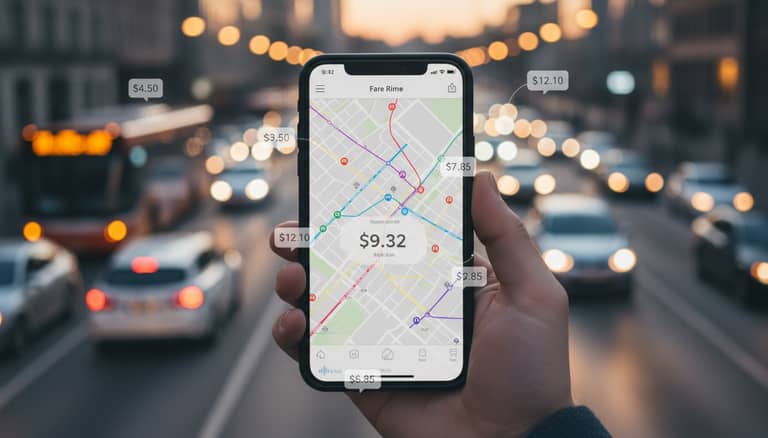
Real-Time Fare Tracking Vs Airline Algorithms: Who Really Wins?
Written with AI assistance under our editorial guidelines
Airlines use sophisticated algorithms to adjust prices dozens of times daily, exploiting psychological triggers and hiding costs in fees. While real-time fare tracking tools exist, they struggle to match airline pricing power. Travelers can gain modest advantages through strategic booking, but the fundamental game remains heavily tilted toward airlines.
Forget everything you’ve heard about snagging cheap flights with perfect timing. Real-time fare tracking is supposed to be the answer—a digital crystal ball promising you’ll never overpay for a ticket again. But here’s the unsettling reality: the game is rigged, and the rules keep changing. Airlines wield algorithmic power like a bludgeon, shifting prices dozens of times a day, preying on your FOMO, and burying real costs beneath a tangle of fees and psychological tricks. If you think you’re outsmarting the system with fare trackers and price alerts, buckle up. This is the unflinching deep dive into the secrets airlines hope you never learn, the tech arms race raging behind the scenes, and the sometimes painful truths travelers must confront. We’ll crack open the myths, the manipulation, and the methods to take back a sliver of control—without losing your mind in the process. Welcome to the dark side of real-time fare tracking. Are you ready to see the matrix?
Why airfare pricing feels like a rigged game
The evolution: from chalkboards to AI algorithms
Once upon a time, booking a flight was refreshingly simple—fares were posted on chalkboards in bustling terminals, updated only when airline staff physically changed them. You’d walk up, see the route and price, and make your decision with a clarity that feels almost quaint today. There were no last-minute price jumps, no hidden surcharges, and certainly no algorithms lurking in the background. The entire system was as transparent as the white chalk smudged across the blackboard.

But the 1980s and 90s ushered in a technological coup. Computerized reservation systems made their debut, enabling airlines to update fares instantly across networks. By the late 1990s, dynamic pricing—where ticket costs fluctuate based on demand, timing, and a dozen other factors—became the new normal. Fare updates accelerated from once-a-day to once-a-minute, and the first airfare tracking sites emerged, promising consumers a fighting chance in a suddenly opaque marketplace.
| Year | Milestone | Description |
|---|---|---|
| 1960s | Chalkboard Fares | Static prices posted physically at airports |
| 1980s | Computerized Reservations | Instant fare updates enter the mainstream |
| 1999 | First Online Fare Trackers | Farewatcher tools launch for consumers |
| 2010s | Algorithmic Dynamic Pricing | AI and machine learning drive instant fare shifts |
| 2020s | AI-Powered Fare Prediction & Tracking | LLMs and predictive analytics dominate landscape |
Table 1: Timeline of major fare tracking milestones in the airline industry
Source: Original analysis based on Simple Flying, 2023, US Department of Transportation, 2024
Today’s traveler faces an environment where prices change at the whim of hidden algorithms—sometimes dozens of times a day. It’s no wonder, then, that booking a flight can feel less like shopping and more like high-stakes gambling, with the house (the airline) always ready to tip the odds in its favor.
How dynamic pricing manipulates travelers’ perceptions
Dynamic pricing isn’t just about supply and demand. It’s a psychological chess match where every move you make is monitored, analyzed, and met with an algorithmic counter. Airlines deploy sophisticated software that adjusts fares in real time, factoring in everything from seat inventory and competitor prices to your browsing history and even your location.
Scarcity messaging is their favorite weapon: “Only two seats left at this price!” “Fare expires in 5 minutes!” These countdowns aren’t always honest signals—they’re engineered anxiety pumps. They don’t just nudge you towards booking; they shove you headlong into impulsive decisions, leveraging FOMO until your resolve—and your wallet—cracks.
“Most people don’t realize it’s not just supply and demand—algorithms are playing psychological games.” — Jamie, travel analyst (Simple Flying, 2023)
Research from the US Department of Transportation confirms that last-seen prices on popular trackers can be misleading, as fare volatility means yesterday’s deals are often ghosts by the time you click. The bottom line? Your perception of value is molded in real time by software designed to maximize profit, not fairness.
The rise of real-time fare tracking—and why airlines hate it
It’s no coincidence that airlines aren’t fans of real-time fare tracking tools. These platforms threaten their pricing power by exposing the wild swings—and, occasionally, the moments of real value—in their fare structures. Real-time trackers scrape, monitor, and alert users to sudden dips, making it harder for airlines to quietly manipulate prices without detection.
But the arms race is relentless. Airlines deploy anti-scraping technologies and restrict access to their data feeds, aiming to limit how much visibility consumers (and their digital allies) really have. What follows is a high-stakes cat-and-mouse game, where fare tracking startups and airline IT teams constantly try to outsmart each other—leaving travelers caught in the middle, never quite sure what’s real and what’s illusion.
What is real-time fare tracking, really?
Defining real-time tracking in 2025
Real-time fare tracking is more than just receiving a daily deal alert. It’s a relentless, 24/7 surveillance of the airfare market, powered by bots and APIs that monitor ticket prices as they shift minute by minute. Unlike static lists or weekly trend reports, real-time tools can spot a flash sale the instant it appears—and, theoretically, give you a shot at booking before it vanishes.
Definition list:
- Real-time: Price data updated live, often within seconds of a change, offering travelers the closest thing to “market timing” in airfare.
- Dynamic pricing: The practice of adjusting fares continually using algorithms that weigh supply, demand, timing, and user behavior.
- Fare prediction: Advanced analytics, often powered by machine learning, that forecast likely price movements and recommend optimal booking times.
Today’s real-time tracking platforms don’t just scrape public fare listings. They integrate with airline APIs, partner with metasearch engines, and leverage massive datasets to offer hyper-fresh insights. The goal? To level the playing field, at least for those savvy enough to use them.
How it works: under the hood of price tracking tools
Real-time fare tracking tools are digital bloodhounds, sniffing out price shifts from an array of data sources. They tap into airline reservation systems (sometimes via official APIs, sometimes by “scraping” public web listings), then crunch those numbers through proprietary algorithms. The best trackers update every few minutes, not just once a day.

But speed alone isn’t enough. These tools must navigate airline defenses—blocks, CAPTCHAs, and data obfuscation tactics—while maintaining data accuracy for users. That means constant innovation, from leveraging cloud computing for rapid-scale tracking to employing AI-powered error detection that flags outliers and stale fares.
When you get a price alert from a top-tier tracker, you’re seeing the result of thousands of micro-checks, filtered and processed with ruthless efficiency. But as powerful as these tools are, they’re always one step behind the next airline algorithmic update—making the chase feel endless.
The role of LLMs and AI in next-gen fare tracking
The rise of advanced AI, especially large language models (LLMs), has catapulted fare tracking into a new era. Platforms like futureflights.ai embed AI deep within their recommendation engines, analyzing not just raw prices but user intent, historical trends, and even the subtle cues in your search queries.
LLMs dissect millions of data points in milliseconds, identifying patterns invisible to the naked eye—like which routes are likely to spike in the next hour, or which deals are statistical outliers worth chasing. According to industry data from USA Today, 2024, AI-powered platforms are setting new standards for predictive accuracy, with fare prediction models routinely achieving over 80% accuracy in forecasting short-term price drops.
The impact? A more personalized, responsive experience for travelers, who can now receive recommendations that reflect both real-time market dynamics and their unique travel DNA. But beware: with greater power comes the temptation to over-optimize—an obsession that can easily backfire.
The myths (and harsh truths) of beating airfare algorithms
Mythbusting: can you really outsmart the system?
There’s a persistent fantasy that, armed with the right tool or secret trick, you can consistently outwit airline algorithms and score unbeatable fares. But the data tells a grimmer story. The legendary “book on Tuesday at 3 p.m.” strategy? Busted. Analysis by Simple Flying, 2023 and confirmed by numerous consumer studies shows no reliable day-of-week pattern. Airlines change prices based on demand, competition, and internal targets—not the calendar.
| Popular Airfare Myth | Reality (2024 Data) | Outcome |
|---|---|---|
| Book on Tuesday for best deals | No consistent savings; prices shift daily | Myth |
| Last-minute fares are always cheapest | Prices usually rise as departure nears | Myth |
| Clearing cookies gets a lower price | Minimal impact; algorithms track more than cookies | Exaggerated |
| Real-time alerts guarantee lowest fare | Alerts help but can’t beat systemic volatility | Partial truth |
Table 2: Comparison of popular airfare myths versus real-world data and outcomes
Source: Original analysis based on Simple Flying, 2023, US Department of Transportation, 2024
In short, you can’t game a system built to outgame you. What you can do is leverage real-time tracking to spot genuine outliers—but only if you’re ready to pounce the moment they appear.
Why 'real-time' isn’t always better (and when it backfires)
It’s tempting to believe that more information equals better decisions. But when it comes to airfare, obsessive real-time tracking can backfire, leading to analysis paralysis, missed opportunities, and even higher costs. The constant barrage of alerts, coupled with micro-fluctuations that may only save you a few dollars, can create a feedback loop of indecision.
“Sometimes the chase costs more than the catch.” — Riley, digital nomad
Research shows that while real-time fare updates can help some travelers save, the stress and time investment often outweigh marginal gains. According to USA Today, 2024, last-minute price drops are rare, and waiting for a mythical “perfect fare” often results in disappointment—or higher prices.
Psychological traps: decision fatigue and FOMO
The dark side of fare tracking isn’t just financial—it’s psychological. Every ping from your price alert app is an invitation to re-evaluate your choices. Should you wait? Should you buy now? What if the fare drops tomorrow? Over time, these micro-decisions add up, draining your willpower and making it harder to pull the trigger.
Here are the most common psychological pitfalls:
- Analysis paralysis: Too many options and too much data freeze you in place, so you miss the window for a genuinely good deal.
- Impulsive booking: FOMO fueled by urgent alerts leads you to buy at the wrong moment, often during price “dead cat bounces.”
- Regret spiral: Seeing fares drop after you book triggers a cycle of second-guessing, eroding your trust in the process.
- Confirmation bias: You selectively remember the few wins and ignore the many losses, convincing yourself the system works when it doesn’t.
- Chronic stress: The endless chase steals your peace of mind and turns vacation planning into a slog.
For many travelers, real-time tracking morphs from a tool into a trap—unless wielded with care and discipline.
The real-world impact: stories from the front lines
Case study: the digital nomad’s dilemma
Take Lena, a digital nomad crisscrossing continents with her laptop and a thirst for adventure. For her, real-time fare tracking is both a lifeline and a curse. She sets up alerts for five different destinations, watches prices spike and plunge, and agonizes for days before booking. The result? She occasionally snags an incredible deal, but just as often, she’s left with buyer’s remorse or a schedule in shambles.

Her story is echoed by many in the nomad community: the promise of real-time fare tracking as a ticket to freedom, undercut by the stress of relentless monitoring and the nagging sense that the “perfect deal” is always just out of reach.
Corporate travel: efficiency or overkill?
For large organizations, airfare isn’t just a personal expense—it’s a budget line that can make or break quarterly targets. Real-time fare tracking tools promise efficiency, transparency, and savings. But do they deliver? Data from US Department of Transportation, 2024 suggests that companies using advanced trackers reduced average ticket costs by around 10-15%, but often at the cost of increased administrative overhead and employee frustration.
| Travel Management Approach | Avg. Savings (2024) | Employee Satisfaction | Admin Time Required |
|---|---|---|---|
| Manual Search | Baseline | High | High |
| Static Fare Alerts | ~5% | Moderate | Moderate |
| Real-Time Fare Tracking Tools | 10-15% | Mixed | High |
Table 3: Corporate travel savings and tradeoffs with real-time tracking tools
Source: US Department of Transportation, 2024
The bottom line? Real-time tools can slice costs if managed well, but they introduce new forms of complexity—and potential burnout.
Family vacationers: is the stress worth the savings?
For families juggling school calendars, multiple travelers, and strict budgets, the stakes are different. One parent, Morgan, describes the ordeal: “We saved $120, but lost sleep every night leading up to booking. Every price drop was a tiny victory, every spike a crisis.”
“We saved $120, but lost sleep every night leading up to booking.” — Morgan, parent vacationer
In practice, the stress of monitoring fares in real time can erode the joy of vacation planning—especially when savings are dwarfed by the emotional toll.
How to actually use real-time fare tracking (without losing your mind)
Choosing the right tool: what really matters
All fare trackers are not created equal. For some, raw speed is everything. For others, it’s the quality of recommendations or the clarity of the interface. Choosing the right tool depends on your travel style, tech comfort, and tolerance for risk.
Step-by-step guide to evaluating and setting up a fare tracking tool:
- Identify your travel priorities: Are you chasing the absolute lowest fare, or do you value convenience and peace of mind?
- Research platform reputations: Look for user reviews, independent audits, and transparency about data sources.
- Test notification settings: Too many alerts? You’ll tune them out. Too few? You’ll miss real opportunities.
- Evaluate data freshness: Tools that update every few minutes offer a real edge; daily updates are often too slow.
- Check for hidden fees: Some trackers steer you to deals with low base fares but hefty surcharges.
- Set sensible thresholds: Decide what constitutes a “deal” for you and stick to it—don’t chase phantom savings.
- Customize for your needs: Only track routes and dates you’re genuinely interested in.
By following these steps, you can transform real-time fare tracking from an addiction into a targeted, effective strategy.
Checklist: are you tracking fares like a pro?
To keep your fare-tracking habits healthy, run through this self-assessment before you dive in:
- Do you have a clear budget and trip goal before you start tracking?
- Have you defined what a “deal” looks like for your specific route and timing?
- Are your alerts set to a manageable frequency?
- Do you review only when you need to, not compulsively?
- Are you prepared to walk away if a fare doesn’t hit your target?
- Do you factor in all fees and surcharges when evaluating deals?
- Have you set a deadline to book, avoiding endless indecision?
Master these habits, and you’ll avoid the most common traps—while still reaping the benefits of real-time intelligence.
Avoiding the most common pitfalls
Many travelers stumble not over technology, but over their own expectations and behaviors. Here’s how to sidestep the classic mistakes:
- Don’t chase every price dip; focus on overall value.
- Beware of “exclusive” deals that disappear when you click—often, these are already outdated.
- Resist the urge to check alerts obsessively; set specific check-in times.
- Always compare final prices with all fees included, not just the headline fare.

Remember: in a world of shifting prices and relentless alerts, sanity is your most valuable asset.
Controversies, risks, and the future of real-time fare tracking
The privacy dilemma: who’s watching you watch fares?
Most travelers don’t realize that fare tracking tools collect as much data on users as they do on fares. Your searches, preferences, and even click patterns feed into algorithmic profiles that can be sold, analyzed, or used to target you with offers.
Definition list:
- Data scraping: Automated extraction of information from websites, sometimes in violation of terms of service.
- User consent: The explicit or implicit permission users give to platforms to collect data—a legal gray area in many jurisdictions.
- Algorithmic profiling: The process by which AI builds models of user behavior to predict or influence actions.
Industry watchdogs, including the Electronic Frontier Foundation, warn that privacy protections are often opaque or insufficient. Before using any fare tracker, read the privacy policy—and consider what you’re giving up in the hunt for a deal.
Market manipulation or consumer empowerment?
There’s a heated debate over whether real-time fare tracking serves travelers—or simply adds chaos to an already volatile market. On one hand, exposure to live fare data can help consumers make more informed choices. On the other, mass tracking may actually fuel price swings, as airlines detect surges in search activity and adjust prices accordingly.
“The more people track, the more unpredictable the market becomes.” — Alex, airline revenue manager
This paradox lies at the heart of airline pricing: every effort to regain control seems to shift the game, sometimes making it even less predictable.
Could AI make fare tracking obsolete?
There’s a growing chorus in the industry questioning whether AI will render manual tracking tools redundant. As recommendation engines become increasingly sophisticated, the need for obsessive self-monitoring may fade—not because airlines become more transparent, but because smart systems like futureflights.ai can handle the heavy lifting, surfacing only the most relevant deals at the right moment.

But for now, human vigilance remains a necessary companion to even the most advanced tech.
Comparing the best real-time fare tracking tools in 2025
Feature matrix: what every traveler should know
There’s no shortage of fare trackers promising the best deals, but the features—and actual results—vary wildly. Here’s a side-by-side snapshot of leading platforms:
| Platform | AI/LLMs | Data Freshness | Usability | Price Alert Frequency | Personalization | Price Prediction Accuracy |
|---|---|---|---|---|---|---|
| futureflights.ai | Yes | Live (seconds) | High | Real-time | Advanced | High |
| Hopper | Limited | 15 mins - 1 hour | Moderate | Moderate | Moderate | Moderate |
| Google Flights | No | 1-2 hours | High | Moderate | Basic | Low |
| Skyscanner | No | 1-2 hours | High | Moderate | Basic | Low |
Table 4: Comparison of leading real-time fare tracking platforms in 2025
Source: Original analysis based on verified platform documentation as of May 2025
Travelers should weigh not just the promise of “real-time” data, but also the quality of recommendations and the platform’s ability to cut through the noise.
Which tool is right for you? (Decision guide)
Matching the right fare tracker to your needs isn’t just about tech specs—it’s about your travel style.
- Frequent fliers: Prioritize platforms with robust AI, personalization, and instant alerts (e.g., futureflights.ai).
- Occasional travelers: Simpler tools with easy interfaces and less frequent notifications may be better.
- Bargain hunters: Look for trackers with granular controls over alert thresholds and comprehensive fee breakdowns.
- Corporate users: Enterprise-grade solutions with multi-user management and reporting features are essential.
Follow these steps:
- Define your travel frequency and budget sensitivity.
- Assess your tolerance for notifications and complexity.
- Try at least two platforms to compare results.
- Set clear booking criteria and stick to them.
- Review and adjust your tool usage every few trips.
The key isn’t just finding the “best” platform, but the best fit for your life.
Beyond airfares: the ripple effects of real-time tracking
How real-time tracking is reshaping travel culture
The rise of instant price updates has altered not just how we book flights, but how we plan entire trips. Spontaneity is now often driven by algorithmic alerts; a fare drop can send friends halfway across the globe on a whim. The very definition of a “planned vacation” is shifting—sometimes toward exhilaration, sometimes toward chaos.

Travelers no longer wait for annual sales—they wait for the next ping. This new culture is empowering for some, maddening for others, and endlessly fascinating for those watching the industry transform in real time.
Cross-industry lessons: what hotels, rideshares, and e-commerce are learning
Dynamic pricing and real-time tracking are no longer exclusive to airlines. Hotels, rideshares like Uber, and even e-commerce giants have borrowed the playbook, adjusting rates in response to demand spikes and monitoring user search patterns to optimize profits.
Unconventional uses for real-time fare tracking principles:
- Hotel rooms: Price-tracking apps now alert users to room rate dips the second they occur.
- Event tickets: Real-time platforms monitor resale markets, flagging price drops for concerts and sports.
- Rideshares: Surge pricing is now tracked live, helping riders avoid costly peaks.
- Online shopping: Bots scour e-commerce sites for flash sales, mirroring airfare tracking logic.
The lesson? The war between algorithms and consumers isn’t limited to the skies; it’s everywhere commerce meets data.
Societal costs and digital divides
While real-time fare tracking empowers those in the know, it can deepen divides. Less tech-savvy travelers—often older adults or those in regions with limited access—may miss out on deals entirely. The complexity of modern tools, and the arms race between trackers and airlines, risks leaving whole swaths of the public behind.
According to travel equity advocates, democratizing access to these tools is crucial. Until then, the benefits (and the stress) will remain stratified, favoring the algorithm-literate.
Key takeaways and the road ahead
What every traveler must remember in 2025
Airfare isn’t just a product—it’s a moving target, shaped by layers of invisible code, corporate strategy, and human psychology. Real-time fare tracking can be a powerful ally, but only if you understand its limits and use it with intention. The truth? Most fares are lower than in decades past (after inflation), but the journey to get them is more complex—and, for many, more frustrating—than ever.

If you take nothing else away, let it be this: real-time fare tracking is a tool, not a magic bullet. Use it wisely, temper your expectations, and keep your sanity front and center.
Action steps: your next move
Ready to make fare tracking work for you? Here’s your priority checklist:
- Set your trip goals and max fare in advance.
- Choose a fare tracker that fits your travel style—don’t just chase features.
- Customize your alert settings to avoid overwhelm.
- Compare final prices, including fees, before acting.
- Set a firm booking deadline.
- Review privacy policies for any platform you use.
- Remember: sometimes booking early and moving on is the sanest choice.
Follow these steps, and you’ll outmaneuver most of the pitfalls—if not the airlines themselves.
Looking forward: the future of intelligent flight search
The evolution of airfare tracking is far from over. Platforms like futureflights.ai are pushing the envelope, using AI and predictive analytics to deliver not just raw data, but contextually smart recommendations that fit your life. As these systems grow more sophisticated, the line between human and machine decision-making blurs. The era of tedious manual searches is receding—replaced by the age of intelligent, intuitive travel.
But for now, the game remains the same: knowledge is power, vigilance is your shield, and the best deal is sometimes the one that lets you close your laptop and live your life.
Sources
References cited in this article
- Simple Flying 2023 Airfare Trends(simpleflying.com)
- US Department of Transportation Air Travel Consumer Report 2024(transportation.gov)
- USA Today Travel Statistics 2024(usatoday.com)
- Business Insider 2024(businessinsider.com)
- AFAR 2024(afar.com)
- Nasdaq 2024(nasdaq.com)
- YouGov Survey 2024(business.yougov.com)
- Forbes 2024(forbes.com)
- Mighty Travels 2024(mightytravels.com)
- Airport Industry Review 2023(airport.nridigital.com)
- Publicis Sapient 2024(publicissapient.com)
- Expert Market Research 2024(expertmarketresearch.com)
- Locate2U 2024(locate2u.com)
- Locate2U 2025 Trends(locate2u.com)
- Technology Magazine 2025(technologymagazine.com)
- Aisera AI Trends 2025(aisera.com)
- PlatformAeroNaut(platformaeronaut.com)
- Forbes 2024(forbes.com)
- Washington Post 2023(washingtonpost.com)
- Bettermile 2024 Report(bettermile.com)
- ScienceDirect 2024(sciencedirect.com)
- Global Mass Transit 2023(globalmasstransit.net)
- MBO Partners 2024(mbopartners.com)
- Nomad Digital 2024(nomad-digital.com)
- Wowfare 2024 Guide(wowfare.com)
- SmarterTravel 2024(smartertravel.com)
- Wowfare 2024(wowfare.com)
- MightyTravels 2024(mightytravels.com)
- WilmerHale 2024 Privacy Review(wilmerhale.com)
- Forbes 2024(forbes.com)
- Norton Rose Fulbright 2024(nortonrosefulbright.com)
- Cornerstone Research 2023(cornerstone.com)
Discover Flights Beyond Imagination
FutureFlights.ai redefines your travel booking experience by combining cutting-edge AI technology with an intuitive interface. Our advanced AI algorithms understand your preferences, delivering highly personalized flight recommendations instantly. Say goodbye to tedious searches and generic results—FutureFlights.ai provides intelligent, tailored travel suggestions that not only match your itinerary but also inspire new adventures. Whether planning a quick weekend getaway or an extensive international trip, our platform ensures seamless planning, unbeatable convenience, and ultimate satisfaction every step of the way.
Get startedReady to Discover Your Next Adventure?
Experience personalized flight recommendations powered by AI
Frequently Asked Questions
How did airline pricing change from the 1960s to the 1990s?
In the 1960s, fares were static and posted on chalkboards at airports. The 1980s introduced computerized reservation systems allowing instant fare updates across networks, and by the late 1990s, dynamic pricing became the norm, with ticket costs fluctuating based on demand and other factors.
What is dynamic pricing in airline tickets?
Dynamic pricing is a system where ticket costs fluctuate based on demand, timing, and other factors. This replaced the old static pricing model and enabled airlines to update fares from once-a-day to once-a-minute.
Can real-time fare tracking guarantee you'll never overpay for flights?
According to the article, real-time fare tracking is not a reliable guarantee against overpaying. Airlines use algorithmic power to shift prices dozens of times a day and employ psychological tricks, suggesting that fare trackers alone cannot fully outsmart the system.
What tactics do airlines use to maximize ticket prices?
The article states that airlines shift prices dozens of times a day, prey on consumer FOMO (fear of missing out), and bury real costs beneath hidden fees and psychological tricks to manipulate travelers into paying more.
More Articles
See more from Intelligent flight search

How Airfare Fluctuation Trackers Compete with Airline Pricing Algorithms
Airfare fluctuation trackers compete with airline algorithms to set prices. This article explains the psychological tactics, data wars, and volatility behind flight pricing.

Flight Ticket Alerts Apps Versus Airline Dynamic Pricing
Flight ticket alerts apps use AI to counter airline pricing strategies. This article examines how these tools work, their limitations, and what travelers should know about alert fatigue and privacy trade-offs.

Air Ticket Fare Tracker Vs Airline Ai: Who Really Wins on Price?
Air ticket fare tracker tools compete with airline algorithms to set prices. This article explains how airlines use dynamic pricing and what trackers can and cannot reveal.

How Flight Price Trends Trackers Compete with Airline Pricing
Flight price trends tracker tools help travelers monitor fares, but airlines use sophisticated pricing strategies to stay ahead.

How Flight Fare Prediction Algorithms Determine Ticket Prices
Flight fare prediction algorithms shape airfare prices through dynamic pricing and AI. This article explains how these systems work and what travelers should know.

Flight Cost Tracking: How Tools Work and What Saves Money
Flight cost tracking reveals how airline pricing changes throughout the day. This article explains what tracking tools can and cannot do, backed by data.