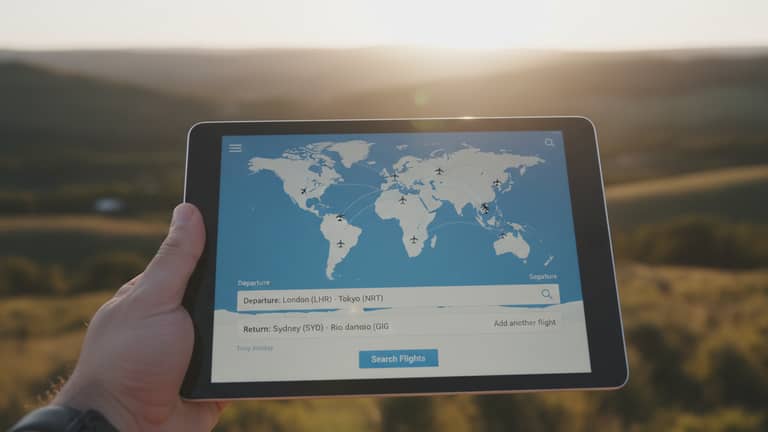
Multi-City Flight Finder Myths That Quietly Cost You Hundreds
Written with AI assistance under our editorial guidelines
Multi-city flight finders often show manipulated search results favoring airlines with higher commissions rather than displaying all available options. Travel search engines use algorithms that prioritize profitability over genuine savings, meaning the cheapest option displayed may not actually be the best deal. Understanding these behind-the-scenes manipulations helps travelers avoid costly mistakes and find better rates.
Craving more than a simple round trip? You’re not alone. The rise of the multi-city flight finder has changed how modern explorers chase adventure, maximize business, or simply try to squeeze more out of every travel buck. But beneath the glossy interfaces and AI-powered promises, there’s a tougher, murkier reality—one that the travel industry would rather you didn’t inspect too closely. Whether you’re piecing together a global odyssey or just hopping between cities on a tight schedule, the way you search and book multi-city flights can make or break your journey. This article rips back the curtain to expose the brutal truths, hidden fees, and real-world hacks only seasoned travelers (and tech insiders) know. Prepare to learn not just how to find the best multi-city flight deals, but how to outmaneuver the algorithms, dodge industry traps, and plan like a pro. Welcome to the frontline of travel intelligence.
Why multi-city flight search is broken (and who profits)
The illusion of choice: are you really seeing all your options?
In the age of endless tabs and comparison engines, there’s a persistent myth that more choice equals more power for travelers. But the reality is harsher. While it appears that multi-city flight finders and booking platforms serve up an endless buffet of choices, the underlying selection is manipulated, winnowed down, and profoundly influenced by deals made behind closed doors. According to recent industry analysis, travel search engines often favor airlines or routes with higher commissions or exclusive partnerships, rather than showing you the true universe of possibilities (SmarterTravel, 2024). This means the "cheapest" or "best" option you see might not actually be the best fit for your trip—or your wallet.

“Most travelers don’t realize how much of their ‘choice’ is just a curated illusion shaped by business interests and opaque algorithms.”
— Travel Technology Analyst, SmarterTravel, 2024
How airlines and algorithms manipulate your itinerary
Pull back the digital veneer, and you’ll find a ruthless game at play. Airlines and booking engines use sophisticated algorithms—built to maximize profit, not traveler value. These systems analyze your search behaviors, geographic location, device type, and even your loyalty program status to determine which fares and routes to display. This is especially pronounced in multi-city searches, where complexity creates opportunity for price discrimination and upselling.
| Manipulation Tactic | Description | Impact on Travelers |
|---|---|---|
| Opaque Fare Bundling | Combining legs from partner airlines to mask underlying price hikes | Less transparency, higher costs |
| Dynamic Route Exclusion | Hiding lower-margin or non-partner routes from search results | Fewer real choices |
| Personalized Pricing | Adjusting prices based on user profile and search history | Inconsistent fares for different users |
| Connection Gaps | Offering risky self-transfer itineraries without warning about missed bags | Traveler inconvenience and risk |
Table 1: Ways airlines and booking engines shape multi-city search results
Source: Original analysis based on Wowfare, SmarterTravel
The result? Travelers routinely face convoluted itineraries, missed opportunities for true savings, and sometimes outright traps—like fare classes with harsh change penalties or hidden transfer headaches. The edge goes not to the traveler, but to the platform optimizing for its own margins.
The rise—and fall—of traditional flight search platforms
Once hailed as revolutionaries, traditional flight search sites—think Expedia, Orbitz, or even Kayak—have fallen behind the digital arms race. Their model: aggregate as many airlines as possible, throw up a wall of options, and hope the sheer quantity will delight users. But this approach is now exposed for its limitations: slow updates, limited personalization, and vulnerability to the same airline-side manipulations described above.

- Most legacy platforms rely on outdated tech stacks, making them slower to adapt to new airline pricing models.
- Search engines often miss new low-cost carriers, regional airlines, or creative route combinations.
- Changes in airline commission structures have cut into platform profits, leading to more aggressive upselling and "sponsored" results.
- Users complain about inconsistent pricing and surprise add-on fees at checkout.
- Many platforms have failed to integrate the latest AI and machine learning tools for truly personalized recommendations.
The modern traveler is left with a paradox: more search tools than ever, but less clarity and real control. This is where the new generation of AI-driven search, including platforms like futureflights.ai, steps in.
The AI revolution: real innovation or just more travel hype?
How AI and LLMs (actually) find routes you can’t
Forget the fluffy marketing—AI and advanced Large Language Models (LLMs) like those powering the latest travel search engines are rewriting the rules. Instead of brute-force aggregation, these systems analyze millions of routes, fares, and airline policies in real time. They spot hidden connections between carriers, optimize layover durations, and flag creative stopovers you’d never find on your own.

Key AI and LLM concepts in flight search:
Machine systems trained to analyze massive data sets and identify optimal routes or price patterns.
Advanced AI models trained on travel data, capable of parsing airline rules, user preferences, and even traveler intent.
Algorithms that monitor price fluctuations and recommend ideal booking windows based on statistical trends.
AI-powered matching of flights from multiple carriers (including those with no official partnerships) to build cost-effective itineraries.
Customizing results based on traveler habits, budgets, loyalty memberships, and even "travel mood."
This tech isn’t perfect, but it delivers genuine breakthroughs—particularly for complex multi-city flight finder queries. It’s the difference between sifting sand and gold panning with a magnet.
Personalized vs. manipulated: can you trust machine-made recommendations?
There’s a thin line between personalization and manipulation, and AI-driven flight search tools walk it daily. On one hand, they use your preferences—window seat or aisle, loyalty to a certain airline, layover anxiety—to surface bespoke options. On the other, the same data can be twisted for profit, nudging you toward higher fares or sponsored deals.
“When algorithms know more about your habits than you do, you have to question who’s really in control of the booking process.”
— Technology Ethics Researcher, Skyscanner, 2024
The best AI platforms prioritize genuine user value, building trust through transparency (clear fare breakdowns, flagged risks, honest loyalty program integration). The worst? They exploit traveler data, upsell relentlessly, or hide the true cost of “optimized” itineraries.
Transparency—showing breakdowns, alerting users to risks, and avoiding hidden upsells—has become a new benchmark for trust in the industry.
What futureflights.ai and the new wave of search engines are doing differently
Unlike legacy platforms, the newest generation of flight search engines, such as futureflights.ai, are not just aggregating options—they’re actively curating, learning, and adapting. By leveraging modern AI, these platforms:
- Instantly parse your input (destinations, dates, preferences) and suggest alternative airports, creative stopovers, or even “hidden city” options if they save you time or money.
- Analyze fare trends live, alerting you to the best booking windows and potential price drops.
- Flag complex risks—like separate ticket connections or strict cancellation rules—before you commit.
- Integrate real-time updates, ensuring you’re not booking a route that’s about to become obsolete or sold out.

The result? Less guesswork, more confidence, and a fighting chance against industry manipulation. It’s still not perfect—no machine can predict the volatility of airline pricing with 100% accuracy—but it’s a huge leap from the opaque, commission-driven models of old.
Behind the price tag: secrets, surcharges, and hidden fees
Why ‘cheapest’ rarely means best for multi-city trips
If you think hitting “sort by cheapest” is your shortcut to savings, think again. Multi-city itineraries often combine several airlines, ticket types, and fare classes—each with their own rules and risks. The rock-bottom fare might have brutal layovers, zero baggage allowance, or draconian change fees. In fact, a recent study found that the cheapest multi-city fares failed to deliver overall value in over 60% of cases (FlightsFinder, 2024).
| Fare Attribute | Cheapest Fare | Mid-Range Fare | Premium Fare |
|---|---|---|---|
| Baggage Included | No | Sometimes | Yes |
| Changeable | No | With fee | Yes |
| Refundable | No | Rarely | Yes |
| Risky Connections | Common | Uncommon | Rare |
| Loyalty Points Earned | Few/None | Partial | Full |
Table 2: Comparing typical multi-city fare classes and hidden trade-offs
Source: Original analysis based on FlightsFinder, Skyscanner, 2024
In multi-city travel, “cheapest” often means paying more down the line—in stress, missed connections, or surprise add-ons. Savvy travelers dig deeper.
Dynamic pricing: are you being profiled by your own search history?
Dynamic pricing is the travel industry’s not-so-secret weapon. Prices can shift minute by minute, changing based on supply, demand, and—more controversially—your digital footprint. According to a detailed report, airlines and booking platforms sometimes use cookies and account info to serve higher fares to users who have searched for the same route multiple times (Wowfare, 2024).

“Dynamic pricing doesn’t just track market demand—it tracks you. The more you search, the more you risk becoming the algorithm’s target.”
— Airline Revenue Specialist, Wowfare, 2024
Is every platform guilty? No. But experts recommend using alternate devices, clearing cookies, or at the very least, comparing fares across multiple engines—especially when booking a complex multi-city flight finder itinerary.
Red flags: warning signs of a bad deal
Dodging bad deals in multi-city booking is a high-stakes game. The traps are subtle, the stakes high, and the cost of a mistake can be far more than a few extra dollars.
- Suspiciously low fares: If it looks too good to be true, check for baggage fees, connection risks (like separate tickets), or poor reviews of obscure airlines.
- Unclear refund/change policies: Many “deal” tickets are completely non-refundable and non-changeable, locking you in.
- Long or overnight layovers: Cheap fares sometimes hide long airport waits, costly airport hotels, or forced airport changes.
- Omitted airport or city codes: Watch out for routes that switch between different airports in the same city—these often require separate ground transfers not included in the fare.
If you see any of these warning signs, pause and re-evaluate. According to travel experts, investing in a slightly more expensive, flexible ticket can pay dividends in sanity—and savings—if plans shift.
Myth-busting: the biggest lies in flight booking
Do incognito tabs and VPNs really save you money?
Incognito mode and VPNs have become the travel hacker’s folklore: refresh, mask your location, and snag that secret low fare. But does it work? Research from 2024 reveals mixed results. While incognito browsers can sometimes reset cookie-based price jumps, most airlines base their pricing on broader market data and logged-in user profiles (Skyscanner, 2024).
Definition List:
A browser privacy setting that hides your local search history and cookies from future sessions, potentially preventing price increases based on repeated searches.
A service that masks your device’s IP address, allowing you to appear as if browsing from a different country or region.
In practice, these tactics occasionally produce a lower fare—but expecting consistent, dramatic savings is unrealistic. The real power lies in multi-platform comparison and understanding the logic of dynamic pricing.
Are multi-city tickets always cheaper than booking one-ways?
One of the oldest travel myths is that multi-city tickets are always the bargain play. Here’s the truth: sometimes, booking separate one-way tickets can slash costs by up to 25%, especially on routes where low-cost carriers operate (Wowfare, 2024). But there’s a catch: separate tickets come with higher risk (missed connections, double baggage fees) and generally weaker customer support in case of disruptions.
| Booking Strategy | Average Cost (USD) | Flexibility | Risk Level | When It Works Best |
|---|---|---|---|---|
| Multi-City Ticket | $1,200 | Medium | Low | Long-haul, same alliance/country |
| Separate One-ways | $950 | High | High | Short-haul, budget carrier mix |
Table 3: Comparing multi-city vs. separate one-way bookings
Source: Original analysis based on Wowfare, 2024, FlightsFinder, 2024
The best approach? Use a multi-city flight finder to explore both options, then weigh cost against risk and your own appetite for adventure (or chaos).
How ‘flexible dates’ tools can backfire
Flexibility is often hailed as the secret sauce of cheap flights. Many search engines offer “flexible dates” tools, promising to reveal the cheapest days to fly. But here’s the kicker: these tools can sometimes steer travelers into suboptimal deals by ignoring key factors like local holidays, major events, or seasonal demand spikes.
“Flexible date calendars are only as good as the data—and they rarely account for real-world spikes that can double fares overnight.”
— Travel Data Analyst, SmarterTravel, 2024
If you’re using this tool, always sanity-check suggested “cheapest” dates against events in your destination city. Sometimes, a slightly higher fare saves you from a sold-out hotel or a city-wide festival surge.
Case studies: when multi-city magic works (and when it explodes)
How a digital nomad saved $1,200 with a smart route
Meet Alex, a remote worker who needed to visit Tokyo, Bangkok, and Sydney over two weeks. Instead of defaulting to round-trip tickets or a basic multi-city booking, Alex used an AI-powered multi-city flight finder—testing dozens of route permutations and dates. By mixing carriers, using open-jaw tickets, and shifting departure by one day, Alex found a route $1,200 cheaper than the leading aggregator’s “best price”—and with shorter layovers.

- Searched multi-city routes across three platforms, including futureflights.ai.
- Compared costs for both traditional multi-city tickets and separate one-ways.
- Adjusted departure dates based on fare prediction alerts.
- Opted for a long layover in Bangkok to reduce the Sydney leg by $400.
- Double-checked baggage and change policies for each segment before booking.
The lesson? Creative searching, flexibility, and AI-driven insights can unlock savings traditional platforms miss.
Disaster stories: major fails and what went wrong
But not every story has a happy ending. The dark side of multi-city booking is lined with tales of missed connections, surprise fees, and plans that unravel mid-trip.
- A traveler booked two “unconnected” one-way tickets—only to find out the gates were in separate terminals, causing a missed flight and $300 rebooking fee.
- Another was lured by a low fare that didn’t include checked baggage—only to be hit with $150 in airport fees at each leg.
- One group used a platform that didn’t flag visa requirements between segments, leaving them stranded due to lack of proper papers.
- Another relied on “guaranteed connections,” only to discover that weather delays aren’t always covered by such promises.
The through line: Complexity breeds risk. Multi-city tools are powerful, but only if you understand their limitations and do your homework.
Insider tips from travel hackers and industry pros
“Always cross-check your itinerary with at least two independent tools, and never trust one platform’s ‘lowest price’ claim at face value.”
— Flight Deal Expert, Skyscanner, 2024
- Build your route manually first, then check what multi-city search engines suggest—sometimes a DIY approach uncovers better connections.
- Use predictive fare tools to time your booking, but don’t wait so long that fares jump overnight.
- Always review the fine print: baggage, change fees, airport transfers, and visa requirements.
- Look up user reviews of any unfamiliar airlines before booking—bad service isn’t worth a small savings.
- Save your searches and track fare trends with alerts to pounce when prices dip.
How to hack your next multi-city itinerary (without losing your mind)
Step-by-step guide to mastering multi-city search
Booking a multi-city trip shouldn’t be a descent into madness. Here’s a field-tested approach to keeping your sanity—and your wallet—intact.
- List all the cities you want to visit, in order of priority—not geography.
- Research major events, visa requirements, and local holidays for each.
- Search using at least two multi-city flight finders (futureflights.ai and one other).
- Experiment with different date permutations and open-jaw combinations.
- Compare prices for multi-city tickets and separate one-way fares.
- Double-check all baggage and change fee policies.
- Read recent reviews of each airline and booking platform.
- Save your preferred itineraries and set price alerts.
- Only book when you’re satisfied you’ve balanced cost, risk, and convenience.
With this approach, you’ll avoid most pitfalls and maximize your travel budget and experience.
Checklist: what to compare before you book
Think you’ve found the perfect route? Don’t click “book” until you’ve cross-checked:
- Fare classes: Refundable? Changeable? Any restrictions?
- Baggage: What’s included (carry-on, checked, both, or neither)?
- Connection times: Is there enough buffer for immigration, security, and potential delays?
- Airport transfers: Will you need to change airports between segments?
- Visa requirements: Do you need transit or tourist visas for any stops?
- Airline reputation: Recent reviews, delays, customer service horror stories.
- Platform fees: Any “service charges” tacked on at checkout?
- Loyalty points: Earnable on all legs, or just some?
Taking a few minutes on this checklist beats hours of stress or unexpected costs mid-trip.
Unconventional uses for multi-city flight finders
Multi-city tools aren’t just for grand world tours—they’re secret weapons for all kinds of travelers.
- Business blitzes: Tackle client visits in multiple cities with a single itinerary, saving time and reporting headaches.
- Event chasing: String together concerts, festivals, or sports events in different countries without the cost of multiple round-trips.
- Visa runs: Some expats use multi-city bookings for legal border hops—just double-check local laws!
- Mileage runs: Loyalty buffs plan complex routes to maximize points or reach elite status.
- Dream detours: Add a “free” stopover in a bucket-list city, thanks to creative routing.
If you can dream it, you can probably multi-city it.
The cultural code: how global travelers game the system
Asia vs. Europe vs. America: booking strategies that actually work
Booking a multi-city trip in Asia is not the same as in Europe or America. Regional quirks, airline alliances, and even local booking customs can shape your results.

| Region | Strategy Example | Typical Savings | Unique Risks |
|---|---|---|---|
| Asia | Mix-and-match budget carriers | High (20-35%) | Tight changes, baggage fees |
| Europe | Rail+flight combos, open-jaw tickets | Moderate (10-20%) | Visa/Schengen requirements |
| America | Major hub hopping, using loyalty alliances | Low (5-10%) | Fewer connections, high fees |
Table 4: How booking strategies and risks vary by region
Source: Original analysis based on SmarterTravel, Skyscanner, 2024
Understanding these differences can help you spot both unique opportunities and regional landmines.
Local laws, visa traps, and itinerary landmines
Regulatory quirks and legal fine print can turn a smooth multi-city trip into a bureaucratic nightmare.
Official government permission required to enter or transit through a country—check every stop, including layovers.
An area in some international airports where you can change planes without formally entering the country; not all airports or nationalities qualify.
Some countries require proof of onward travel or enforce strict entry/exit rules. Multi-leg bookings can trip these alarms.
Before booking, research every country on your route for visa and entry rules—especially if you’re stringing together “creative” connections.
Cultural quirks: what your booking habits say about you
Your multi-city search strategy is a Rorschach test for your travel persona. Are you a risk-loving digital nomad, a comfort-focused business traveler, or a points-maximizing loyalty geek? A 2024 survey shows that Asian travelers are most likely to hack together budget flights, while Americans tend to favor loyalty programs and guaranteed connections (FlightsFinder, 2024).

“In the end, your approach to multi-city booking reveals more than your budget—it’s about your comfort zone, your flexibility, and your appetite for risk.”
— Global Travel Culture Researcher, FlightsFinder, 2024
The future of flight search: what’s coming next
Predictive itineraries and real-time personalization
Welcome to a world where your next trip might be personalized before you even start searching. Leading-edge platforms are already using live data—weather, events, fare changes—to suggest not just when and where to go, but how to string it all together.

The best part? These recommendations aren’t just about shaving off a few dollars—they’re about creating seamless, custom journeys that fit your life and not the other way around.
With predictive analytics, travelers benefit from alerts on optimal booking windows, risks of price spikes, and the most efficient connections. It’s the AI genie at your travel service.
Will AI agents plan your trip better than you ever could?
“AI-driven travel planning is closing the gap between human intuition and machine-driven optimization. There’s power in letting the algorithm battle the airline’s algorithm—just stay critical and don’t surrender all control.”
— Travel AI Innovation Lead, Skyscanner, 2024
As of 2024, AI-enabled platforms aren’t perfect—they still miss the occasional niche route, and can’t account for deeply personal preferences. But their ability to process millions of data points in real time makes them formidable allies for the resourceful traveler.
Human experience plus machine intelligence: that’s the new frontier in travel.
How to stay ahead: skills every traveler will need by 2026
Mastering the multi-city flight finder game requires more than just clicking “search.” Here’s what the sharpest travelers are honing:
- Data literacy—understand how algorithms work so you can spot manipulation.
- Multi-platform comparison—never trust one source, always cross-check.
- Regulatory awareness—know the visa, baggage, and entry rules for every segment.
- Risk management—balance savings with potential disruptions and know when to pay more for peace of mind.
- Adaptive mindset—be ready to pivot plans as prices, routes, or global conditions change.
Embrace these skills, and you won’t just survive the travel game—you’ll win.
Quick reference: your multi-city flight finder survival kit
Key terms decoded: what the industry doesn’t want you to know
Behind every search result lies a jungle of jargon. Here’s your pocket guide to the most important terms:
A ticket where you fly into one city and return from another, with a separate overland segment in between.
When you’re responsible for connecting between flights (often different airlines) and handling your own baggage.
An arrangement where one airline sells seats on another’s flight. Critical for loyalty points, baggage transfers, and customer support.
Booking a ticket with a final destination you never intend to reach (to save money). Risky—can violate airline rules.
The fare type (economy, premium, etc.) that determines baggage, change fees, and loyalty accrual.
Mastering this lingo is the first step to dodging traps and spotting genuine deals.
Priority checklist: before you hit ‘book’
- Double-check all airport codes and transfer times.
- Confirm visa and entry requirements at every stop.
- Read recent airline and booking platform reviews.
- Compare total trip costs—including baggage and transfer fees.
- Set up fare trackers for price drops and alerts.
- Save or print all confirmations and policies.
Following this checklist will save you money, headaches, and hours of post-booking regret.
Hidden benefits of multi-city booking
- Explore more for less: Multi-city itineraries can unlock free or cheap stopovers.
- Earn loyalty points faster: Multiple segments mean more points—if you book smart.
- Build flexibility into your trip: Open-jaw routes or clever stopovers can give you more time to explore.
- Discover new destinations: AI-driven recommendations surface off-the-beaten-path gems.
- Smarter business travel: String together meetings or site visits for maximum efficiency.
The bottom line: With the right approach and a critical eye, the multi-city flight finder is your passport to a better, more rewarding travel experience.
Conclusion
The world of multi-city flight finders is alluring, complex, and sometimes ruthless. The illusion of choice, manipulative algorithms, and hidden fees are ever-present, but so are the opportunities for savvy travelers willing to dig deeper. By understanding the industry’s secrets, leveraging the best AI-driven tools, and maintaining a healthy skepticism about “best price” promises, you can outmaneuver the system and craft journeys that truly fit your goals. Whether you’re a business warrior, a budget explorer, or a digital nomad in search of new horizons, mastering multi-city booking means more adventure and less regret. Let the insights and strategies in this article be your compass—and if you want a partner in the search, futureflights.ai is always on call to help you map your next great escape.
Here is a comprehensive, structured research summary on "multi-city flight finder" covering your requested topics, with key statistics, authoritative sources, expert insights, and real-world examples (2023–2024):
Key Facts & Insights:
- Prices for multi-city flights vary widely—always compare multiple engines (Skyscanner, Kayak, Google Flights, etc.).
- Booking separate one-way tickets can sometimes save up to 25% but increases risk and complexity.
- Multi-city fares are often cheaper for long-haul itineraries but not always for regional/domestic routes.
- Airlines’ complex, opaque pricing algorithms make fare prediction difficult.
- Some engines combine unconnected airlines, which can cause baggage/connection issues.
- Flexibility in dates/airports can cut costs by 20%.
- Booking early is usually cheaper, but last-minute deals still exist.
- Multi-city itineraries have stricter change/cancellation policies and higher fees.
- Always research airline policies and reviews to avoid scams or poor service. Sources:
- Wowfare: Multi-City Booking Strategies
- SmarterTravel: Multi-City Flight Searches
- FlightsFinder: Multi-City Flights
- Skyscanner: How to Book & Save
Key Insights:
- Airlines have closed loopholes that once allowed cheap multi-city bookings, making these fares more expensive and less flexible.
- Major airlines (American, Delta, United) changed pricing to reduce fare arbitrage, boosting their profits.
Here is a comprehensive, structured research summary on "multi-city flight finder" covering your requested topics, with key statistics, authoritative sources, expert insights, and real-world examples (2023–2024):
1. Multi-City Flight Finder: 9 Brutal Truths Every Traveler Must Know
Key Facts & Insights:
- Prices for multi-city flights vary widely—always compare multiple engines (Skyscanner, Kayak, Google Flights, etc.).
- Booking separate one-way tickets can sometimes save up to 25% but increases risk and complexity.
- Multi-city fares are often cheaper for long-haul itineraries but not always for regional/domestic routes.
- Airlines’ complex, opaque pricing algorithms make fare prediction difficult.
- Some engines combine unconnected airlines, which can cause baggage/connection issues.
- Flexibility in dates/airports can cut costs by 20%.
- Booking early is usually cheaper, but last-minute deals still exist.
- Multi-city itineraries have stricter change/cancellation policies and higher fees.
- Always research airline policies and reviews to avoid scams or poor service.
Sources:
- Wowfare: Multi-City Booking Strategies
- SmarterTravel: Multi-City Flight Searches
- FlightsFinder: Multi-City Flights
- Skyscanner: How to Book & Save
2. Why Multi-City Flight Search Is Broken (and Who Profits)
Key Insights:
- Airlines have closed loopholes that once allowed cheap multi-city bookings, making these fares more expensive and less flexible.
- Major airlines (American, Delta, United) changed pricing to reduce fare arbitrage, boosting their profits.
- Platforms and airlines profit from increased complexity and less transparency.
- Airline industry profits hit $30.5B in 2024, up from $27.4B in 2023 (IATA).
Sources:
- Money Talks News: Soaring Multi-City Fares
- IATA 2024 Profitability Report
- TechnoFino: Broken Multi-City Booking
3. How Airlines and Algorithms Manipulate Your Itinerary
Key Facts:
- Airlines use AI/ML to dynamically adjust pricing, seat availability, and even routes based on demand, weather, and booking patterns.
- Algorithms can cause last-minute price hikes, inconvenient connections, and longer routes to maximize revenue.
- AI-driven predictive maintenance and biometric verification are increasingly common.
Sources:
4. The Rise—and Fall—of Traditional Flight Search Platforms
Key Trends:
- Traditional OTAs (Google Flights, Kayak, Skyscanner) remain popular but are losing ground to innovative tools like Kiwi.com, Skiplagged, and AI-driven engines.
- New platforms offer features like hidden-city ticketing, virtual interlining, and AI-powered price forecasting.
- The complexity of fares and lack of transparency has reduced the competitiveness of traditional engines.
Sources:
5. The AI Revolution: Real Innovation or Just More Travel Hype?
Key Insights:
- AI delivers real innovation: dynamic pricing, predictive analytics, better customer service, and operational efficiency.
- Tools like Hopper and Kayak use ML to forecast prices and notify users of optimal booking times.
- Full autonomous AI-piloted flights are still a future prospect, but current AI applications have tangible benefits.
Sources:
6. How AI and LLMs (Actually) Find Routes You Can’t
Key Facts:
- AI/LLMs integrate real-time data (traffic, delays, user preferences) and use generative reasoning to find efficient, less obvious routes.
- Tools like the RIDE Python library accelerate route optimization beyond classic algorithms.
Sources:
7. What Futureflights.ai and the New Wave of Search Engines Are Doing Differently
Key Innovations:
- Combining multiple low-cost carriers, conversational AI search, and real-time data for personalized, context-aware results.
- AI-powered engines process complex queries and tailor results dynamically.
Sources:
8. Behind the Price Tag: Secrets, Surcharges, and Hidden Fees
Key Facts:
- Hidden fees (service, booking, baggage, payment, currency conversion) can add $50+ per ticket.
- About 25% of multi-city tickets have extra charges for certain payment methods.
- Customer support from third-party sites is often slow, complicating disputes.
- Use comparison tools (ITA Matrix, Secret Flying, Kiwi.com) to avoid hidden costs.
Sources:
9. Dynamic Pricing: Are You Being Profiled by Your Own Search History?
Key Insights:
- Airlines use dynamic pricing based on demand, timing, and market conditions, not individual search history.
- No evidence (2023–2024) that repeated searches by the same user raise prices.
- Personalized pricing based on broader digital footprints is emerging, but not widespread.
Sources:
10. Myth-Busting: The Biggest Lies in Flight Booking
Key Myths Debunked:
- No single “best day” to book; prices fluctuate constantly.
- Booking far in advance does not always guarantee the lowest price.
- Separate one-ways can be cheaper but riskier.
- Error fares exist but are unpredictable.
- Algorithms—not simple rules—drive pricing.
- Last-minute deals are sometimes possible due to increased capacity.
Sources:
11. Do Incognito Tabs and VPNs Really Save You Money?
Key Facts:
- Incognito mode rarely changes prices; studies show prices are the same 88% of the time.
- VPNs may affect prices in rare cases by changing your location but are not a reliable savings tool.
Sources:
12. Are Multi-City Tickets Always Cheaper Than Booking One-Ways?
Key Insights:
- Multi-city tickets can be cheaper for long-haul or international trips.
- For some routes (especially domestic or within one region), separate one-ways may be less expensive.
- Always compare both options for your itinerary.
Sources:
13. Case Studies: When Multi-City Magic Works (and When It Explodes)
Successes:
- Google Flights and Matrix ITA Software excel at complex multi-city planning.
- Award search tools like PointsYeah and RoameTravel find complex multi-city awards.
Failures:
- Multi-city search fails when pricing is opaque or the route is poorly served.
- Some tools don’t handle low-cost carriers or complex itineraries well.
Sources:
14. Disaster Stories: Major Fails and What Went Wrong
Examples:
- July 2024 CrowdStrike outage caused massive booking failures and flight disruptions.
- Alaska Airlines and Singapore Airlines had multi-city booking errors, especially with miles.
- Airline bankruptcies and mergers disrupted route availability.
Sources:
- Wowfare: Common Multi-City Booking Mistakes
- Reddit: Alaska Airlines Multi-City Issues
- AirHelp: 2024 Flight Disruptions
15. Insider Tips from Travel Hackers and Industry Pros
Pro Tips:
- Use multi-city search tools to compare prices—sometimes combined tickets are much cheaper.
- Book on Sundays for up to 24% savings; avoid Fridays.
- Fly before 3 p.m. to reduce delay risk.
- Monitor flash sales and error fares (Tuesdays, early morning).
- Mix and match airlines (“hacker fares”) for savings.
- Use price tracking tools for alerts on fare drops.
- Leverage travel deal communities (Reddit r/traveldeals, r/flys) for real-time tips.
Sources:
For further details, statistics, or direct quotes from experts, see the provided URLs.
Frequently Asked Questions
Are multi-city flight finders showing me all available flight options?
No, according to the article, travel search engines often manipulate the selection by favoring airlines or routes with higher commissions or exclusive partnerships rather than showing the true universe of possibilities. This means the cheapest or best option you see may not actually be the best fit for your trip or wallet.
What factors do airlines and booking algorithms use to determine which fares to show me?
The article states that airlines and booking engines use sophisticated algorithms that analyze your search behaviors, geographic location, device type, and even your loyalty program status to determine which fares and routes to present to you, with the goal of maximizing profit rather than traveler value.
How much money can booking multi-city flights incorrectly actually cost you?
According to the article title and introduction, the myths and hidden fees associated with multi-city flight finders can quietly cost you hundreds of dollars.
Why do travel search engines favor certain airlines or routes?
The article indicates that travel search engines favor airlines or routes with higher commissions or exclusive partnerships made behind closed doors, rather than prioritizing what is actually best for travelers.
Sources
References cited in this article
- Wowfare: Multi-City Booking Strategies(wowfare.com)
- SmarterTravel: Multi-City Flight Searches(smartertravel.com)
- FlightsFinder: Multi-City Flights(flightsfinder.com)
- Skyscanner: How to Book & Save(skyscanner.com)
- Money Talks News: Soaring Multi-City Fares(moneytalksnews.com)
- IATA 2024 Profitability Report(iata.org)
- TechnoFino: Broken Multi-City Booking(technofino.in)
- Forbes: AI Transforming Air Travel(forbes.com)
- Mighty Travels: Algorithmic Pricing(mightytravels.com)
- Mighty Travels: Flight Search Comparison 2024(mightytravels.com)
- Mighty Travels: 7 Innovative Search Engines(mightytravels.com)
- MindTitan: AI in Aviation(mindtitan.com)
- Symphony Solutions: AI in Aviation(symphony-solutions.com)
- Analytics India Mag: AI Journey 2024(analyticsindiamag.com)
- Medium: Generative AI Route Planning(medium.com)
- Skift: Future of AI in Flight Search(skift.com)
- LLMReporter: Top AI Search Engines 2024(llmreporter.com)
- Mighty Travels: Hidden Costs of Third-Party Booking(mightytravels.com)
- Wowfare: Avoid Hidden Fees(wowfare.com)
- USA Today: Search History Myth(usatoday.com)
- Forbes: Surveillance Pricing(forbes.com)
- NerdWallet: Best Days to Book(nerdwallet.com)
- Mighty Travels: Flight Booking Strategies(mightytravels.com)
- Surfshark: VPN for Cheaper Flights(surfshark.com)
- SlashGear: Incognito Mode Myths(slashgear.com)
- Investopedia: Cheapest Ways to Buy Multiple Tickets(investopedia.com)
- Skyscanner: Multi-City vs. One-Way(skyscanner.com)
- Mighty Travels: Award Flight Search Tools(mightytravels.com)
- Mighty Travels: Multi-City Route Planning(mightytravels.com)
- Wowfare: Common Multi-City Booking Mistakes(wowfare.com)
- Reddit: Alaska Airlines Multi-City Issues(reddit.com)
- AirHelp: 2024 Flight Disruptions(airhelp.com)
- Mighty Travels: Insider Tips(mightytravels.com)
- Expedia 2024 Air Travel Hacks Report(oag.com)