

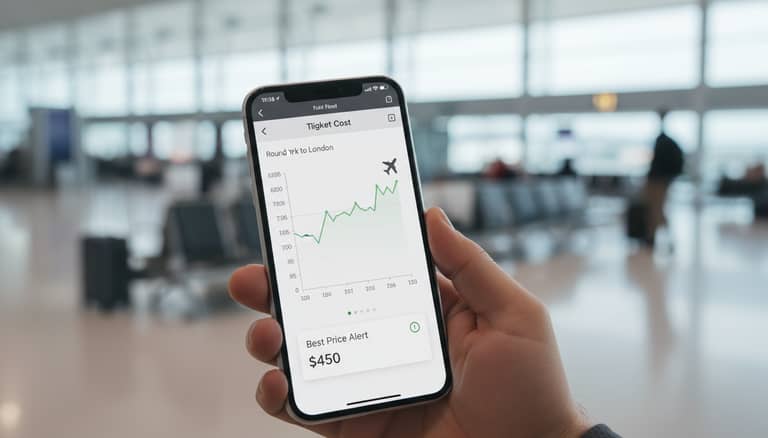
How Flight Ticket Cost Trackers Work Against Airlines in Real Time
Written with AI assistance under our editorial guidelines
Flight ticket cost trackers help travelers navigate increasingly volatile airfare markets, but their effectiveness remains contested. While algorithms promise to outsmart airlines through real-time price monitoring, airlines continue evolving their pricing strategies. Success depends on balancing active monitoring with psychological resilience against constant price fluctuations rather than any single tool guaranteeing savings.
It’s 2025, and scoring a cheap flight ticket is no longer just a frugal flex—it’s a full-blown psychological battleground. The days when you could rely on “Tuesday at midnight” wisdom are dead and buried, and now the war for affordable airfare is waged in real time by armies of algorithms, dopamine-addicted travelers, and AI overlords. Welcome to the world of the flight ticket cost tracker: a digital tool that claims to help you outsmart airlines, but—like everything else in travel—comes with its own set of harsh realities. This article is your no-holds-barred guide to the unvarnished truth about tracking flight ticket costs in 2025. We’ll rip the mask off industry secrets, reveal the emotional toll of price swings, and arm you with actionable tactics backed by real research, not rumor. Ready to see how deep this rabbit hole goes? Strap in, clear your cookies (or don’t), and let’s uncover what the airlines, apps, and so-called experts don’t want you to know.
The obsession with airfare: why tracking prices became a ritual
The rise of price paranoia
The simple act of booking a flight has mutated into a digital ritual of obsession, anxiety, and ritualistic checking. It starts innocently—one search, maybe two. But soon, you’re compulsively opening tabs at 2 a.m., eyes glazed, chasing a fare drop that may never come. According to recent research, airfare volatility exploded in 2023, with prices jumping 25%—the highest leap since 1989 (AInvest, 2025). The market’s wild swings, amplified by post-pandemic “revenge travel” and shrunken airline capacity (Boeing’s deliveries were down 53% in early 2024), have made deal hunting a high-stakes game. It's no wonder that specialized tools like flight ticket cost trackers have gone from nerdy travel hack to mainstream necessity.
"I refresh ticket prices daily, it's like a game I can't stop playing." — Alex

The emotional toll of price swings
The emotional rollercoaster of flight price tracking is real and relentless. Dopamine rushes when you spot a “deal,” frustration when it vanishes overnight, and regret when you buy too soon or too late. According to Scott Keyes of Going.com, “Airfare is the most volatile purchase we regularly make. Unlike groceries, prices swing wildly and unpredictably.” This volatility isn’t imagined: in 2023, load factors hit 91.5%, and in summer 2024, they only nudged down to 86.9% (Hopper, 2025). Flights are near full, deals are rare, and the need for a trustworthy flight ticket cost tracker has never been sharper.
| Day | Lowest Observed Price ($) | Highest Observed Price ($) | Emotional Impact |
|---|---|---|---|
| 1 | 350 | 390 | Cautious optimism |
| 7 | 330 | 420 | Dopamine spike |
| 15 | 370 | 470 | Panic, regret |
| 22 | 340 | 400 | Hope returns |
| 30 | 355 | 415 | Exhaustion |
Table 1: Timeline of NYC–LAX sample economy ticket price volatility over 30 days. Source: Original analysis based on NerdWallet, 2025, Hopper, 2025
From secret tips to mainstream obsession
Not long ago, tracking airfare was a niche sport for travel hackers and spreadsheet fanatics. Now, it’s practically a rite of passage for anyone leaving the country. The democratization of price trackers, powered by AI and mobile notifications, has changed the game. Where “insider tricks” once ruled, now every traveler has access to price graphs, fare history, and predictive analytics at the tap of a screen.
- Early notification access: Trackers tip you off to price drops before the competition, increasing your odds of snagging a deal.
- Fare prediction accuracy: Modern tools use AI models for real-time fare forecasts, reducing the guesswork.
- Multi-destination monitoring: Simultaneously track multiple routes and dates—vital for flexible travelers.
- Budget-friendly recommendations: Many platforms recommend alternative airports or dates to stretch your dollar.
- Decision support: Analytics help you decide when to book versus wait, cutting through noise and myth.
- Peace of mind: Automated alerts reduce FOMO (fear of missing out) and obsessive manual searches.
- Historical pricing context: See whether a “deal” is genuinely rare or just average by long-term standards.
Behind the curtain: how flight ticket cost trackers actually work
Decoding airline algorithms
Understanding the beast you’re battling requires a peek behind the curtain at airline pricing. Airlines deploy dynamic pricing strategies, leveraging complex revenue management systems to maximize profits on every seat, every day.
Airlines adjust fares in real time based on demand, competition, and remaining seats. Two travelers searching seconds apart can see wildly different prices.
Each seat on a plane belongs to a “fare class,” each with its own price and restrictions. Lower classes (i.e., cheaper seats) vanish first.
The art and science of squeezing every dollar by predicting what price a given traveler will pay. Airlines use historical data, seasonality, and booking patterns to optimize for profit.
Consider a simple example: 100 seats, 10 fare classes. As seats fill, lower fare classes sell out, and the price ratchets upward—often without any visible logic to the consumer. The result: volatile, opaque pricing that fuels the arms race between airlines and the travelers tracking them.
The tech stack: crawlers, APIs, and AI
Modern flight ticket cost trackers are marvels of digital engineering. Web crawlers scour airline and OTA (online travel agency) sites, feeding real-time data into APIs—application programming interfaces that serve up fare info efficiently. On top of this, artificial intelligence algorithms churn through mountains of data, predicting the next price swing and customizing alerts to your travel habits.
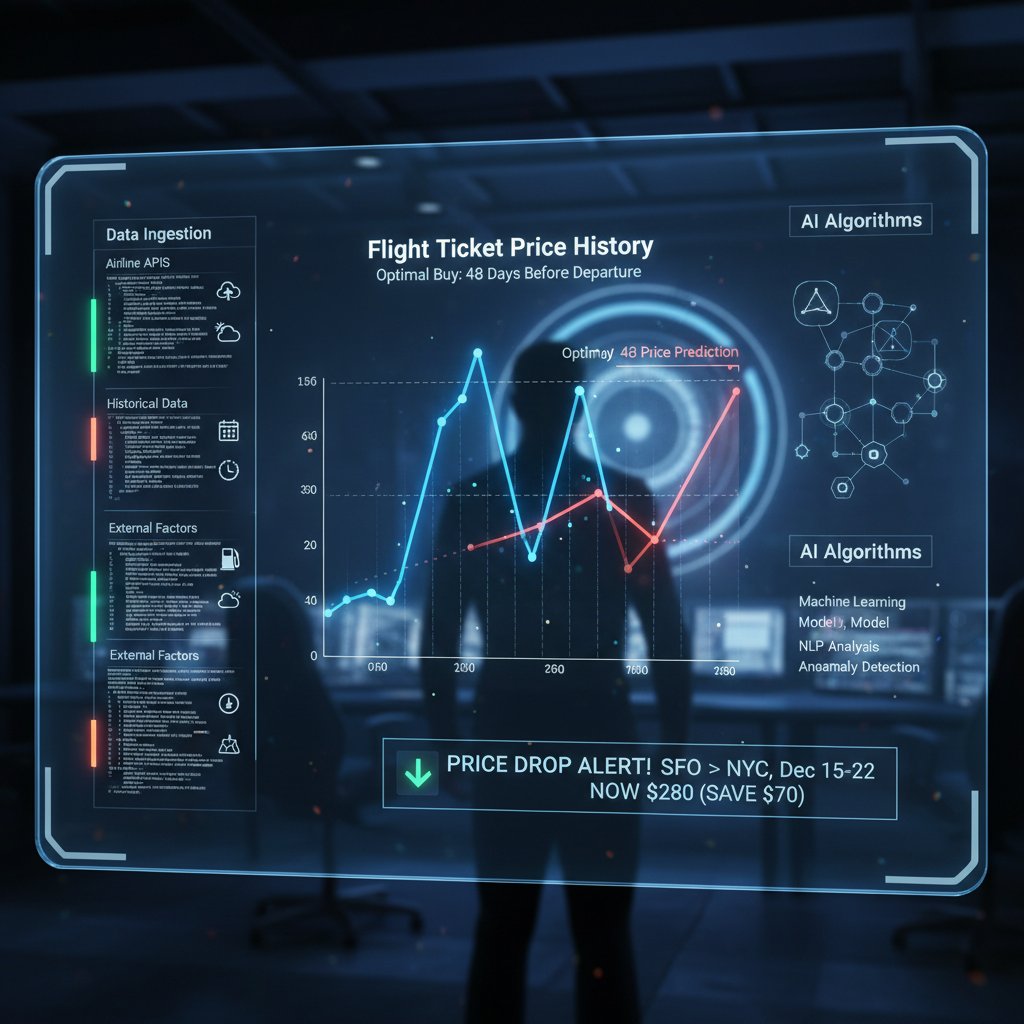
Platforms like futureflights.ai exemplify this next-gen approach—marrying advanced LLMs (large language models) with intuitive interfaces for a more insightful, less stressful user experience.
What most trackers won’t tell you
Here’s the dirty secret: no flight ticket cost tracker is perfect. There are blind spots, limitations, and outright red flags that most platforms gloss over.
- Data delays: Not all trackers update in real time; some lag by hours, rendering “fresh” alerts stale.
- Coverage gaps: Budget airlines, niche routes, and international carriers often block or restrict bots.
- Opaque algorithms: Many sites don’t disclose how they predict fares—resulting in black box advice.
- Privacy risks: Some trackers collect more personal data than you’d expect.
- False positives: Overzealous alerts can trigger on noise, not genuine deals.
- Hidden fees: Taxes and baggage fees might not be included in alerted prices.
- Inconsistent notifications: Some platforms bombard you with alerts, others leave you in the dark.
- Affiliate bias: Beware “sponsored deals” that aren’t the cheapest, just the most lucrative for the site.
The myth-busting zone: truths and lies about flight price tracking
Clearing cookies: urban legend or secret weapon?
Let’s put this to bed: the myth that clearing your browser cookies leads to cheaper flight prices is mostly outdated. According to a 2025 fare analysis by Hopper, airlines rely far more on dynamic IP, device fingerprinting, and real-time user segmentation than basic cookies. Your “incognito” booking session is a drop in the bucket compared to the ocean of data airlines wield.
"If only deleting cookies made flights cheaper—airlines are way ahead of that." — Jamie
The fallacy of “best day to buy”
Remember when everyone swore Tuesday was the golden day for cheap tickets? Welcome to 2025: data from NerdWallet and US Inflation Calculator shows there’s no longer a consistent “best day.” Airlines adjust prices throughout the week, often multiple times per day, based on demand and inventory, not the calendar.
| Weekday | Average Fare ($) | Lowest Fare ($) | Highest Fare ($) |
|---|---|---|---|
| Monday | 370 | 340 | 420 |
| Tuesday | 365 | 330 | 410 |
| Wednesday | 368 | 335 | 415 |
| Thursday | 372 | 345 | 425 |
| Friday | 369 | 338 | 418 |
| Saturday | 371 | 342 | 419 |
| Sunday | 370 | 340 | 422 |
Table 2: Average U.S. domestic airfare by booking weekday, April 2025. Source: Original analysis based on NerdWallet, 2025 and Hopper, 2025
No clear winner—just a fog of fluctuating prices.
Tracking overload: when the tool becomes the problem
There’s a dark side to relentless tracking. Decision fatigue, analysis paralysis, and missed opportunities plague those who obsessively monitor every blip. Multiple trackers, overlapping alerts, and endless incognito sessions can lead you to hesitate so long that you miss the best fare entirely.

Inside the machine: AI, LLMs, and the new era of price prediction
From guesswork to machine learning
The days of gut-feeling flight bookings are gone. Early price tracking relied on crude graphs or email alerts. Now, advanced AI and huge language models sift through billions of data points, identifying patterns invisible to humans. These systems adapt to new capacity constraints (like Boeing’s 53% drop in deliveries in early 2024) and global shocks with uncanny accuracy.

Research from AInvest, 2025 confirms that machine learning models are now the backbone of most accurate flight ticket cost trackers.
How LLMs personalize your fare alerts
Large language models (LLMs) are the secret weapon behind today’s most sophisticated price trackers. On platforms like futureflights.ai, LLMs crunch your preferences, search history, and unique travel quirks to deliver hyper-personalized fare recommendations.
- Sign up with preferences: The tool learns your airport, favorite airlines, seat types, and budget.
- Input your itinerary: Tell it where, when, and how you want to travel.
- Data collection: The platform monitors real-time fare data for your route.
- Pattern recognition: LLMs analyze historical trends and current market shifts.
- Customized alerts: You get notifications only when deals match your criteria.
- Decision support: The AI explains whether to book now or wait, based on real trends.
- Booking integration: Seamlessly jump from alert to checkout without juggling tabs.
The risks: privacy, bias, and data manipulation
AI-powered ticket cost trackers come with real risks. Feeding a platform your search history, travel preferences, and booking habits can create a privacy minefield. Worse, algorithmic bias can skew recommendations—overlooking outlier deals or favoring certain partners.
"AI can predict prices, but it can also learn your habits—double-edged sword." — Morgan
Always vet what data your chosen tracker collects, how it uses your info, and whether it truly serves your interests.
The traveler’s playbook: actionable tactics for real savings
Mastering notifications and alerts
The difference between a helpful alert and a digital migraine? Smart configuration. Setting up effective notifications can save you both money and mental bandwidth.
- Prioritize routes: Only track flights you realistically plan to book.
- Set budget thresholds: Receive alerts for fares below your target price.
- Choose alert frequency: Daily, weekly, or real-time—don’t drown in noise.
- Filter by stops and layovers: Tailor notifications to your comfort.
- Exclude specific airlines: Avoid carriers you dislike.
- Flag flexible dates: Alerts for surrounding dates can snare surprise deals.
- Silence expired routes: Turn off alerts for past trips.
- Review alert quality: Adjust settings if you get too many false alarms.
- Sync with calendar: Integrated reminders reduce last-minute stress.
- Opt for in-app over email: Push notifications get your attention faster.
Combining tools for the edge
No one tracker has a monopoly on great fares. The savviest travelers layer cost trackers, incognito searches, and smart timing to maximize their edge. For instance, using futureflights.ai in tandem with another reputable platform can expose hidden discrepancies and rare deals.
| Tracker Name | Accuracy | Speed | Privacy | Alert Options |
|---|---|---|---|---|
| FutureFlights.ai | High | Fast | Strong | Push, Email, App |
| Hopper | Medium | Fast | Moderate | Push, Email |
| Google Flights | Medium | Fast | Strong | Email, App |
| Kayak | Medium | Medium | Moderate | Email, App |
| Skyscanner | Medium | Medium | Moderate |
Table 3: Feature matrix comparing top flight ticket cost trackers in 2025. Source: Original analysis based on publicly available platform information.
When to ignore the tracker and just book
Sometimes, the best move is to silence your inner tracker and pull the trigger. Overtracking can cost you more—emotionally and financially.
- Booking for holidays or peak events: Last-minute deals are a fantasy—prices climb the closer you get.
- Scarce routes: If only one airline flies your route, book early.
- Using miles or points: Award seats often vanish early; don’t risk it.
- Group travel: Limited seats at low fares mean waiting equals paying more.
- Visa or travel restrictions: Book as soon as plans firm up to avoid sudden price hikes.
- Time-sensitive trips: If your schedule is rigid, don’t gamble for a mythical drop.
Stories from the battlefield: wins, losses, and lessons learned
Alice vs. the fare jump: a case study
Alice thought she had cracked the code—tracking a transatlantic ticket for weeks, eyes glued to her cost tracker graph. Then, overnight, her $520 dream fare shot up to $770. She waited, hoping for a dip that never came. The result: an expensive lesson in overtracking, and a stark reminder that sometimes, the lowest fare is the one you see today.

Victory stories: beating the algorithm
Not every tracker tale ends in regret. Daniel set a price alert, ignored it for a week, and woke up to a $300 drop on his planned route.
"I set my tracker and forgot about it—landed a fare $300 cheaper." — Daniel
These stories highlight the unpredictable, often arbitrary nature of airfare, but also the power of letting smart tools do their work—without micromanaging every uptick.
The hidden price: what’s your time and sanity worth?
It’s tempting to see only the dollars saved, but every hour spent compulsively tracking is an hour lost to decision fatigue.
| Cost Component | Value Gained | Value Lost |
|---|---|---|
| Money saved on fare | $50-300 | |
| Time spent tracking | 5-10 hours | |
| Emotional stress | High | |
| Missed opportunities | Occasional (missed deals) |
Table 4: Cost-benefit analysis of aggressive flight tracking. Source: Original analysis based on NerdWallet, 2025 and user testimonials.
Global game: how ticket tracking differs worldwide
Regional rules: why location changes everything
Airfare tracking isn’t a universal game. Country, currency, and regulation all shape the field. In the EU, strict consumer protection rules offer more price transparency, while in the U.S., fierce competition and anti-bot tactics favor last-minute swings. Emerging markets may lack comprehensive data, limiting the effectiveness of global trackers.

Currency swings and market shocks
Exchange rates, oil prices, and geopolitical disruptions can upend even the most advanced price tracker. According to Nasdaq, 2024, the strong dollar, ongoing supply chain issues, and regional conflicts have all shifted fare landscapes in the past decade.
- COVID-19 pandemic (2020): Triggered industry-wide volatility.
- Post-pandemic “revenge travel” (2022): Demand surge outpaced capacity.
- Boeing 737 MAX groundings (2019–2024): Reduced global supply.
- Oil price spikes (2022, 2024): Raised operating costs, hiked fares.
- Russian airspace restrictions (2022–2025): Re-routed, longer flights.
- U.S. inflation surge (2023): Domestic prices soared.
- Currency devaluations (Argentina, Turkey): Local fares fluctuated wildly.
- Europe’s new emissions taxes (2024): Added costs to all tickets.
The future is now: what’s next for flight ticket cost tracking?
The AI arms race: trackers vs. airlines
The arena is crowded with players: airlines tweaking their algorithms to outmaneuver trackers, and trackers developing smarter AI to predict and expose deals. It’s an endless cat-and-mouse game—each side evolving, each side raising the stakes.

Personalization or manipulation? The new frontier
Hyper-personalization is both a blessing and a curse. While AI-driven customization delivers uncanny recommendations, it also opens the door to algorithmic manipulation—showing you not the best fare, but the one you’re most likely to buy.
The process by which AI tailors content and offers to individual users, often using personal data and real-time behavior.
The subtle (or not-so-subtle) steering of users based on proprietary algorithms; sometimes in the user’s favor, sometimes not.
The ethical gray zone is here. As a traveler, you must decide how much personal data to share, and how much trust to grant opaque systems.
How to stay ahead: skills for the next-gen traveler
To win the airfare game in 2025, you need more than an app—you need a mindset.
- Skepticism: Don’t take every alert at face value—vet with secondary sources.
- Patience: Give trackers time to surface genuine deals.
- Flexibility: The more routes and dates you can handle, the more you’ll save.
- Curiosity: Stay updated on global events impacting fares.
- Discipline: Know when to book—and when to walk away.
- Privacy awareness: Adjust settings to limit unnecessary data sharing.
- Analytical thinking: Read fare trends critically, not emotionally.
- Automation mastery: Configure alerts to work for you, not against you.
- Community engagement: Share your findings, learn from others.
The hard truth: when to trust, when to walk away
Recognizing tracker fatigue and decision paralysis
The greatest danger isn’t paying $20 too much. It’s the spiral into obsessive tracking, endless second guessing, and joyless trip planning. When you find yourself measuring the worth of every hour spent in front of fare graphs, it’s time to step back.

Cutting through the noise: expert takeaways
Here’s what matters, stripped of hype:
- Accept volatility: Airfare is unpredictable; use trackers as a guide, not gospel.
- Set clear thresholds: Decide your max fare, and book when you see it.
- Limit your tools: Too many trackers create confusion, not clarity.
- Monitor responsibly: Schedule time for fare checks—don’t make it your life.
- Trust, but verify: Cross-check alerts before acting.
- Respect your data: Opt for platforms with strong privacy policies.
- Book for you: Don’t let FOMO override solid, timely decisions.
Where to go from here: resources and next steps
Ready to level up your airfare game? Here’s your next move.
- Explore leading AI-driven trackers like futureflights.ai for predictive power and personalized insights.
- Join travel hacker forums to swap tips and stay sharp.
- Subscribe to fare trend newsletters for context you won’t get from one tracker.
- Read up on airline revenue management for deeper understanding.
- Test multiple tracker tools—find the one that fits your rhythm and privacy needs.
- Remember: no tool replaces good judgment. Sometimes, the best action is to close your laptop and book the damn ticket.
Final thoughts
Flight ticket cost trackers have democratized airfare hunting, turning every traveler into a mini-analyst and every booking into a battle of wits. Yet with great power comes great responsibility—and a serious risk of losing your mind amid the noise. Use technology as a tool, not a crutch; combine skepticism, patience, and privacy savvy for the best results. The price-tracking arms race will rage on, but with the right tactics and a clear head, you can ride the volatility, seize the real deals, and reclaim the joy of the journey. For the next level in smart travel, platforms like futureflights.ai offer a glimpse into the future—where AI does the heavy lifting, and you, the traveler, are back in control.
Sources
References cited in this article
- AInvest, 2025(ainvest.com)
- Nasdaq, 2024(nasdaq.com)
- NerdWallet, 2025(nerdwallet.com)
- Hopper, 2025(media.hopper.com)
- US Inflation Calculator, 2025(usinflationcalculator.com)
- Thrifty Traveler(thriftytraveler.com)
- Simple Flying(simpleflying.com)
- Medium(medium.com)
- AirTrackBot(airtrackbot.com)
- The National News(thenationalnews.com)
- Business Insider(businessinsider.com)
- OAG Survey 2024(oag.com)
- CNBC(cnbc.com)
- Medium(mayurashinde.medium.com)
- SmarterTravel(smartertravel.com)
- AirTrackBot(airtrackbot.com)
- MightyTravels(mightytravels.com)
- Forbes(forbes.com)
- The Week(theweek.in)
- Expedia 2025 Air Hacks Report(prnewswire.com)
- MightyTravels(mightytravels.com)
- Kayak(kayak.com)
- Mindtitan(mindtitan.com)
- iMean.ai(imean.ai)
- Predibase(predibase.com)
- Journal of Engineering Sciences, 2024(jespublication.com)
- Fetcherr Blog(fetcherr.io)
- Springer ICDAI 2023(link.springer.com)
- ABA Business Law Today(businesslawtoday.org)
- Gibson Dunn(gibsondunn.com)
- MightyTravels(mightytravels.com)
- Expedia(expedia.com)
- CNBC Select(cnbc.com)
- NerdWallet(nerdwallet.com)
- MightyTravels(mightytravels.com)
- Going.com(going.com)
- MightyTravels(mightytravels.com)
- MightyTravels(mightytravels.com)
- SmartAsset(smartasset.com)
- LendingTree(lendingtree.com)
Discover Flights Beyond Imagination
FutureFlights.ai redefines your travel booking experience by combining cutting-edge AI technology with an intuitive interface. Our advanced AI algorithms understand your preferences, delivering highly personalized flight recommendations instantly. Say goodbye to tedious searches and generic results—FutureFlights.ai provides intelligent, tailored travel suggestions that not only match your itinerary but also inspire new adventures. Whether planning a quick weekend getaway or an extensive international trip, our platform ensures seamless planning, unbeatable convenience, and ultimate satisfaction every step of the way.
Get startedReady to Discover Your Next Adventure?
Experience personalized flight recommendations powered by AI
Frequently Asked Questions
What caused airfare prices to become so volatile in recent years?
According to the article, airfare volatility exploded in 2023 with prices jumping 25%—the highest leap since 1989. This was driven by post-pandemic 'revenge travel' and shrunken airline capacity, with Boeing's aircraft deliveries down 53% in early 2024.
Why do people compulsively check flight prices repeatedly?
The article describes price tracking as a ritual driven by dopamine rushes when spotting deals, combined with the fear of missing out as prices swing unpredictably. This has created an addictive checking behavior, with some travelers compulsively opening tabs at 2 a.m. searching for fare drops.
Is the 'Tuesday at midnight' rule for booking cheap flights still valid?
No, according to the article, 'the days when you could rely on "Tuesday at midnight" wisdom are dead and buried,' as the competition for affordable airfare is now waged in real time by algorithms and AI rather than following predictable patterns.
What emotional impact does tracking flight prices have on travelers?
The article describes the emotional toll as 'a real and relentless' rollercoaster involving dopamine rushes when spotting deals, frustration when prices vanish overnight, and regret about buying too soon or too late.
More Articles
See more from Intelligent flight search

Plane Ticket Price Trackers: How They Work and Their Limits
Plane ticket price trackers promise to expose airline pricing secrets. This article explains how these tools work, their limits, and what actually influences airfare costs.

Flight Price Tracker Vs Airline Algorithms: Who Really Wins?
Flight price trackers use AI to hunt cheap flights, but airlines employ their own algorithms to counter them. This article examines the real dynamics of the competition.

How Airlines Set Flight Ticket Cost Trends Using Algorithms
Flight ticket cost trends involve complex algorithms and data-driven strategies. This article explains how airlines set prices, why fares shift overnight, and what shapes ticket costs.

Flight Cost Tracking: How Tools Work and What Saves Money
Flight cost tracking reveals how airline pricing changes throughout the day. This article explains what tracking tools can and cannot do, backed by data.

Flight Ticket Price Tracker Apps: How Airline Pricing Really Works
Flight ticket price tracker apps operate within volatile airline systems shaped by psychology and hidden algorithms.

Air Ticket Fare Tracker Vs Airline Ai: Who Really Wins on Price?
Air ticket fare tracker tools compete with airline algorithms to set prices. This article explains how airlines use dynamic pricing and what trackers can and cannot reveal.


