

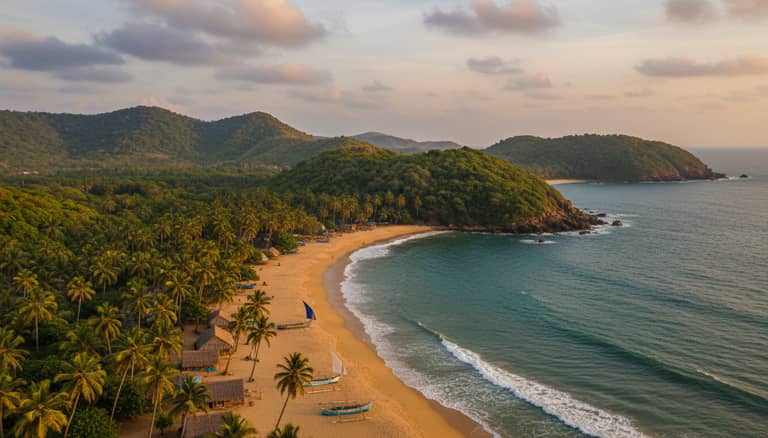
Lesser-Known Travel Destinations: What Authenticity Means Now and How to Find It
Written with AI assistance under our editorial guidelines
Once-hidden travel destinations rapidly lose their appeal after going viral on social media and influencer platforms. Research shows places like Hallstatt, Austria and Chefchaouen, Morocco experienced visitor explosions following digital exposure, transforming them from tranquil escapes into overcrowded tourist zones with inflated prices and cultural degradation. The challenge for 2026 travelers is finding genuine undiscovered places before algorithms and hashtags destroy their authenticity.
Forget every listicle that promised you “hidden gems.” In 2025, the world is mapped, hashtagged, and algorithmically dissected—yet the hunger for lesser-known travel destinations pulses stronger than ever. What’s left to discover when every cobblestone alley and deserted shoreline hits your feed before your passport even gets stamped? This isn’t just about wanderlust—it’s a raw reckoning with travel’s underbelly: the Instagram effect, ethical dilemmas, and the always-moving finish line of authenticity. In this no-holds-barred journey, we’ll dissect what “undiscovered” even means now, expose the pitfalls of the off-grid chase, and hand you the real tactics (and warnings) for breaking free from the tourist herd. If you’re tired of reruns masquerading as adventure, brace yourself. The world’s best-kept secrets aren’t where you think—and sometimes, they’re best left alone.
Why the myth of hidden gems is failing us
The rise and ruin of the once-unknown
Once upon a time, discovering a windswept Greek island or a mist-shrouded Japanese mountain village felt like winning the travel lottery. Today, the real jackpot seems to be “going viral”—and it comes with a curse. Instagram’s geotags, viral listicles, and travel influencers have transformed once-undiscovered corners into the latest selfie backdrops, often overnight. According to research from Forbes Travel Guide, 2024, destinations like Sedona, Arizona, and Petra, Jordan have seen explosive visitor growth following digital exposure, shifting from tranquil escapes to bustling tourist magnets.
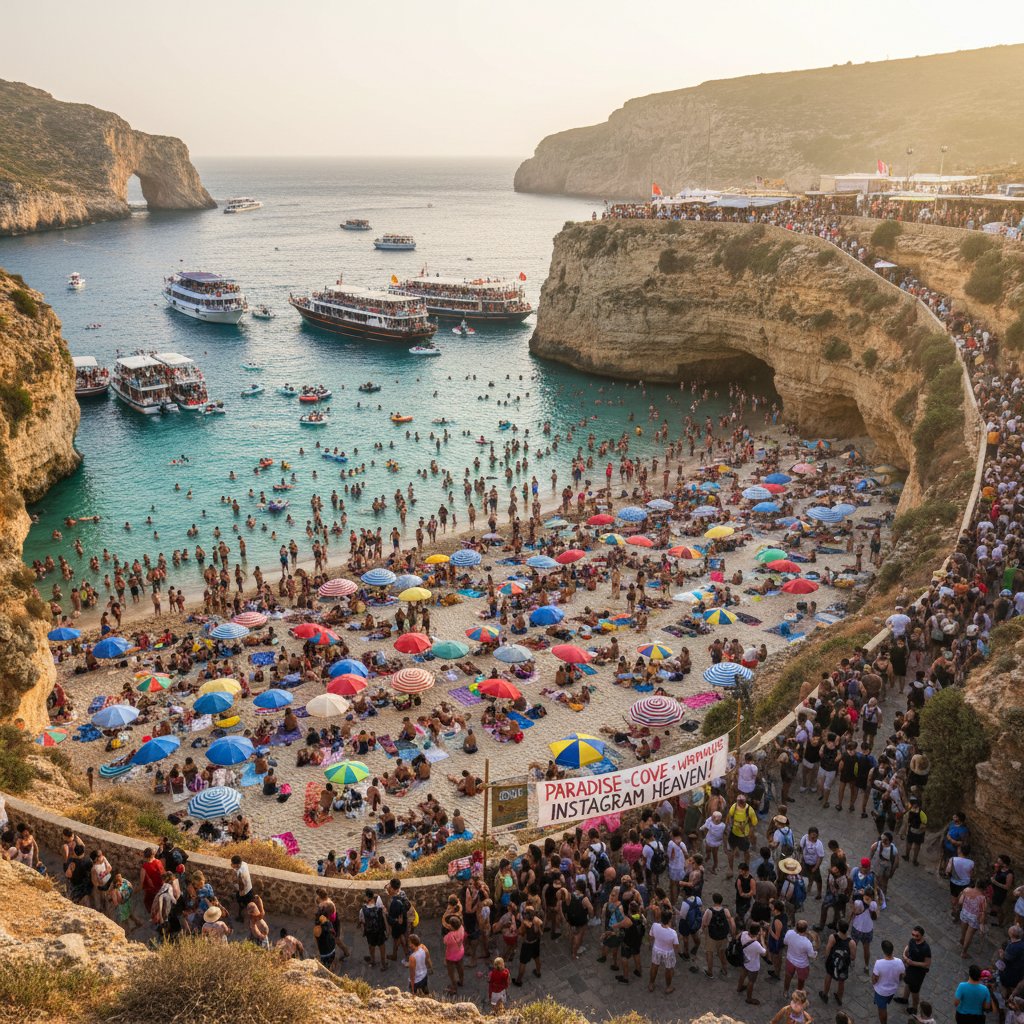
“The moment a place goes viral, it’s never the same again.” — Elena
For perspective, here’s a timeline showing just how quickly 'hidden gems' can unravel:
| Destination | Year “Discovered” | Pre-viral Visitors/Year | Post-viral Visitors/Year | Impact |
|---|---|---|---|---|
| Hallstatt, Austria | 2014 | 60,000 | 1,000,000+ | Overcrowding, local protests |
| Chefchaouen, Morocco | 2016 | 20,000 | 200,000+ | Price spikes, loss of local culture |
| Naxos, Greece | 2019 | 35,000 | 120,000 | Hotel boom, beach erosion |
| Jiufen, Taiwan | 2017 | 50,000 | 700,000+ | Infrastructure under stress |
| Sedona, Arizona | 2022 | 2 million | 3.5 million | Traffic congestion, habitat impact |
Table 1: Timeline of ‘hidden gems’ becoming mainstream and the consequences.
Source: Original analysis based on Forbes Travel Guide, 2024, BBC Travel, 2025.
The emotional backlash among seekers of authenticity is palpable. What once felt intimate now smacks of déjà vu. Travelers vent their frustration as even remote havens morph into Instagram playgrounds, chasing likes rather than life-changing moments. The “hidden gem” narrative, once a lifeline for wanderers, teeters on the brink of cliché.
How ‘off the beaten path’ became a marketing cliché
The phrase “off the beaten path” once conjured images of windswept cliffs, remote villages, and the thrill of stumbling upon something truly unspoiled. Now? It’s splashed across every travel ad, blog, and influencer’s bio, stripped of meaning and weaponized as a marketing tool. According to research from CNBC, 2025, more than half of trending summer destinations are marketed as “hidden” or “secret,” despite being well-documented.
Here are seven red flags that a travel pitch is more manufactured than mysterious:
- “Secret” revealed in a viral video: If everyone’s watching it, the secret’s out.
- Buzzwords overload: “Hidden,” “off-grid,” “undiscovered” repeated ad nauseam signals a sales pitch.
- Package tours to ‘unknown’ spots: If there’s a cruise, it’s not undiscovered.
- Instagrammable hotspots list: If a location trends on social media, expect company.
- Influencer ‘collaborations’: Brand partnerships hint the path is anything but unbeaten.
- Hotel/Resort booms: Rapid development usually follows viral exposure.
- Cliché stories of “locals only”: If you’re reading about it, it’s not just for locals anymore.
Travelers crave uniqueness yet find themselves funneled through identical “secret” experiences, guided more by algorithms than serendipity. The quest for originality has been commodified, with digital breadcrumbs leading millions down the same “unbeaten” tracks.
Defining lesser-known: What does ‘undiscovered’ even mean in 2025?
The data: Are these places really unknown?
Peel back the marketing and the numbers tell a stark story. Mastercard’s 2024 travel report highlights a 30% year-on-year surge in bookings to so-called “lesser-known” regions across Asia and Europe. Similarly, Google Trends reveals that searches for “hidden gem travel” have tripled since 2020, while corresponding Instagram hashtags escalate into the millions.
| Destination Type | Avg. Google Searches/Month | Instagram Hashtags | Actual Visitors/Year |
|---|---|---|---|
| Santorini, Greece | 250,000 | 7.5M | 2,000,000 |
| Naxos, Greece | 22,000 | 195k | 120,000 |
| Sedona, Arizona | 90,000 | 1.2M | 3,500,000 |
| Dominica, Caribbean | 15,000 | 80k | 75,000 |
| Niseko, Japan | 8,000 | 60k | 100,000 |
Table 2: Comparison of digital trends for 'hidden' vs. mainstream destinations.
Source: Original analysis based on Mastercard, 2024, Google Trends, 2025, [Instagram, 2025].
The perception and reality of discovery rarely align. A spot might be “lesser-known” in global consciousness but already saturated in digital presence and on the ground. The metrics reveal that the line between “secret” and “mainstream” is blurred at best, and often outright fictional.
Local perspective: When ‘discovery’ feels like invasion
For locals, the sudden onslaught of outsiders can feel less like economic boon and more like a siege. As one resident, Anya, of a newly popular Eastern European town put it:
“We were invisible, and then overnight—everyone showed up.” — Anya
The ripples are profound: housing prices spike, traditions morph for tourist tastes, and once-quiet streets buzz with foreign chatter. Local economies may boom, but so do resentments and struggles for cultural preservation. According to BBC Travel, 2025, communities in places like Dominica and Tamuda Bay are grappling with these rapid changes, balancing opportunity with the erosion of identity.
The ethics of exposing secret spots
Sharing or gatekeeping “secret” places is an ethical minefield. Is it noble to preserve a place by silence, or elitist to deny others the same joy of discovery? The answer is rarely clear-cut, but responsible sharing is non-negotiable in today’s travel landscape.
- Assess impact before you post: Will your tips accelerate overtourism or support sustainable growth?
- Credit local sources: Give visibility to local guides, creators, and businesses—don’t erase them.
- Avoid sensitive details: Don’t geotag or reveal fragile locations publicly.
- Share context, not just photos: Offer history and etiquette, not just pretty imagery.
- Promote responsible behavior: Encourage sustainable, low-impact travel practices.
- Support local economies mindfully: Choose businesses and experiences that give back.
The golden rule? Do no harm. If your discovery could damage what made a place special, think twice about amplifying it.
How to actually find lesser-known travel destinations in 2025
Insider strategies: Beyond Google and Instagram
The real explorers don’t follow hashtags; they dig deeper. Pro travelers rely on obscure forums, digitized archives, historical travel logs, and niche community guides—places where algorithms don’t rule and authenticity hasn’t been polished away for public consumption.
Unconventional sources for finding hidden destinations:
- Specialized travel forums: Old-school, text-based communities like Thorn Tree or niche Reddit subs often surface spots years before the mainstream catches on.
- Academic research and field studies: University travelogues and anthropological studies document locations untouched by tourism.
- Historical archives: Old maps, ship logs, and regional histories reveal forgotten trade routes and settlements.
- Local language blogs: Skip English—search in the local tongue for spots the global web hasn’t scraped.
- Expat newsletters: Those who live abroad tend to have treasure troves of non-touristy tips.
- Geo-tagged satellite imagery: Tools like Google Earth unmask beaches and valleys absent from travel media.
- NGO and conservation reports: Wildlife corridors and ecological surveys often identify pristine, off-limits sites.
- Small publisher guidebooks: Printed in tiny runs, these often predate digital exposure.
Recently, AI-driven tools like futureflights.ai are shaking up the landscape, surfacing destinations based not just on popularity but by analyzing nuanced preferences, overlooked flight paths, and obscure travel patterns. This moves the needle beyond mere trend-chasing, injecting genuine discovery back into the hunt.
The new power of AI in travel discovery
Large Language Models (LLMs) and intelligent flight search platforms are fundamentally altering travel discovery. Instead of brute-force keyword matching, these systems parse your intent, cross-reference behavioral data, and propose destinations that might never have made page one of a search engine. A recent comparison underscores just how stark the difference is:
| Feature | Traditional Search | AI-Driven Discovery |
|---|---|---|
| Results Curation | Popular spots | Personalized, niche |
| Source Diversity | Limited | Multilingual, global |
| Context Sensitivity | Low | High |
| Bias Toward Trends | Yes | Reduced |
| Route Optimization | Manual | Automated, intelligent |
| Local Insights | Minimal | Embedded via data |
Table 3: Feature matrix—traditional search vs. AI-powered travel discovery.
Source: Original analysis based on platform testing and Mastercard, 2024.
But beware: the algorithmic echo chamber is real. If you only feed the machine what’s trending, you’ll get more of the same. Human curiosity—and a willingness to deviate from the script—remains your most potent tool.
Meet the anti-tourists: First-person stories from the edge
From abandoned islands to post-Soviet towns
Picture stepping off a battered fishing boat onto a fog-wrapped island, the only sounds your own footsteps and the distant echo of seabirds. That’s not the beginning of a Netflix docuseries—it’s the real journey of an anti-tourist, seeking out the places most travelers never will. These islands, sometimes entirely uninhabited, offer silence so complete it’s almost unsettling.

Then there’s Marcus, a digital nomad who spent weeks in a decaying post-Soviet town on the edge of nowhere:
“It felt like the end of the earth, and I loved it.” — Marcus
For these travelers, the lure isn’t just solitude but the richness of forgotten stories and raw, uncurated reality.
When things go wrong: The risks and rewards
Of course, the edge isn’t for everyone. One traveler’s misadventure: stuck overnight in a remote Japanese mountain village after the last bus left, no English spoken, phones dead, and only basic survival skills standing between comfort and catastrophe.
How to stack the odds in your favor? Here’s a seven-point risk checklist for off-the-map travel:
- Research transport options in advance: Confirm schedules—don’t trust assumptions.
- Check weather and terrain alerts: Remoteness often means volatile conditions.
- Learn basic local language phrases: Communication failures can escalate risk.
- Carry backup navigation tools: GPS isn’t foolproof; pack analog maps.
- Know emergency contact protocols: Save embassy and local rescue numbers.
- Prepare for limited connectivity: Offline maps, physical cash, and power banks are essential.
- Respect local customs and restrictions: Ignorance isn’t an excuse—research etiquette and regulations first.
Preparation transforms potential disaster into a story worth telling—and ensures both your safety and respect for the places you visit.
The real cost of going off the beaten path
Budget vs. experience: Surprises you should expect
Contrary to the myth, going off-grid can torch your budget. Remote destinations often mean pricier, less frequent flights, a dearth of budget lodging, and inflated local costs due to scarcity or lack of tourist infrastructure. According to recent data from AAA Trip Canvas, 2025, travelers to places like Dominica or Tamuda Bay spend up to 40% more than those visiting mainstream destinations, once hidden transport and supply expenses are factored in.
| Expense Type | Mainstream Destinations | Off-grid Destinations | Notes |
|---|---|---|---|
| Flights | $300–$600 | $500–$1200 | Fewer connections, less competition |
| Lodging | $60–$180/night | $90–$250/night | Scarcity, lack of hostels |
| Food | $20–$50/day | $35–$90/day | Import costs, limited options |
| Local Transit | $15–$40/day | $40–$100/day | Taxis, private drivers often necessary |
Table 4: Mainstream vs. off-grid travel cost comparison.
Source: Original analysis based on AAA Trip Canvas, 2025.
The savvy traveler learns when to splurge (on safe, reliable transport and unique local experiences) and when to save (by traveling in shoulder seasons, self-catering, or embracing homestays). The bottom line: the price of authenticity isn’t always cheap—but often, it’s worth every cent.
Environmental and cultural price tags
The environmental and cultural toll can far exceed your wallet’s burden. When a new place is “discovered,” fragile ecosystems and traditional ways of life can be quickly imperiled. According to BBC Travel, 2025, the sudden influx of outsiders brings unintended consequences:
- Resource depletion: Water and energy stretched to the brink.
- Waste management strain: Inadequate facilities buckle under new loads.
- Cultural commodification: Traditions morph to cater to tourist tastes.
- Wildlife disruption: Sensitive habitats disrupted by foot traffic and pollution.
- Real estate inflation: Locals priced out of their own communities.
- Loss of privacy: Once-quiet places lose their sense of safety and sanctuary.
The antidote? Mindful travel—choosing operators that give back, minimizing waste, respecting local customs, and choosing experiences that leave more than money behind.
Debunking myths and misconceptions about secret travel spots
Myth #1: Lesser-known means safer or better
Some believe that the absence of crowds guarantees safety and quality. The truth? Remote doesn’t always mean risk-free—it can mean the opposite. Lesser-known places may have limited medical care, unreliable infrastructure, and a lack of emergency response.
“Safety is about preparation, not popularity.” — Diego
Consider the winding, guardrail-free roads of Sardinia’s interior, or the sudden storms on Japan’s northern coast. The unexpected is the only constant. Real-world challenges—language barriers, transport strikes, and medical emergencies—are far more acute off the grid.
Myth #2: Nobody else will be there
The fantasy of solo exploration often evaporates on arrival. Many “hidden gems” are now magnets for niche communities: drone photographers, digital nomads, or Instagram micro-influencers. According to recent visitor surveys, places like Naxos and Sedona now bustle with travelers chasing the illusion of solitude.
Five signs your ‘hidden gem’ isn’t hidden any longer:
- Wi-Fi and coworking spaces abound: Digital nomad hotspots attract a steady crowd.
- Social media check-ins spike: Spot floods Instagram, TripAdvisor, and Google Maps.
- Tour groups arrive: If buses or guided groups are present, privacy is gone.
- Local prices inflate: “Hidden” status ends when menus and shops multiply.
- Construction cranes: Rapid resort or Airbnb growth means the secret is out.
Recalibrate your expectations: The magic isn’t always in solitude, but in meaningful encounters and mindful exploration—even in places shared by others.
The future of discovery: Will AI ruin or rescue the unknown?
Tech’s double-edged sword for travel
AI and data mining now dissect the world’s surface with precision once reserved for cartographers and explorers. LLMs parse travel desires, identify trending routes, and even predict the next “it” spot before you do. Flight search platforms like futureflights.ai harness these powers to deliver hyper-personalized suggestions, marrying your preferences with fresh data from across the globe.

But there’s a shadow to this innovation: the very algorithms that reveal the new can also accelerate its demise, funneling more explorers into the same “secret” places. It falls on platforms—futureflights.ai included—to promote responsible discovery and emphasize ethical, sustainable travel over mere trend-chasing.
How to stay ahead of the next trend wave
If you’re determined to stay a step ahead, strategy is everything. Here’s a nine-step guide to future-proofing your travel discovery:
- Ditch mainstream lists: Start with obscure sources and languages.
- Monitor non-English social channels: Trends break in local circles first.
- Set up Google Alerts for niche keywords: Catch new mentions early.
- Use AI to surface overlooked flight routes: Tap into alternative airports and regional carriers.
- Network with seasoned travelers: Offline tips beat digital noise every time.
- Read local news: Infrastructure changes signal new access.
- Stay flexible: Be ready to pivot when crowds catch up.
- Travel off-season: Beat both the rush and the hype.
- Practice humility: Embrace the unknown, accept surprises, and respect both place and people.
Curiosity, not just technology, is still the traveler’s sharpest tool.
Practical guide: Planning your trip to a lesser-known destination
Essential checklist: Are you ready to go off-grid?
Preparation is the ultimate safety net when going where maps blur and cell signals die. Here’s your 10-step checklist for venturing into the unknown:
- Research geopolitical stability: Check travel advisories and recent news.
- Secure comprehensive insurance: Cover medical, evacuation, and cancellations.
- Download offline resources: Maps, phrasebooks, and emergency contacts.
- Arrange pre-arrival logistics: Confirm key transport and lodging in advance.
- Plan cash access: ATMs may be scarce; bring backup funds.
- Pack medical essentials: First aid, prescriptions, and water purification supplies.
- Learn local customs: Understand etiquette, taboos, and dress codes.
- Notify embassies/family: Share your itinerary and check-in protocols.
- Pack for self-sufficiency: Food, power, navigation, shelter.
- Prepare for no connectivity: Embrace the digital detox and plan accordingly.
Don’t overlook government permits, vaccination requirements, or last-mile transport—oversights here can unravel your entire journey.
Quick-reference: What to pack, expect, and respect
Packing for the unknown means prioritizing versatility, safety, and cultural sensitivity.
- Multitool/Swiss Army knife: Versatile for everything from repairs to meal prep.
- Portable power bank: Lifesaver when power grids are unreliable.
- Water filtration device: Essential in regions with suspect water quality.
- Lightweight rain jacket: Weather can shift in a heartbeat.
- Translation app or phrasebook: Break language barriers fast.
- Local currency in small denominations: Many vendors don’t accept cards.
- Respectful clothing: Modesty or local tradition may require covered shoulders, headscarves, or closed shoes.
Always err on the side of respect: observe how locals behave, ask questions, and never assume your norms travel with you.
Definition list: Travel terms you need to know
-
Overtourism
The phenomenon where an influx of visitors exceeds a destination’s capacity, causing socio-environmental strain. -
Shoulder season
The period between a location’s high and low tourist seasons; often less crowded and more affordable. -
Geo-tagging
Adding digital location data to photos or posts, which can inadvertently expose fragile spots to mass tourism. -
Homestay
Accommodation within a local’s home, offering cultural immersion and often supporting the community directly. -
Slow travel
Prioritizing depth of experience over ticking boxes, often involving longer stays and deeper engagement. -
Leave No Trace
A set of principles urging travelers to minimize their environmental and social footprint. -
Digital nomad
Someone who works remotely while traveling, often shaping demand for new, “hidden” destinations. -
Sustainable tourism
Traveling in ways that conserve resources, protect culture, and give back more than you take.
Mastering this lingo isn’t just about sounding savvy. It’s armor against missteps and a key to reading between the guidebook lines.
The ultimate list: 13 lesser-known travel destinations to watch now
From the Arctic Circle to forgotten deserts
Ready to break away for real? Here are 13 handpicked, legitimately lesser-known travel destinations, each with a vivid snapshot, best time to visit, and a hard-earned warning or tip:
- Nafplio, Greece: Venetian architecture, serene seafronts, and zero cruise ships. Visit in spring for wildflowers; watch for midday heat.
- Killarney, Ireland: Misty lakes, ancient woods, and fewer crowds than Irish staples. Early autumn is sublime; rain gear is non-negotiable.
- Sedona, Arizona: Red rocks and mystical energy, minus Grand Canyon mobs. March/April is cool and quiet; beware monsoon flash floods.
- Portsmouth, New Hampshire: Colonial charm, indie art, and river sunsets. Late summer is festival season; parking is scarce.
- Naxos, Greece: Quieter than Santorini, with wide beaches and mountain villages. May/June for fewer tourists; bring cash.
- Dominica, Caribbean: Whale sanctuaries and volcanic hikes, not resorts. Winter is whale season; island roads are treacherous.
- Tamuda Bay, Morocco: New luxury meets pristine sands, minus the Marrakech bustle. September is ideal; local customs require modest dress.
- Sardinia, Italy: Wild interiors, turquoise coves, and Nuragic ruins. June or September for balance; car rental essential.
- Niseko, Japan: Powder snow, hot springs, and honest-to-goodness ramen. January/February for snow; English is rare.
- Yamaguchi, Japan: Feudal history, firefly festivals, and onsen baths. Early summer is magical; mosquitoes are relentless.
- Petra, Jordan: Lost city splendor without the Amman crowds. March for mild weather; dress modestly and hydrate.
- Lake Geneva, Switzerland: Tranquil waters, vineyard hikes, and lakeside jazz. July for music; prices are steep.
- Costa Navarino, Greece: Sustainable resorts on untouched coastlines. October for quiet luxury; book ahead.

Conclusion: Will you be a traveler or a trend?
The ultimate challenge isn’t just to find the next lesser-known travel destination—it’s to leave it better than you found it. Discovery is a privilege, not a bragging right. Whether you’re wandering Sardinian backroads or savoring street food in Yamaguchi, your impact matters. Responsible travel means carrying out more than you carry in—trash, assumptions, and all.

“The real secret isn’t where you go, but how you go.” — Priya
If you’ve got a story of sustainable adventure or lessons learned off-grid, share it. The world’s best-kept secrets aren’t the places—they’re the people who choose to travel with purpose, grit, and respect. Will you join them, or just chase the next viral trend?
Sources
References cited in this article
- AAA Trip Canvas(aaa.com)
- Forbes Travel Guide(forbes.com)
- CNBC(cnbc.com)
- Travel + Leisure(travelandleisure.com)
- Minimal Miles(minimalmiles.com)
- UNWTO(unwto.org)
- McKinsey(mckinsey.com)
- Fodor's No List 2025(fodors.com)
- Tripzilla(tripzilla.com)
- CNBC(cnbc.com)
- Lonely Planet(lonelyplanet.com)
- Travel Off Path(traveloffpath.com)
- Business Insider(businessinsider.com)
- TourismTicker(tourismticker.com)
- SustainableTravel.org(sustainabletravel.org)
- PMC Study(ncbi.nlm.nih.gov)
- Ethical Traveler(ethicaltraveler.org)
- Travel + Leisure(travelandleisure.com)
- Melanin Base Camp(melaninbasecamp.com)
- Mighty Travels(mightytravels.com)
- National Geographic(nationalgeographic.com)
- The Green Voyage(thegreenvoyage.com)
- The Future of Commerce(the-future-of-commerce.com)
- World Economic Forum(weforum.org)
- Washington Post(washingtonpost.com)
- WBUR On Point(wbur.org)
- Condé Nast Traveller(cntraveller.in)
- Megan Starr(meganstarr.com)
- Intrepid Travel(intrepidtravel.com)
- On Call International(blog.oncallinternational.com)
- Uptourist(uptourist.com)
- National Geographic(nationalgeographic.com)
- World Economic Forum(weforum.org)
- Forbes(forbes.com)
- World Economic Forum(weforum.org)
Discover Flights Beyond Imagination
FutureFlights.ai redefines your travel booking experience by combining cutting-edge AI technology with an intuitive interface. Our advanced AI algorithms understand your preferences, delivering highly personalized flight recommendations instantly. Say goodbye to tedious searches and generic results—FutureFlights.ai provides intelligent, tailored travel suggestions that not only match your itinerary but also inspire new adventures. Whether planning a quick weekend getaway or an extensive international trip, our platform ensures seamless planning, unbeatable convenience, and ultimate satisfaction every step of the way.
Get startedReady to Discover Your Next Adventure?
Experience personalized flight recommendations powered by AI
Frequently Asked Questions
What causes once-hidden travel destinations to become overcrowded so quickly?
Instagram's geotags, viral listicles, and travel influencers have transformed formerly undiscovered locations into popular tourist attractions almost overnight. According to Forbes Travel Guide 2024, destinations like Sedona, Arizona, and Petra, Jordan experienced explosive visitor growth following digital exposure, shifting from tranquil escapes to bustling tourist magnets.
Can you give examples of destinations that were ruined by going viral?
Yes. Hallstatt, Austria went from 60,000 annual visitors in 2014 to over 1,000,000 post-viral, causing overcrowding and local protests. Chefchaouen, Morocco grew from 20,000 visitors in 2016 to over 200,000, resulting in price spikes and loss of local culture. Naxos, Greece increased from 35,000 visitors in 2019 to 120,000.
What is the article's main argument about 'hidden gems'?
The article argues that the myth of hidden gems is failing because the world is now fully mapped, hashtagged, and algorithmically dissected, making true discovery nearly impossible. It claims that when places go viral, they are fundamentally changed and never the same again.
Does the article suggest that visiting lesser-known destinations is always a good idea?
No. The article warns that sometimes the world's best-kept secrets are best left alone, and it exposes the pitfalls of the off-grid chase, including ethical dilemmas and the risk of damaging authentic, undiscovered places.
More Articles
See more from Intelligent flight search

Unknown Tourist Attractions: the Psychology and Ethics of Hidden Travel
Unknown tourist attractions appeal to travelers seeking authenticity. This article examines why hidden gems attract visitors, how they become commodified, and the ethical implications of chasing them.

Hidden Travel Gems Still Exist, but Finding Them Has Changed
Finding hidden travel gems demands genuine strategy and counterculture thinking. This article explains how overtourism and social media have changed what authenticity means.

Underrated Travel Locations Beyond the Instagram Algorithm
Underrated travel locations offer authentic experiences away from overcrowded destinations. This article examines why travelers seek overlooked places and what makes them compelling alternatives.

Find Unique Travel Destinations in 2026 Without Ruining Them
Discover insights about find unique travel destinations

Unknown Travel Destinations: What Genuinely Remains Undiscovered
Unknown travel destinations still exist beyond mapped tourist routes. This article examines the reality of genuine discovery and the myths surrounding truly remote escapes.

Explore Unusual Travel Destinations: Ethics and Authenticity
Explore unusual travel destinations ethically and authentically. This article examines overtourism, hidden gems' real impact, and how to travel responsibly.