

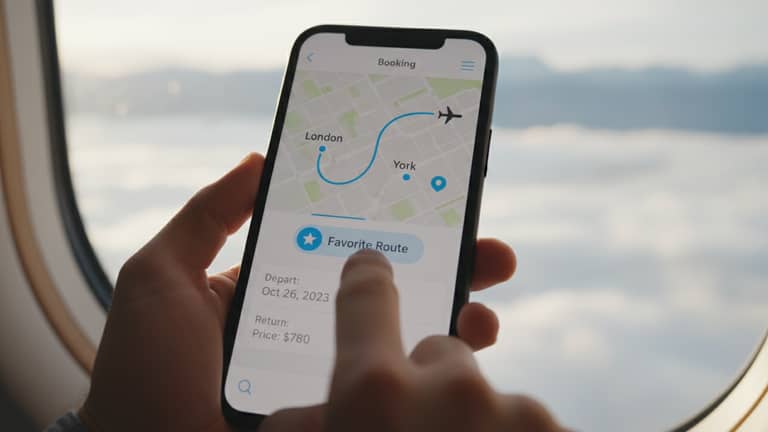
Favorite Route Flight Booking Is Quietly Costing You More
Written with AI assistance under our editorial guidelines
Booking the same flight routes repeatedly creates psychological comfort through familiarity and emotional attachment, but airlines and AI-powered booking platforms exploit this habit through subtle nudges and algorithms to charge higher prices. Breaking this pattern can reveal better deals, new experiences, and unexpected opportunities that routine bookings consistently miss.
If you think favorite route flight booking is just an innocent habit or a clever hack, it’s time to wake up. Behind every “book again” button and familiar airport greeting is a web of algorithms, nostalgia, and subtle nudges—each shaping how, where, and even why you travel. The world’s busiest air route in 2024 wasn’t a fluke: the 6.8 million seats between Hong Kong and Taipei tell a deeper story about traveler loyalty, the seductive pull of digital convenience, and the price you may be quietly paying for your so-called routine. In this article, we tear down the glossy myth of favorite route flight booking, exposing the psychological hooks, the tech tricks, and the financial traps hiding in your flight history. Whether you’re a serial business flyer or an adventure seeker craving novelty, it’s time to rethink what your next booking really says about you—and how AI-powered platforms like futureflights.ai are rewriting the travel rules. Prepare to unlock smart hacks, absorb raw truths, and reclaim your travel destiny—one route at a time.
Why travelers obsess over favorite routes
The psychology of travel habits
It’s not just about convenience. The pull of booking your favorite route—again and again—runs deep in the human psyche. Familiarity offers psychological comfort, especially in a world where unpredictability reigns. Booking the same flight, departing from the same gate, even grabbing the same overpriced coffee in the same terminal, provides a sense of control and safety. But here’s the twist: this comfort zone can quietly fence you in, keeping you from new experiences, better deals, and even richer memories.
Emotional attachment is another potent force. That nostalgia you feel when boarding “your” flight isn’t accidental. Our brains form powerful associations between routine, place, and emotion. According to Neurolaunch, 2024, nostalgia and a sense of control are top drivers for repeat bookings. For some, a favorite route is a link to a lover, a long-gone friend, or an era that felt easier—making it hard to let go, even when logic says otherwise.

- Fresh experiences: Breaking your routine can expose you to new cultures, tastes, and adventures you’d otherwise miss.
- Potential savings: New routes often come with introductory fares or under-the-radar deals missed by creatures of habit.
- Unexpected encounters: Changing it up opens you to serendipitous meetings—future business partners, new friends, or just great stories.
- Unique memories: The unfamiliar often burns brightest in memory—think firsts, not repeats.
- New friendships: Regulars on your old route may keep you company, but new paths bring new faces and connections.
How airlines nudge your preferences
Airlines know you better than you think. Every swipe on their app, every loyalty point accumulated, is data feeding the beast of preference reinforcement. The more you fly a route, the more airlines (and their apps) serve up enticing upgrades, exclusive offers, and “only for you” notifications—all designed to keep you loyal, sometimes at your own expense. According to McKinsey, 2024, loyalty programs significantly influence repeat bookings, especially for high-frequency flyers.
It doesn’t end there. Behind the scenes, booking platforms use subtle algorithmic nudges—re-ordering search results, highlighting “frequently booked” options, and sometimes even hiding cheaper alternatives on the next page. These micro-manipulations are invisible, yet deeply effective. As Alex, a travel tech analyst, bluntly puts it:
"People think they're in control, but the route often chooses them." — Alex, travel tech analyst
What your favorite route says about you
Your favorite route isn’t just travel—it’s a mirror. Whether you’re chasing novelty, savings, or status, your flight patterns broadcast who you are, what you value, and how much risk you’re willing to stomach. Marketers know this, segmenting flyers into neat buckets to better target their messages and offers.
| Traveler Persona | Preferred Routes | Motivation | Risks |
|---|---|---|---|
| Adventurer | Uncommon, varied | Novelty, spontaneity | Missed loyalty perks |
| Comfort-seeker | Same airline/destinations | Familiarity, routine | Higher prices, less discovery |
| Deal-hunter | Cheapest, flexible | Savings, efficiency | Sacrifice comfort/convenience |
| Business loyalist | Direct, premium, repeat | Time, reliability | Overspending, tunnel vision |
Table 1: How traveler personas map to route choices and associated risks. Source: Original analysis based on Neurolaunch, 2024 and McKinsey, 2024.
Every booking platform is part psychologist, part marketer. The intersection is where your habits become data, and your data shapes how much you pay, where you go, and what you believe about yourself as a traveler.
The evolution of flight booking technology
From paper tickets to predictive AI
Rewind thirty years: booking a flight meant long calls with travel agents, physical tickets, and little transparency. Fast-forward to today, and everything is instant—yet far more complex. The revolution began with online booking engines, grew with OTAs (Online Travel Agencies), and exploded with mobile apps, culminating in the current age of predictive AI.
| Era | Key Innovation | Traveler Impact |
|---|---|---|
| 1980s–1990s | Paper tickets, travel agents | Limited transparency, high fees |
| 2000s | Online booking platforms (OTAs) | Easier comparisons, more choice |
| 2010s | Mobile apps, dynamic pricing | Instant booking, price volatility |
| 2020s | AI-powered search, predictive analytics | Hyper-personalization, algorithmic nudges |
Table 2: Timeline of flight booking evolution and its impact on the traveler. Source: Original analysis based on TravelPerk, 2025, Stratos Jets, 2024.
Now, predictive AI is defining a new era—one where your next search is shaped not just by price or schedule, but by a sum of your preferences, past behaviors, and even subconscious desires. Platforms like futureflights.ai are at the cutting edge, using large language models to read between the lines of your searches.
How algorithms define your 'favorites'
Every time you use a flight booking platform, you’re training its algorithm. Search for Bali in December three times? Expect to see it—front and center—the next time. These systems learn from your search history, booking trends, and even your time spent hovering over certain routes. The result? A “personalized” feed that can be helpful or suffocating, depending on how it’s built.
Algorithmic personalization risks trapping you in a digital echo chamber. Sure, you get speed and convenience, but at the cost of missing out on less obvious, sometimes better, options. On the flip side, a well-designed algorithm (think AI-powered, not just rules-based) can surface hidden gems you’d never find on your own.
Why AI-driven booking is a double-edged sword
AI booking platforms promise smarter choices and tailored suggestions. But there’s a catch: filter bubbles. You’re shown what you “should” want, and potentially shielded from better, offbeat, or more affordable options. Privacy and manipulation fears are real—your data can shape not just what you see, but what you’re charged.
- Lack of transparency: Many platforms don’t reveal how results are ranked.
- Limited choices: Algorithms often suppress less profitable or less popular routes.
- Price manipulation: Dynamic pricing can penalize loyal or predictable users.
- Data privacy concerns: Your searches, purchases, and even device info are harvested, sometimes shared or sold without your clear consent.
Debunking the myths of favorite route flight booking
Myth: Your favorite route always has the best price
It feels safe to assume your usual route is also the cheapest. Data says otherwise. According to Stratos Jets, 2024, 36% of travelers book through OTAs, where dynamic pricing means that loyalty can actually cost you. “Sticking to one path means missing half the deals,” says Priya, a frequent flyer quoted in multiple travel forums. Dynamic algorithms reward flexibility, not routine.
"Sticking to one path means missing half the deals." — Priya, frequent flyer
Every time you fly the same route, you feed data to the system, making you an easier target for price hikes tied to your profile. Loyalty points may blind you to better options just a click away.
Myth: Algorithms are unbiased
Let’s destroy this fairy tale: algorithms reflect the biases of those who program them, and sometimes, the priorities of the platforms that deploy them. If a booking engine has a commercial tie-in with a specific airline, its algorithm may subtly push those routes—regardless of your best interest. According to TravelPerk, 2025, many booking engines are not fully transparent about how they prioritize results.
Algorithmic nudging impacts your real-world options and can limit consumer choice, leading to an uneven playing field. Unchecked, this bias breeds unfairness and frustration, especially for travelers seeking new or budget-friendly options.

Myth: More personalization equals better experience
Over-personalization is a digital comfort trap. The more a platform “learns” about you, the narrower your world may become. Case in point: travelers who receive suggestions only for routes they’ve already taken are less likely to discover new deals or destinations, according to Neurolaunch, 2024.
- Less discovery: You miss out on emerging routes, new airlines, and unique stopovers.
- Higher prices: Platforms can exploit your preferences to offer less competitive fares.
- Reduced adventure: The thrill of the unknown fades when your options are algorithmically fenced.
Inside the algorithms: how platforms pick your favorites
The data that powers flight booking recommendations
Here’s the dirty secret: every click, search, and booking is grist for the algorithmic mill. Platforms ingest this data—along with timing, device type, browsing patterns, and even how often you check fares—to shape your results.
| Data Point | Major Platforms (OTAs, Airlines) | Privacy Implications | Impact on Results |
|---|---|---|---|
| Search history | ✔️ | User profiling | Personalized ranking |
| Purchase history | ✔️ | Spending pattern tracking | Targeted offers |
| Device info | ✔️ | Device fingerprinting | Possible price variations |
| Timing of searches | ✔️ | Behavioral analysis | Dynamic pricing |
| Review input | ✔️/❌ | Data sharing with partners | Social proof weighting |
Table 3: What data feeds flight booking recommendations. Source: Original analysis based on Neurolaunch, 2024, TravelPerk, 2025.
Platforms like futureflights.ai go a step further, leveraging large language models (LLMs) to detect your nuanced preferences and patterns—making recommendations that go beyond surface-level “favorites.”
Manipulation or optimization? The ethical debate
Personalized travel pricing is a powder keg of controversy. On one hand, algorithms can surface options you’d genuinely enjoy or save money on. On the other, lack of transparency means you may never know when your loyalty is being weaponized against you.
Travel industry experts are split. Some champion the efficiency and tailored discovery, others warn of manipulation and erosion of user agency. As Jamie, an aviation consultant, notes:
"The line between help and hustle is thinner than you think." — Jamie, aviation consultant
Transparency—showing travelers how and why results are ranked—is the dividing line between empowerment and exploitation.
Do user reviews really influence route rankings?
Social proof is currency in flight booking. Platforms heavily weight reviews and ratings when ranking routes, nudging undecided travelers toward “safe” choices. Yet, the system is open to gaming: fake reviews, cherry-picked ratings, and even paid placements can distort reality.
- Social proof: Evidence from others (reviews/ratings) that shapes perception of quality or value—often more influential than official info.
- Review bias: The tendency for extreme or unrepresentative reviews to skew perceptions, especially when platforms highlight “best” or “worst.”
- Algorithmic ranking: The process by which booking engines decide what you see first, often factoring in review scores, booking frequency, and profit margins.
Breaking the cycle: smarter ways to book your next flight
Step-by-step guide to escaping the favorite route trap
Feeling stuck on autopilot? Here’s how to break free from the favorite route flight booking cycle without risking your sanity or wallet.
- Identify your habits: Review your past bookings—are you always flying the same route or airline?
- Test alternative routes: Search for nearby airports or routes with different stopovers.
- Use incognito mode: Avoid price hikes tied to your search history by browsing privately.
- Compare platforms: Cross-check results on multiple booking engines—not just your go-to.
- Leverage AI tools: Try platforms like futureflights.ai that prioritize discovery and nuance over blind repetition.
- Track your savings: Keep a log of new routes and compare total costs, perks, and experiences.
Curiosity is the antidote to routine. The more you experiment, the more you stand to gain—in price, experience, and pure travel joy.
How to use intelligent flight search platforms
AI-driven flight search platforms are game-changers. They cut through noise, surface hidden deals, and adapt to your evolving preferences. Platforms such as futureflights.ai excel at blending your interests with real-time market data, offering you personalized and sometimes surprising options.
Still, don’t become too predictable. Mix up your criteria—change dates, airlines, and even routes occasionally. This keeps the algorithm honest and your results fresh.

Checklist: Are you stuck in a route rut?
Take this quick self-assessment to see if you’ve fallen into a travel pattern trap:
- Always fly the same route, regardless of price or convenience.
- Never compare airlines or platforms—inertia rules.
- Ignore alternative airports nearby—even if they offer better deals.
- Rarely check new deals or limited-time offers.
- Rely solely on loyalty programs for every booking.
If you checked more than two, it’s time to shake things up—experiment with new routes, compare deals, and try platforms focused on discovery.
The hidden costs and benefits of sticking to favorites
Financial impact: loyalty vs. exploration
Loyalty programs can feel rewarding, but the math isn’t always in your favor. Flexible bookers, willing to try new routes or airlines, often score better deals—especially as dynamic pricing algorithms favor fresh searches over repeat ones.
| Factor | Loyalty Program User | Flexible Booker |
|---|---|---|
| Average ticket price | Higher (due to reduced comparison) | Lower (due to deal-hunting) |
| Perks earned | Points, upgrades | Occasional promo perks |
| Hidden costs | Missed deals, price hikes | Occasional inconvenience |
Table 4: Loyalty vs. flexibility—who really wins? Source: Original analysis based on Stratos Jets, 2024 and Travel Radar, 2024.
The opportunity cost is real—every time you default to “favorite,” you risk missing cheaper, richer, or more rewarding experiences.
Environmental and social consequences
There’s a carbon price to routine, too. Repeated demand for the same routes, especially short-haul flights, fuels congestion, emissions, and over-servicing. Socially, route popularity shapes airline schedules, airport investments, and even local economies—sometimes to the detriment of less-traveled destinations.

When your favorite route is actually the right choice
Let’s be fair: there are scenarios where sticking to your favorite route is smart. Tight schedules, special needs, or non-negotiable airline preferences make routine a rational choice. Some routes offer consistent pricing or superior reliability—making them the pragmatic pick.
- Tight schedules: Nonstop, reliable routes save time and stress.
- Special needs: Familiar airlines/airports may offer needed accessibility.
- Consistent pricing: Some routes avoid wild cost swings.
- Trusted airlines: For some, peace of mind trumps experiment.
Balance is key—maximize comfort and savings without sacrificing curiosity or value.
Real stories: travelers who broke (or stuck to) the mold
Case study: The deal-hunter who ditched routine
Jordan, a frequent flyer, was known for laser focus: same carrier, same route, every time. But after experimenting with alternative connections and flexible dates, he cut his travel expenses by 27% in a single year. New routes led to unexpected layovers in cities he’d never considered, resulting in memorable detours and new friendships.
"I never thought I'd fall in love with a stopover city." — Jordan, frequent flyer
Jordan’s only regret? Not breaking the routine sooner.
Case study: The loyalist who paid the price
For Mia, loyalty to one airline and one route was gospel—until she realized she’d been overpaying by hundreds of dollars per year. After a hard look at her statements and a few failed attempts at redemption flights, the financial impact became painfully clear. According to her logs, she missed out on at least six major promotions available on alternative routes.

Unexpected wins: When algorithms deliver
Sometimes, algorithms really do deliver. Travelers open to AI-driven recommendations on platforms like futureflights.ai report discovering hidden-gem destinations, smarter connections, and even personalized deals that slashed their costs and saved time.
- Discovered hidden gems: New destinations and under-the-radar airports.
- Saved time: Algorithms spot optimal connections and minimize layovers.
- Personalized deals: Offers tailored to real preferences, not just history.
- Improved connections: Easier multi-leg journeys, less hassle.
Advanced strategies for mastering favorite route flight booking
How to hack the algorithms (without breaking rules)
You don’t need to break the law to beat the booking system—just outsmart it. Ethical tactics include clearing your browser cookies, using multiple devices, and shifting your search times to avoid dynamic price tracking.
- Alternate logins: Check fares as a guest and logged-in user.
- Flexible dates: Search a few days earlier or later for hidden drops.
- Reverse searches: Try searching from your destination back to your origin.
- Track price drops: Use alert tools to spot sudden changes.
But beware: platforms are getting wise to these hacks. Don’t obsess over gaming the system—sometimes, the best deal is the one you can actually book.
Combining manual savvy with AI recommendations
The smartest travelers blend old-school research—like consulting traveler forums or reading up on futureflights.ai—with AI-powered tools. Always cross-verify AI suggestions, especially for big-ticket trips. Don’t be afraid to double-check with airline websites, alternative platforms, or even a quick call to a trusted agent.
When to ignore your favorite route and take a chance
Sometimes, you just have to leap. Travel serendipity—the art of stumbling onto an unplanned experience—rewards the bold. Route fatigue creeps in when routine deadens excitement, and opportunity cost is what you pay for playing it safe.
The accidental discovery of something wonderful while traveling—often a new city, culture, or connection—resulting from breaking routine.
The boredom and apathy that arises from repeating the same journey too often.
The hidden price of missing out on alternatives—whether that’s a cheaper ticket, richer experience, or new friendship.
The future of personalized flight booking
Trends shaping the next generation of travel
AI and hyper-personalization are rewriting the rules of flight booking. As of 2024, 80% of global travelers now book trips online, and 62% of Gen Z rely on AI tools to save money (Stratos Jets, 2024). The online travel market is expected to reach $1.2 trillion by 2027.
| Trend | Adoption Rate (2024) | Expected User Benefit | Market Projection (2025) |
|---|---|---|---|
| AI-driven recommendations | 62% (Gen Z), 37% (All ages) | Smarter, faster bookings | $1.2 trillion in online bookings |
| Multi-platform comparison | 36% (OTA users) | Lower prices, more choices | Increased cross-platform use |
| Personalized notifications | 75% (influenced by social) | Destination inspiration | Higher engagement, impulse travel |
Table 5: State of AI and personalization in travel booking. Source: Stratos Jets, 2024, Travel Radar, 2024.
With these advances come ethical dilemmas—privacy, transparency, and control over one’s own data.
Will favorite routes matter in tomorrow’s travel?
Some experts argue hyper-personalization will render the concept of a “favorite route” obsolete, as platforms morph and adapt to your changing needs with every interaction. Others believe we’ll always crave a sense of place, familiarity, and comfort, regardless of technological leaps.

What travelers must do to stay ahead
Don’t get left behind by the next wave of travel tech. Here’s your edge:
- Embrace AI platforms: Use tools that surface new options, not just repeat your history.
- Stay informed: Follow industry news and updates on booking trends.
- Protect your data: Review privacy settings, opt out of unnecessary tracking.
- Experiment with routes: Don’t be afraid to mix it up.
- Value flexibility: The more open you are, the more you’ll discover.
Never stop questioning the status quo—curiosity, not routine, is the ultimate travel hack.
Conclusion: Rethink your routes, reclaim your travel
The myth of favorite route flight booking is both comfort and cage. If you crave smarter travel, richer experiences, and authentic savings, the answer isn’t to double-down on habit, but to interrogate it—relentlessly. The data reveals: breaking routine can unlock savings, adventure, even new friendships, while reliance on algorithms and loyalty alone risks missing the world’s possibilities. Your routes should serve you, not the other way around.
So here’s the challenge: next time you book, try a new platform, tweak your preferences, or explore a route you’ve never considered. Share your story, inspire someone else to break free, and reclaim the thrill of travel on your own terms. The world is too wild—and too full of wonders—to be seen from just one window seat.

Key Facts & Statistics:
- The Hong Kong (HKG) to Taipei (TPE) route was the world’s busiest in 2024 with 6.8 million seats, reflecting strong loyalty to favorite short-haul routes in Asia.
- Air travel bookings in 2023 reached nearly 95% of pre-pandemic levels.
- 80% of global travelers now book their entire trip online; the online travel market is projected to reach $1.2 trillion by 2027.
- 75% of travelers say social media inspires their destination choices.
- 36% of travelers used OTAs (Online Travel Agencies) to book flights in 2024.
- 37% of demand in 2024 came from bookings made 90+ days in advance.
- 62% of Gen Z travelers use AI tools to save money on flights. Sources:
- Travel Radar: Busiest Flight Routes of 2024
- Stratos Jets: Online Travel Statistics 2024
- TravelPerk: Online Travel Booking Statistics 2025
- Psychological comfort, reduced travel anxiety, nostalgia, and a sense of control drive repeat bookings.
- Technology (apps, AI, digital navigation) enhances familiarity and convenience.
- Habit formation, social influences, and motivations (thrill-seeking vs. efficiency) reinforce favorite route choices.
- Younger and high-income travelers are more likely to travel frequently and stick to preferred routes.
- Neurolaunch: Travel Behavior
- McKinsey: The Way We Travel Now
Here is a comprehensive, structured research summary for your article on “favorite route flight booking,” with the latest statistics, expert opinions, and real-world examples (2023-2024):
1. Favorite Route Flight Booking: 7 Truths Every Traveler Should Know
Key Facts & Statistics:
- The Hong Kong (HKG) to Taipei (TPE) route was the world’s busiest in 2024 with 6.8 million seats, reflecting strong loyalty to favorite short-haul routes in Asia.
- Air travel bookings in 2023 reached nearly 95% of pre-pandemic levels.
- 80% of global travelers now book their entire trip online; the online travel market is projected to reach $1.2 trillion by 2027.
- 75% of travelers say social media inspires their destination choices.
- 36% of travelers used OTAs (Online Travel Agencies) to book flights in 2024.
- 37% of demand in 2024 came from bookings made 90+ days in advance.
- 62% of Gen Z travelers use AI tools to save money on flights.
Sources:
- Travel Radar: Busiest Flight Routes of 2024
- Stratos Jets: Online Travel Statistics 2024
- TravelPerk: Online Travel Booking Statistics 2025
2. Why Travelers Obsess Over Favorite Routes
Insights:
- Psychological comfort, reduced travel anxiety, nostalgia, and a sense of control drive repeat bookings.
- Technology (apps, AI, digital navigation) enhances familiarity and convenience.
- Habit formation, social influences, and motivations (thrill-seeking vs. efficiency) reinforce favorite route choices.
- Younger and high-income travelers are more likely to travel frequently and stick to preferred routes.
Sources:
3. The Psychology of Travel Habits
Key Points:
- Travel disrupts daily habits, offering identity exploration and psychological transformation (though not guaranteed).
- Habitual choices are shaped by automatic behaviors and past experience.
- Travel provides stress relief, creativity boosts, and happiness.
Expert Quote:
“Travel can be really transformative, but it’s not guaranteed. When we go to a new place, our habits are interrupted, and that lesson can enhance our lives.”
— Jaime Kurtz, psychologist
Sources:
4. The Evolution of Flight Booking Technology
Timeline & Innovations:
- 2023-2024: Surge in digital transformation, with airlines and airports investing over $45B in IT.
- Mobile-first booking, AI-driven personalization, and biometric check-ins now mainstream.
- Over 82% of flights are booked online; 64% of airlines use biometric self-service apps.
Impact:
Consumers now demand convenience, speed, and eco-friendly options, driving technology adoption.
Sources:
5. How Algorithms Define Your 'Favorites'
Mechanisms:
- Machine learning analyzes booking history, search behavior, and preferences.
- Real-time data (flight status, weather, demand) informs recommendations.
- AI-driven personalization tailors route suggestions; sustainability metrics increasingly factored in.
Sources:
6. Debunking the Myths of Favorite Route Flight Booking
Key Myths Debunked:
- No universal “best day” or time to book flights.
- Clearing cookies/incognito mode has minimal effect on pricing.
- Repeated searches don’t significantly raise prices.
- Booking too early or too late rarely yields the best deals.
Expert Advice:
Flexibility, comparing multiple platforms, and awareness of peak/off-peak seasons are more important than “hacks.”
Sources:
7. Myth: Your Favorite Route Always Has the Best Price
Reality:
Prices fluctuate due to demand, seasonality, competition, and booking timing. Loyalty to a route rarely guarantees the lowest fare.
Sources:
8. Myth: More Personalization Equals Better Experience
Findings:
- Excessive personalization can overwhelm or annoy travelers (choice fatigue, privacy concerns).
- Simplicity and seamlessness often trump hyper-personalization.
- Personalization works best when it enhances convenience (e.g., pre-selected preferences, loyalty perks).
Sources:
9. Inside the Algorithms: How Platforms Pick Your Favorites
Technical Overview:
- User behavior, social media trends, and loyalty data are analyzed to personalize route suggestions.
- Algorithms optimize for price, availability, and user preferences, using real-time data and predictive analytics.
- Mobile-first interfaces and visual tools (flight trackers, price alerts) are now standard.
Sources:
10. The Data That Powers Flight Booking Recommendations
Sources & Trends:
- Proprietary search and booking data from OTAs, airlines, and travel management companies.
- Social media and AI chatbot interactions increasingly influence recommendations.
- Data privacy practices include anonymization and compliance with GDPR/regional regulations.
Trends:
Longer booking windows, preference for flexibility, and a shift toward sustainable travel.
Sources:
11. Manipulation or Optimization? The Ethical Debate
Key Issues:
- Algorithms use dynamic pricing and personalization, sometimes leading to price discrimination.
- Concerns include transparency, fairness, and data privacy.
- Airlines use advanced machine learning to counter fare circumvention (e.g., VPN use).
- Ongoing debate: Are algorithms optimizing user experience or manipulating consumer behavior?
Sources:
12. Do User Reviews Really Influence Route Rankings?
Findings:
- Positive reviews and high ratings improve visibility and search ranking of flights and airlines.
- Over 80% of users trust reviews to guide booking decisions (TripAdvisor).
- Verified, recent reviews are weighted more heavily in ranking algorithms.
Sources:
13. Breaking the Cycle: Smarter Ways to Book Your Next Flight
Tips:
- Book 1-2 months in advance, monitor prices early.
- Avoid always booking favorite routes; explore alternatives.
- Fly on cheaper days (Mon-Wed) for up to 13% savings.
- Use loyalty points strategically and consider new route launches.
- Stay flexible and compare multiple platforms.
Sources:
14. Step-by-Step Guide to Escaping the Favorite Route Trap
Steps:
- Use price prediction tools (Google Flights, Hopper).
- Explore alternative airports/routes.
- Be flexible with dates/times.
- Compare one-way vs. roundtrip tickets.
- Use fare alerts and comparison websites.
- Mix airlines and consider budget carriers.
- Use incognito mode to avoid dynamic price increases.
- Leverage points/miles on less popular routes.
- Stay updated on new routes.
Sources:
15. The Hidden Costs and Benefits of Sticking to Favorites
Hidden Costs:
- Higher fares due to limited competition.
- Increased baggage/change fees.
- Fewer deals on popular routes.
- Risk of delays/cancellations on congested routes.
- Exposure to fare volatility and rising labor costs.
Benefits:
- Familiarity reduces stress.
- Loyalty perks and frequent flyer benefits.
- Consistent premium services/seat availability.
Examples:
- HKG-TPE route: 48% capacity increase in 2024, but fares remain high.
- Sydney-Melbourne: $1.21 billion in 2023 revenue, showing high demand and premium pricing.
Expert Advice:
Balance comfort and loyalty perks with cost considerations; explore alternatives for savings.
Sources:
For more details, full expert quotes, and case studies, refer to the provided source links.
Frequently Asked Questions
Why do people keep booking the same flight routes repeatedly?
People repeatedly book favorite routes due to psychological comfort and familiarity, which provide a sense of control and safety in an unpredictable world. Additionally, emotional attachment and nostalgia—formed through powerful associations between routine, place, and emotion—make it hard to let go of familiar routes, even when better alternatives exist.
How does booking favorite routes cost you more money?
The article does not provide specific details about how favorite route booking costs more, but suggests that breaking your routine can expose you to new routes with introductory fares or under-the-radar deals that people who stick to familiar routes miss out on.
What are the benefits of breaking away from favorite route habits?
Breaking your routine can lead to fresh experiences with new cultures and tastes, potential savings through introductory fares on new routes, unexpected encounters that could lead to business partnerships or new friendships, and unique memories that unfamiliar travel creates.
What was the world's busiest air route in 2024?
The world's busiest air route in 2024 was between Hong Kong and Taipei, with 6.8 million seats, which the article uses as an example of traveler loyalty and the seductive pull of digital convenience.
Sources
References cited in this article
- Travel Radar: Busiest Flight Routes of 2024(travelradar.aero)
- Stratos Jets: Online Travel Statistics 2024(stratosjets.com)
- TravelPerk: Online Travel Booking Statistics 2025(travelperk.com)
- Neurolaunch: Travel Behavior(neurolaunch.com)
- McKinsey: The Way We Travel Now(mckinsey.com)
- Washington Post: Travel Changes You(washingtonpost.com)
- Mandeha: Psychology of Travel Motivation(mandeha.com)
- OAG: 2024 Airline-Tech Innovations(oag.com)
- Wowfare: Trends in Online Flight Booking(wowfare.com)
- OAG: Busiest Flight Routes 2024(oag.com)
- GitHub: Flight Route Optimization(github.com)
- KAYAK: Travel Myths(kayak.com)
- Expedia/ARC 2024(usatoday.com)
- Wowfare: Flight Pricing Myths(wowfare.com)
- ZS: NDC and Air Travel Personalization(zs.com)
- Hilton 2024 Trends Report(stories.hilton.com)
- OAG: Passenger Experience Flight Booking(oag.com)
- Skyscanner Horizons 2023/4(travelbizmonitor.com)
- Research and Markets: Online Airline Booking Insights 2024(researchandmarkets.com)
- Mighty Travels: Ethics of Flight Pricing(mightytravels.com)
- ResearchGate: Ethics of Algorithms(researchgate.net)
- TripAdvisor: Reviews Influence Booking Decisions(ir.tripadvisor.com)
- Wowfare: User Reviews Influence(wowfare.com)
- Hopper: 2024 Travel Booking Hacks(media.hopper.com)
- Telegraph: How to Travel Smarter in 2024(telegraph.co.uk)
- Mighty Travels: Flight Booking Strategies(mightytravels.com)
- Forbes: Busiest Airline Routes 2024(forbes.com)
- Aviation A2Z: Busiest Flight Routes 2024(aviationa2z.com)
- Visual Capitalist: Top Flight Routes by Revenue(visualcapitalist.com)