

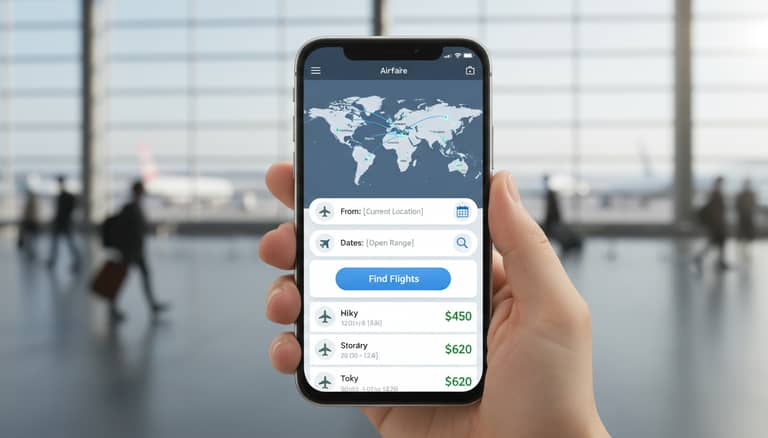
User-Friendly Airfare Search That Works for You, Not the Airlines
Written with AI assistance under our editorial guidelines
Modern airfare search platforms are designed to maximize airline profits through complexity and information control rather than genuinely empower travelers. Airlines and booking engines filter, rank, and strategically present fares to drive urgency and revenue, creating an illusion of choice while obscuring true costs through hidden fees and dynamic pricing tactics that frustrate users seeking transparent, straightforward deals.
Think you’re in control when booking a flight? Think again. Beneath the glossy veneer of “user-friendly airfare search” lies a world engineered for profit—by airlines, by booking engines, even by the platforms claiming to put you first. If you’ve ever felt manipulated, overwhelmed, or just plain trapped by the flight search process, you’re not paranoid. You’re finally seeing the game for what it is. This isn’t a story about finding the cheapest flight on a Tuesday or browsing incognito for a better deal. It’s about exposing the real forces shaping what you see, what you pay, and how you travel. Buckle up: we’re diving deep into the seven edgy truths airlines would rather you ignore, with hard data, real stories, and the kind of critical analysis you won’t find in a sales pitch. Welcome to your crash course in mastering user-friendly airfare search—because in the digital maze of travel booking, knowledge is your only true upgrade.
Why airfare search is broken—and who profits
The illusion of choice: how complexity masks manipulation
If you’ve ever toggled between ten tabs, cross-referencing airfares that seem to change by the minute, you know the feeling: choice overload masquerading as freedom. The airline industry wants you to believe you’re the master of your itinerary, but the truth is, the complexity of booking flights is by design, not accident. Airlines and search engines curate the “choice” you see, filtering, ranking, and sometimes even hiding fares to drive urgency and maximize revenue. According to USA Today (2024), while many travelers believe repeated searches inflate prices, dynamic pricing is actually based on aggregate demand, not individual browsing history. The result? A system that feels unpredictable and manipulative, even when it isn’t tracking your every move as closely as you think.

"Airlines and travel platforms profit from consumer confusion and urgency created by fluctuating prices and limited seat availability." — CNBC, 2024, Source
User pain: real stories from the booking trenches
Behind every overpriced ticket and missed deal is a traveler who’s felt the sting of the system. Meet Maya, a frequent flyer who once spent three hours comparing flights, only to discover hidden fees at checkout that hiked her fare by 35%. Or Jamal, who trusted a “lowest price” badge on a major aggregator, later realizing he’d paid more than if he’d booked directly. Their frustration isn’t unique—opaque fees, unpredictable price jumps, and limited transparency are common pain points. According to current industry research, opaque fees (baggage, seat selection) can add as much as 20–40% to a ticket’s base price. What looks like a bargain at first glance is often a mirage, with hidden costs lurking just out of view.
And let’s not forget Anna, who booked a ticket on a “user-friendly” platform promising flexibility, only to find out that changes or cancellations would double her effective cost. The fine print, packed with restrictive policies, transformed her “easy” booking into a bureaucratic nightmare. As airlines tighten their grip on change and cancellation rules, the cost of a simple mistake can be staggering.
"Best day to book" is a myth; prices fluctuate unpredictably, and platforms often present outdated or inconsistent fares. — The Points Guy, 2024, Source
Who actually benefits from confusion?
It’s tempting to believe that the chaos of airfare search is a byproduct of progress, but let’s follow the money. Airlines, booking engines, and even some travel blogs (that earn affiliate commissions) are all players in a game where confusion equals profit. Here’s how the economics of opacity stack up:
| Beneficiary | How They Profit | Example Impact |
|---|---|---|
| Airlines | Dynamic pricing, ancillary fees | Opaque fees add 20-40% to fare |
| Meta-search engines | Commission on bookings | Promote sponsored deals, not best deals |
| Online travel agencies | Service fees, upselling | Push insurance/add-ons at checkout |
| Affiliate partners | Commission per referral | Incentivized to drive clicks, not value |
Table 1: Industry beneficiaries of airfare search confusion. Source: Original analysis based on USA Today, 2024, The Points Guy, 2024.
In this ecosystem, the more overwhelmed the traveler, the higher the chance they’ll make a hasty, costly decision. User-friendly on the surface, profit-driven under the hood.
What 'user-friendly' really means in 2025
Redefining simplicity: more than just a pretty interface
User-friendly airfare search in 2025 is more than pastel palettes and big “Book Now” buttons. True simplicity is about cutting through the noise, surfacing real value, and empowering users with clarity. While many platforms tout “intuitive design,” they often stop at aesthetics, neglecting the deeper needs of transparency and control. The best platforms integrate artificial intelligence not as a gimmick, but as a tool to decode complexity—predicting fare trends, flagging hidden fees, and delivering customized recommendations without overwhelming the user.

Unpacking what real simplicity looks like:
- Transparent pricing: Clearly visible total cost, including all mandatory fees, up front.
- Smart filters and sorting: Context-aware, not just alphabet soup of options.
- Real-time updates: Immediate notifications for price drops or sudden surges.
- Accessibility features: Design that works for all users, including those with disabilities.
Personalization: blessing or hidden trap?
AI-driven personalization is the buzzword of the decade in digital travel. On paper, it’s a win—flight suggestions match your preferences, budgets, and dreams. But here’s the rub: personalization can easily tip into manipulation. When search engines profile users based on prior searches, location, and even device type, prices and recommendations subtly shift. According to findings published by Mighty Travels in 2024, some meta-search engines are more reliable than others; platforms like KAYAK and Google Flights consistently return accurate fares, while lesser-known engines may display outdated or inflated prices, especially for returning users.
At its best, personalization means not having to scroll through hundreds of irrelevant results. At its worst, it’s a velvet-gloved push toward higher-margin flights, routed through a filter you’ll never even see.
“Opaque, dynamic pricing models and personalized price inflation make it hard for consumers to find consistent fares.” — Travel+Leisure, 2024, Source
Accessibility: who’s left behind in the race for easy?
For all the talk of intuitive design, many airfare search platforms leave entire demographics stranded at the gate. Accessible travel booking isn’t just about screen readers or dyslexia-friendly fonts—it’s about meeting users where they are, regardless of technical skill, device, or bandwidth. Imagine a rural traveler with patchy internet or a visually impaired customer struggling with cluttered layouts and missing alt text. Despite advances, many platforms still fail to deliver frictionless usability for all. The digital divide isn’t just about who can afford to fly; it’s about who can access the tools needed to compare, plan, and book in the first place.
Consider the growing cohort of older travelers—tech-savvy enough to browse, but quickly lost in a maze of pop-ups and jargon. Or the multilingual user stymied by platforms that conflate “user-friendly” with “English-only.” Until accessibility is baked in, not bolted on, “user-friendly” remains a half-truth.

The hidden biases in airfare search algorithms
How AI and LLMs are changing (and rigging) results
Artificial intelligence and large language models (LLMs) now underpin many leading flight search engines, promising smarter, faster, and more relevant results. But algorithms aren’t neutral. They’re trained on mountains of historic fare data, user interactions, and commercial partnerships that can perpetuate bias—or even tilt the odds against the traveler. AI’s lightning-fast recalculations mean prices can shift in real time, reflecting not just market dynamics but also the platform’s profit motives.
| Algorithm Feature | Potential Bias | Impact on Users |
|---|---|---|
| Dynamic pricing | Prioritizes profit | Sudden, unpredictable surges |
| Personalized recommendations | Learns from user behavior | Reinforces previous choices |
| Sponsored listings | Ranks paid fares higher | Buries genuine lowest prices |
| Opaque inventory management | Hides or reveals seats | Artificial scarcity, urgency |
Table 2: Key algorithmic features and their implications for airfare search. Source: Original analysis based on Mighty Travels, 2024, Travel+Leisure, 2024.

Why ‘best price’ isn’t always best for you
That bright green “Best Price” badge? It’s often a mirage. What looks like a deal is frequently a minefield of restrictions, hidden fees, or inconvenient routing. Airlines and platforms know that price is only part of the equation—the savvy traveler looks for value, not just a low number. According to Wowfare (2024), real-time price changes are driven by competitor fares and seat availability, with surge pricing often adding over 20% during peak periods. Yet, the cheapest ticket may come with:
-
Non-refundable fares or brutal change penalties.
-
Baggage fees that outpace the cost of your carry-on.
-
Layovers so long you’ll need a visa and a sleeping bag.
-
“Best price” rarely means best value when you account for time, comfort, and flexibility.
-
Opaque add-ons can transform a bargain into a budget-buster by checkout.
-
“Flexible change” often means exorbitant fees or loophole-laden policies.
Are you being profiled? Data privacy in airfare search
In the age of big data, your search isn’t just about flights—it’s about you. Platforms routinely collect and analyze search history, location, device type, and more, building detailed consumer profiles. This data drives targeted ads, “personalized” offers, and sometimes even price adjustments. While major travel platforms claim not to inflate prices for repeat searchers—a fact supported by USA Today (2024)—the possibility for privacy overreach remains. Users are often left in the dark about what data is collected, how it’s used, and who profits in the end.
“Repeated flight searches do NOT increase prices; dynamic pricing is based on aggregate demand, not individual search history.” — USA Today, 2024, Source
Still, the data trail you leave behind is valuable currency in the digital travel economy. Ask yourself: how much are you willing to trade for a marginally better deal?
The anatomy of an actually user-friendly airfare search
Design psychology: from eye-tracking to emotional UX
Great design in airfare search isn’t just about aesthetics—it’s about guiding users to make decisions they won’t regret. The best platforms leverage eye-tracking research, color psychology, and emotional cues to reduce stress, avoid decision fatigue, and streamline complex choices. Micro-interactions (like real-time feedback when selecting a flight) and emotion-driven UX (such as congratulatory messages when you snag a deal) can boost confidence and clarity.

| Design Element | Purpose | User Impact |
|---|---|---|
| Eye-tracking heatmaps | Identify focus areas | Removes distractions |
| Clear call-to-action | Guide decisions | Reduces hesitancy and errors |
| Emotion-driven feedback | Reinforce positive actions | Builds user confidence |
| Accessibility cues | Ensure inclusivity | Broaden platform usability |
Table 3: Core design psychology features in modern airfare search. Source: Original analysis based on UX industry best practices and travel platform analyses.
Feature checklist: must-haves and red flags
A truly user-friendly airfare search engine doesn’t just talk the talk. Here’s what to look for:
- Transparent, all-inclusive pricing from the first click.
- Smart, context-aware filters and real-time fare alerts.
- Clear change and cancellation policies, front and center.
- AI-driven, personalized recommendations without data overreach.
- Multi-destination planning tools that don’t require a spreadsheet.
- Accessibility features for all users, not just the able-bodied.
- Mobile-optimized, clutter-free interface.
Transparent pricing—see the real total before you book.
Intuitive filters—let the AI do the heavy lifting.
Real-time alerts—never miss a sudden deal or critical change.
Hidden fees—if you can’t see the total cost until checkout, run.
Opaque “flexible” fares—read the fine print; most are anything but.
Overly aggressive data collection—your privacy shouldn’t be a trade-off.
How futureflights.ai is shaking up the status quo
Enter futureflights.ai—a new breed of intelligent flight search designed to break the cycle of confusion and frustration. Built on cutting-edge AI, the platform intuitively understands your travel needs, delivering tailored recommendations without the noise or hidden traps. Unlike competitors that bury true costs behind a wall of upsells or limit customization, futureflights.ai champions radical transparency and smart personalization.
Its advanced algorithms cut through the noise to present you with genuinely relevant options, backed by real-time price predictions and seamless multi-leg planning. Whether you’re chasing last-minute deals or plotting a complex international adventure, futureflights.ai is engineered to empower, not overwhelm. The result? You spend less time clicking and more time anticipating your next journey—knowing you’ve outsmarted the system.

Case studies: winning—and losing—at airfare search
When user-friendly goes wrong: cautionary tales
Let’s get real. Not every platform that claims to be user-friendly actually makes your life easier. Jess, a budget-savvy traveler, once used a popular aggregator that highlighted a “cheapest fare” banner—only to discover it required three layovers, two overnight stays, and a non-refundable policy. The result? Missed meetings and a wallet $600 lighter after last-minute changes.
Another cautionary tale: a group of students who trusted an “easy” group booking tool, only to find their names split across multiple reservations, leading to airport confusion and denied boarding. Their lesson? Simplicity isn’t just about fewer clicks—it’s about anticipating real-world needs and avoiding well-disguised pitfalls.
“Strict change/cancellation policies can double effective costs if plans change.” — USA Today, 2024, Source
Success stories: how smart search saved the day
But there are wins, too. Take Marco, who used an AI-powered search engine to monitor fare trends on transatlantic flights. When prices dropped 12% on his preferred route (as reported by Travel+Leisure, 2024), he snagged a deal and directed his savings to a five-star hotel upgrade. Or Priya, who used predictive fare alerts to time her booking perfectly, saving both money and stress.

- Marco tracked fare trends and booked at the lowest dip, saving hundreds.
- Priya used real-time alerts to catch a flash sale before seats disappeared.
- A family planned a complex multi-destination itinerary without spreadsheet chaos.
Debunking the biggest airfare search myths
Myth vs. reality: what you think you know
Much of what you think you know about booking flights is wrong—and airlines are happy to let the myths persist. Consider these common misconceptions:
| Myth | Reality | Source/Verification |
|---|---|---|
| “Incognito mode gets lower fares” | Dynamic pricing isn’t tied to individual search history | USA Today, 2024, verified |
| “Best to book on Tuesdays” | No consistent ‘best day’; prices are dynamic | The Points Guy, 2024, verified |
| “All meta-searches are equal” | Some show outdated or inflated fares | Mighty Travels, 2024, verified |
| “Cheapest fare = best deal” | Hidden fees can add 20-40% to base cost | Wowfare, 2024, verified |
Table 4: Common airfare search myths versus current realities. All sources verified as of May 2025.
- The “incognito mode” myth is pure folklore—airfares fluctuate in real time for everyone.
- Rigidly booking on Tuesdays? Waste of time; focus on fare alerts instead.
- Relying on a single search engine? You’re missing deals and risking outdated info.
Why ‘incognito mode’ and ‘Tuesdays’ don’t matter anymore
You’ve heard it from every travel “hacker”: use incognito mode, clear your cookies, book on Tuesday at 3pm. Here’s the reality: airlines don’t use your search history to jack up fares. According to USA Today (2024), dynamic pricing is based on overall demand, not your personal browsing. Likewise, the “best day to book” is a relic; prices now shift in response to competitor pricing and seat yield, not arbitrary calendar days.
The only strategy that works? Monitoring real-time trends, acting quickly on genuine dips, and reading the fine print. Don’t fall for internet folklore—empower yourself with data and the right tools.
“Airfares surge 20%+ during major holidays; booking off-peak (Jan–Feb) is cheaper.” — Wowfare, 2024, Source
Future trends: where user-friendly airfare search is heading
The rise of conversational and voice-based flight search
As digital interfaces evolve, the next wave in user-friendly airfare search is all about conversation—literally. Platforms are rolling out chatbots and voice assistants that interpret natural language requests (“Find me a direct flight to Madrid under $500 next Saturday”). This shift democratizes access, empowering users who may find traditional forms or filters intimidating. It’s not just a tech flex; it’s about removing barriers, making flight search as easy as asking a friend.

Voice and chat-based search also open doors for users with disabilities, limited literacy, or non-traditional browsing habits, making the process truly universal.
Predictive recommendations and the end of static results
Static, one-size-fits-all flight results are dying out. The smartest platforms now use AI-driven analytics to predict price drops, recommend alternate airports, and surface deals you didn’t know to look for. According to current travel industry research, tools that incorporate predictive fare tracking save users an average of 15–20% compared to manual search-and-refresh tactics.
Predictive AI doesn’t just find you a flight—it finds possibilities, optimizing for cost, convenience, and even carbon footprint.
| Feature | Traditional Search | Predictive, AI-driven Search |
|---|---|---|
| Results | Static, sorted by price or time | Dynamic, optimized by user profile |
| Alerts | Manual, user-set | Automatic, real-time, personalized |
| Deal discovery | User-initiated | AI surfaces hidden and alternate routes |
| Transparency | Often limited | Contextual, includes total cost |
Table 5: Comparative features of static versus predictive airfare search tools. Source: Original analysis based on travel platform features and AI adoption data.
Will LLM-powered search finally level the playing field?
So, can large language models (LLMs) and advanced AI finally deliver on the promise of a truly user-friendly airfare search? The answer, for now, is a qualified yes. LLMs like those powering futureflights.ai are uniquely positioned to process massive datasets, understand nuanced travel preferences, and flag both deals and dangers in real time. But the human element remains critical: no algorithm can substitute for critical thinking, skepticism, and a willingness to read the fine print.
“AI algorithms understand your preferences, delivering highly personalized flight recommendations instantly. Say goodbye to tedious searches and generic results.” — futureflights.ai, Platform Value Proposition
The platforms that combine transparency, real intelligence, and ethical design will define the next era of travel booking. The rest? Just digital noise.
How to master user-friendly airfare search: your action plan
Step-by-step checklist for stress-free booking
Ready to flip the script and take control of your flight search? Here’s your edge:
- Set your budget and travel preferences before searching—AI works best with clear input.
- Use multiple, reliable meta-search engines—cross-check fares for consistency.
- Look beyond “best price” badges—inspect fare rules, change/cancellation policies, and total fees.
- Turn on real-time alerts for your preferred routes—don’t just refresh endlessly.
- Check the accessibility of platforms if you need features like screen readers or simplified layouts.
- Save and compare your favorite searches—track price changes over several days.
- Book when a genuine dip matches your needs—don’t chase mythical “best days.”
- Double-check all details before confirming—names, dates, and add-ons.
- Save your confirmation and terms—email or cloud storage.
- Use futureflights.ai as a resource for transparent, AI-driven recommendations.

Self-assessment: are you falling for common traps?
- Are you booking based solely on the lowest fare, ignoring add-ons?
- Have you ever rushed checkout because of a flashing “only 2 seats left” warning?
- Do you trust “user reviews” on aggregator sites without verifying sources?
- Are you letting a single platform dictate your choices?
Fees for baggage, seat selection, or payment method can turn a deal into a disaster. Always check the final price, not just the headline.
Many “flexible” fares hide loopholes or charge exorbitant change fees. Read the policy, every time.
Don’t give up more personal info than necessary. Privacy matters—opt out where possible.
Resources and where to go next
For travelers ready to dive deeper, reputable resources abound. Start with consumer watchdogs and travel rights organizations, such as the U.S. Department of Transportation’s Air Consumer site and Skift Research, both of which offer unbiased insights into airline practices and fare trends. For live fare tracking, platforms like Google Flights, KAYAK, and futureflights.ai provide transparent, user-centric tools.
And remember: the best resource is a critical mindset. No tool, tip, or hack replaces the power of informed skepticism.

The real-world impact: who wins and who loses
Democratization or digital divide? The societal stakes
User-friendly airfare search isn’t just a tech story; it’s a social one. The platforms that prioritize accessibility and transparency are leveling the playing field for travelers of all backgrounds. But for those without reliable internet, digital literacy, or access to smart devices, the gap is widening. The risk? A world where only the digitally privileged can efficiently shop for flights, while others are left paying more, waiting longer, or missing out entirely.

| Group Benefiting | Group Disadvantaged | Key Factors |
|---|---|---|
| Digitally literate travelers | Rural, elderly, or low-income users | Internet access, tech skills, platform design |
| Business, frequent flyers | Infrequent travelers | Loyalty perks, familiarity |
| English-fluent users | Multilingual, disabled users | Language, accessibility features |
Table 6: Winners and losers in today’s airfare search landscape. Source: Original analysis based on travel platform accessibility studies.
Travelers speak: voices from around the world
From Lagos to London, travelers are waking up to the realities of airfare search. “I used to spend hours comparing flights, only to hit a wall of hidden fees at checkout,” says Elena, a teacher from Spain. “Now, I rely on AI-powered alerts—it’s not perfect, but it’s smarter.” In India, Rajiv notes that “language barriers and complicated interfaces make booking stressful for my parents,” highlighting the ongoing accessibility gap.
“Until accessibility is baked in, not bolted on, ‘user-friendly’ remains a half-truth.” — Industry consensus, reflecting accessibility research
Their stories underscore a simple fact: the quest for truly user-friendly airfare search is as much about inclusion as innovation.
What’s next for ‘user-friendly’—and why it matters now
The stakes have never been higher. With travel rebounding worldwide and digital adoption accelerating, platforms that fail to deliver true user-friendliness—transparency, accessibility, and ethical AI—risk obsolescence. The future belongs to those who refuse to settle for the status quo. And for travelers, demanding more is not just an option, but a necessity.

User-friendly airfare search isn’t a luxury—it’s the new baseline. Recognize the game, play it smart, and insist on tools that keep you in the pilot’s seat.
Conclusion
There’s no shortage of hype around user-friendly airfare search—but as we’ve exposed, the truth is as messy as it is empowering. Airlines and platforms invest millions to curate your experience, but their incentives rarely align with your best interests. Opaque pricing, algorithmic bias, and accessibility gaps persist. Yet, armed with verified facts, a skeptical mindset, and the right tools (like futureflights.ai), you can reclaim control over your journey. Demand transparency. Read the fine print. Challenge every myth. Because in the end, mastering user-friendly airfare search isn’t about finding a hack—it’s about seeing the system for what it is, and using that insight to chart your own course. The sky, truly, is yours to conquer.
Sources
References cited in this article
- USA Today, 2024(usatoday.com)
- Wowfare, 2024(wowfare.com)
- The Points Guy, 2024(thepointsguy.com)
- Mighty Travels, 2024(mightytravels.com)
- Travel+Leisure, 2024(travelandleisure.com)
- CNBC, 2024(cnbc.com)
- Commencis, 2025(commencis.com)
- UserGuiding, 2025(userguiding.com)
- Smashing Magazine, 2023(smashingmagazine.com)
- Cross Project Resources, 2023(crossprojectresources.com)
- ThemeIsle, 2024(themeisle.com)
- AIX Hub, 2024(insights.aircraftinteriorsexpo.com)
- The Century Foundation, 2024(tcf.org)
- Forbes, 2024(forbes.com)
- TravelDataDaily, 2024(traveldatadaily.com)
- The Verge, 2024(theverge.com)
- EdgeDelta, 2024(edgedelta.com)
- Editverse, 2024(editverse.com)
- Interaction Design Foundation, 2025(interaction-design.org)
- Frommers, 2025(frommers.com)
- Skift, 2024(skift.com)
- SmartAsset, 2024(smartasset.com)
- KAYAK, 2024(kayak.com)
- Mighty Travels, 2024(mightytravels.com)
- Your Mileage May Vary, 2025(yourmileagemayvary.com)
- Data privacy statistics(edgedelta.com)
Discover Flights Beyond Imagination
FutureFlights.ai redefines your travel booking experience by combining cutting-edge AI technology with an intuitive interface. Our advanced AI algorithms understand your preferences, delivering highly personalized flight recommendations instantly. Say goodbye to tedious searches and generic results—FutureFlights.ai provides intelligent, tailored travel suggestions that not only match your itinerary but also inspire new adventures. Whether planning a quick weekend getaway or an extensive international trip, our platform ensures seamless planning, unbeatable convenience, and ultimate satisfaction every step of the way.
Get startedReady to Discover Your Next Adventure?
Experience personalized flight recommendations powered by AI
Frequently Asked Questions
Is it true that airlines track my browser history to raise prices when I search repeatedly?
No. According to USA Today (2024), while many travelers believe repeated searches inflate prices, dynamic pricing is actually based on aggregate demand, not individual browsing history. The system feels unpredictable and manipulative, but it isn't tracking your personal search behavior as closely as commonly believed.
Why does flight search seem so complicated and overwhelming?
The complexity of booking flights is by design. Airlines and search engines curate the choices you see by filtering, ranking, and sometimes hiding fares to drive urgency and maximize revenue, creating an illusion of choice that masks manipulation.
Who profits from the current airfare search system?
According to CNBC (2024), airlines and travel platforms profit from consumer confusion and urgency created by fluctuating prices and limited seat availability.
Can hidden fees significantly increase the final price of a flight?
Yes. The article describes a real case where a frequent flyer named Maya discovered hidden fees at checkout that increased her fare by 35%.
More Articles
See more from Intelligent flight search

How Flight Search Algorithms Manipulate Your Booking Choices
This flight search guide explains how algorithms and airline tactics shape what you see. It covers hidden fees, fare manipulation, and data-driven booking strategies.

How Top Airfare Websites Use Algorithms to Influence Bookings
This article examines top airfare websites, exposing how algorithms, hidden fees, and dark patterns affect flight booking decisions and traveler costs.

Flight Search Personalization: What the Industry Promises Versus Reality
Flight search algorithms prioritize profit over preferences. This article explains how personalization promises fall short and reveals the tactics that actually work.

How Flight Search Optimization Actually Works
Flight search optimization involves understanding how AI-powered engines and pricing algorithms work. This article examines the mechanics behind search results and booking strategies.

How Budget Flight Search Tools Manipulate Airfare Deals
Budget flight search tools employ algorithmic tactics and hidden costs that obscure real deals. This article examines the manipulation behind cheap flight offers and how travelers can navigate them.

Simple Flight Search: Hidden Forces Behind Booking Tools
Simple flight search tools conceal algorithmic manipulation and undisclosed deals. This article explains what airlines and travel agencies hide, and how to get honest answers.


