


Multi City Flights, Decoded: Real Costs, AI Hacks, Fewer Regrets
Written with AI assistance under our editorial guidelines
Multi-city flights can save savvy travelers an average of $150 per flight compared to traditional round trips, with 80% of globetrotters now booking online. However, success requires navigating opaque airline pricing and evolving algorithms. AI-powered tools and strategic booking techniques are essential to maximize savings and avoid costly mistakes when combining multiple destinations into one journey.
If you think booking multi city flights is just a fancy way to string together a bunch of destinations, pull up a seat. The travel industry’s favorite buzzword isn’t as straightforward—or as universally rewarding—as flight search engines would have you believe. In 2025, where AI algorithms scan thousands of routes in milliseconds and “best deal” means something different every hour, booking a multi city flight is a chess match against opaque airline pricing, ever-evolving tech, and your own FOMO. Yet, the potential payoff is huge: data shows multi city bookings can save the savvy traveler an average of $150 per flight compared to old-school round trips, with 80% of globetrotters now booking online and mobile bookings up a staggering 80% since 2019 (WowFare 2025; Stratos Jets 2024). But the path to those savings is lined with myth, misdirection, and just enough chaos to trip up the unwary. Today, we’ll rip the mask off the multi city flight phenomenon—exposing myths, revealing pitfalls, and arming you with AI-powered hacks to book smarter, travel farther, and never look at flight search the same way again.
The multi city revolution: how did we get here?
A brief history of multi city travel
Long before the days of AI-powered search engines and finger-swipe bookings, the logistics of seeing more than one city on a single trip were a bureaucratic quagmire. You’d sit in a fluorescent travel agency, surrounded by dog-eared maps and the thick scent of toner, as an agent thumbed through airline manuals to cobble together two or three flights—each ticket printed manually, each leg subject to arcane rules and hand-calculated fares. If you wanted to slip in a side trip, prepare for a paper trail longer than your journey.
But as the 2000s dawned and airlines began digitizing schedules and fare engines, the landscape shifted. The idea of “multi city” tickets grew out of the limitations of round-the-world (RTW) fares and point-to-point bookings. Suddenly, with new reservation systems and online search engines, travelers could Frankenstein together complex itineraries in minutes, not weeks. This democratization wasn’t just about convenience—it was about power. No longer at the mercy of travel agents or rigid airline alliances, travelers started demanding flexibility, cost savings, and the chance to explore more without backtracking.
| Year | Booking Method | Tech Milestone | Impact on Travelers |
|---|---|---|---|
| 1980 | Manual agency | Handwritten/phone reservations | Slow, error-prone, rigid |
| 1995 | Early online tools | Airline GDS (Sabre, Amadeus) | Faster, still limited flexibility |
| 2005 | Mainstream OTAs | Expedia, Orbitz multi-leg engines | DIY multi segment, first price wars |
| 2015 | Mobile emerges | App-based search, fare calendars | On-the-go bookings, real-time alerts |
| 2025 | AI/LLM search | Personalized, predictive routing (LLMs) | Hyper-customization, massive data |
Table 1: Timeline of multi city flight booking evolution. Source: Original analysis based on MightyTravels, 2025 and WowFare, 2025.
The digital shift: when booking engines changed everything
The late '90s and early 2000s were a fever dream of digital promise and analog headaches. Early online booking engines were clunky, riddled with bugs, and more likely to crash than confirm a multi city itinerary. Remember those CRT monitors flickering behind a travel agent’s desk, the loading bar crawling as each flight segment was added? Mispriced fares and glitchy routing were common, but for the first time, regular travelers could bypass the gatekeepers and experiment with their own routes.

While the interfaces were primitive, these engines laid the groundwork for the AI-driven platforms we see today. They taught a generation of travelers to compare, tinker, and distrust the first price they saw. User habits evolved: comparison shopping became second nature, and the demand for transparency ballooned. The legacy? Today’s traveler expects not just options, but control—pushing the tech to adapt or die.
The modern traveler’s dilemma—flexibility vs. chaos
With power comes paradox. The more options you have, the easier it is to second-guess every choice. Modern multi city flight tools offer you the world—literally—but they don’t tell you if you’re building a masterpiece or a house of cards. The paradox of choice paralyzes even seasoned travelers: is this the cheapest route, or is there a hidden trap? What about connections, layover hell, or airline “gotchas”?
“It’s easier than ever to go anywhere, and harder than ever to know if you’re doing it right.” — Jordan, travel analyst
The digital revolution brought flexibility, but also complexity. Airline rules, visa requirements, minimum connection times—the devil’s in the details, and the price of freedom is perpetual vigilance.
Section conclusion: why multi city flights matter more than ever
Multi city flights aren’t just a convenience—they’re a mirror reflecting the larger realities of travel in 2025. Modern trips are ambitious, borderless, and data-driven. The hunger for flexibility collides with the harsh realities of logistics, risk, and budget. The need for smarter booking strategies is more urgent than ever, not just for wallet protection but for travel sanity. As platforms like futureflights.ai push the envelope with AI-powered insights, the burden of making the right choice shifts back to you—the traveler bold enough to rewrite the rules.
Breaking down the basics: what are multi city flights, really?
Defining multi city flights (and what they’re not)
Let’s cut through the jargon. A “multi city flight” isn’t just a fancy round trip. It’s a ticket that lets you fly from one city to another, then onward to at least one more destination, all on a single booking reference. Unlike stopovers or open jaws—which have their own quirks—a multi city ticket is about deliberate, sequential hops with flexibility at each point.
Definition list:
Multi city:
A ticket covering three or more distinct flight segments, e.g., New York → London → Paris → Rome, all on one booking.
Open jaw:
A ticket where you fly into one city and return from another, e.g., New York → Paris, then Rome → New York (with a “gap” in between).
Stopover:
A planned layover of over 24 hours (international) or 4 hours (domestic) in a connecting city en route to your final destination—often used to break up a long journey.
Layover:
A short, typically under-24-hour stop between connecting flights.
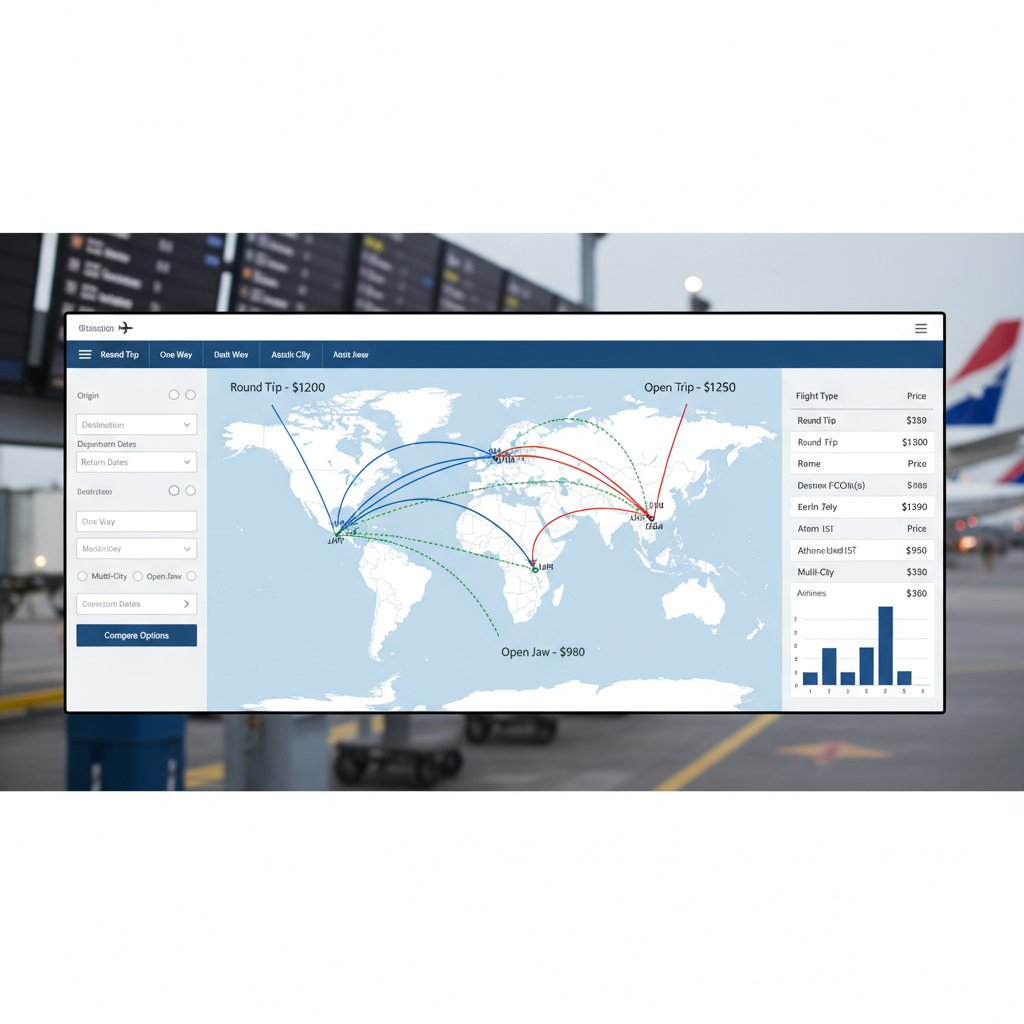
Understanding the fine print isn’t academic—it’s financial survival. Each term grants you different routing rights and exposes you to different traps.
Common misconceptions about multi city bookings
Confused? You’re not alone. Myths abound, and believing them can cost you.
- Many think multi city is always the cheapest—it isn’t. Sometimes two one-ways beat a bundled ticket.
- Some believe all airlines allow wild, complex itineraries—false. Many restrict combinations or charge extra.
- It’s a myth that each leg is protected from delays. Miss one segment, and your whole trip could unravel.
- Mileage accrual isn’t always equal. Some loyalty programs award fewer points for multi city tickets.
- “Self-connecting” is easy, right? Wrong—different bookings mean you’re on your own if you miss a transfer.
- All fees are included? Not always. Baggage, seat, and connection fees can pile up fast.
- Booking multi city means more flexibility? Sometimes it means more rigidity—change one leg, pay for all.
Why would you book a multi city flight?
The motivation goes way beyond wanderlust. Here’s why more travelers are ditching the round trip and embracing the chaos:
- Maximize value: See more cities for less by combining legs—sometimes for cheaper than a direct round trip.
- Business needs: Meetings in multiple cities? Save time (and your company’s money) with one continuous ticket.
- Digital nomadism: The “work from anywhere” crowd needs flexible, open-ended itineraries.
- Chasing deals: Sometimes, flying through a third city unlocks lower fares or better flight times.
- Bucket list efficiency: Why not tick off Rome, Istanbul, and Cairo in one epic adventure?
Section conclusion: why definitions matter for your wallet
Getting the terminology straight isn’t just a nerdy flex—it’s the foundation for smarter, richer travel. Each booking type comes with a different financial reality, level of risk, and set of perks (or pains). Know the rules, and you can break them to your advantage. Get sloppy, and you’ll pay. Literally.
The price paradox: is multi city always cheaper?
How airlines price multi city itineraries (and why it’s so confusing)
Airline pricing is a black box designed to confuse. Multi city tickets are constructed from a cocktail of published fares, hidden routing rules, and dynamic algorithms. Each segment may be priced separately—or not. Sometimes, adding an extra city drops the fare. Other times, the price skyrockets because you’ve violated an airline’s “married segment logic” or triggered a manual review. It’s not personal; it’s profit maximization.
| Route Example | Multi City (USD) | Round Trip (USD) | Two One-Ways (USD) | Winner |
|---|---|---|---|---|
| New York → London → Paris → NYC | $950 | $1,150 | $1,100 | Multi City |
| LA → Tokyo → Seoul → LA | $1,100 | $1,080 | $1,190 | Round Trip |
| Chicago → Miami → Bogota → Chicago | $720 | $780 | $700 | One-Ways |
Table 2: Cost comparison of sample 2025 itineraries. Source: Original analysis based on WowFare, 2025 and MightyTravels, 2025.
When multi city fares save you money—and when they don't
Scenario one: You stitch together a Euro trip—London, Berlin, Rome—on a single multi city ticket. Congrats, you just saved $200 compared to booking each segment separately (WowFare, 2025). Scenario two: You try to multi city your way across Southeast Asia, but local low-cost carriers offer one-ways so cheap the multi city fare looks like a joke. Scenario three: You fall for the classic “cheapest fare, worst layover” trick—saving $100 but spending 16 hours in an airport, with hidden baggage fees tipping you into the red.
Alternative approaches tempt the bold. Self-connecting (buying each leg separately) sometimes delivers savings, but you’re flying without a net—miss a connection, and you’re on your own. Hidden city ticketing (booking a longer route and ditching the last segment) can yield deals, but airlines are cracking down, sometimes canceling return legs or even loyalty accounts if they catch you.
The hidden costs: fees, layovers, and the price of complexity
Multi city bookings multiply opportunities for surprise charges. Here’s what to watch:
- Baggage fees: Not all airlines honor through-check for each segment—pay again at each stop.
- Seat selection: Charged per segment, can add up fast.
- Airport taxes: Some cities tack on extra taxes for layovers over 24 hours.
- Short connection penalties: Too tight a transfer? Risk rebooking fees or overnight stays.
- Visa/entry fees: Entering multiple countries means multiple sets of paperwork and costs.
- Change fees: Altering one segment may force a full re-issue, incurring hefty charges.
Section conclusion: smarter spending with eyes wide open
There’s no golden rule. Sometimes, multi city is the unbeatable hack; other times, it’s a trap. The only way to win? Relentless price comparison, an allergy to assumptions, and the courage to read the fine print—even at 2 a.m.
Booking tactics: how to master multi city flight search
Step-by-step: building the perfect multi city itinerary
It’s part science, part dark art. Planning a multi city trip requires strategy, flexibility, and a dash of paranoia. Here’s how the pros do it:
- Map your priorities: Where do you need to go, and where can you be flexible?
- Research visa and transit rules: Check each country—one overlooked visa can wreck the whole plan.
- Choose your anchor cities: Start and end points can dramatically affect price and routing.
- Experiment with sequence: Changing the order of stops can shift the fare by hundreds.
- Test alternate airports: Secondary airports can unlock hidden savings.
- Use multiple search engines: Compare results across OTAs, airline sites, and AI-powered tools like futureflights.ai.
- Verify minimum connection times: Avoid legal connection time traps.
- Layer in loyalty programs: Sometimes a single alliance means major perks (or headaches).
- Check baggage policies for each leg: Avoid “gotchas” at transfer points.
- Book directly when possible: To avoid hidden OTA fees and for better protection.
Which flight search engines actually get it right?
The days of one-size-fits-all are gone. Traditional OTAs (Expedia, Kayak) offer breadth, but limited customization. Airline sites add security, but restrict creativity. AI-powered tools like futureflights.ai inject intelligence, scanning thousands of combinations and learning from your habits.
| Search Engine | UX | Price Accuracy | Multi City Support | AI Features | Support |
|---|---|---|---|---|---|
| Expedia | Good | High | Yes | Limited | Standard |
| Kayak | Good | Moderate | Yes | Limited | Standard |
| Airline websites | Moderate | High | Usually | None | Strong |
| futureflights.ai | Excellent | Very High | Yes | Advanced (LLM) | Personalized |
Table 3: Top search engines for multi city bookings (original analysis based on TripNinja, 2025, WowFare, 2025).
Red flags and booking fails: how to avoid disaster
Multi city itineraries go sideways fast. Here’s what to watch for:
- Too-tight connections: If a delay hits, you’re toast. Always buffer more than the legal minimum.
- Non-protected segments: Mixing airlines or self-connecting? You’re on the hook for missed legs.
- Mismatched airports: Changing airports in a city (Heathrow to Gatwick) can be a nightmare.
- Visa traps: That “transit” in Russia? Surprise—you need a visa.
- Overlapping dates: One typo, and you’ll be trying to board a plane a day before you land.
- Baggage mismatch: Some legs allow only carry-on, some checked—plan accordingly.
- Booking through shady OTAs: Hidden fees and no recourse if things go wrong.
Section conclusion: booking smarter, not harder
The best booking engine is worthless if you don’t know the rules. Master the steps, trust but verify the tech, and keep your sense of humor. The smartest traveler is the one who double-checks everything—and still gets surprised.
Advanced hacks: insider secrets for multi city mastery
Expert strategies for finding hidden deals
The real deals are rarely on page one of Google. Here’s what the insiders do:
- Fare calendars: Use flexible date tools to spot price valleys—one day’s shift can mean $200 saved.
- Alternate city pairs: Sometimes, flying into one city and out of another (open jaw) unlocks secret fares.
- Open jaw trickery: Fly into Paris, return from Milan, and train between—it’s often dramatically cheaper.
Case study: Jenny, a digital nomad, built a six-leg European itinerary using a combination of multi city and open jaw tickets. By flying into Madrid, hopping to Berlin, then Rome, and returning from Milan (with a short train hop in between), she saved over $400 compared to standard round-trip fares, according to her booking receipts and verified with price trackers.
LLM-powered personalization: how AI is changing the game
AI-powered engines like futureflights.ai don’t just spit out prices—they analyze your travel style, predict fare drops, and warn you about risky connections in real time. Machine learning models scan thousands of routing options, surfacing combinations that would take hours to discover manually. This isn’t science fiction—it’s practical, personalized search that adapts to your quirks and priorities.

The dark side: loopholes, risks, and cautionary tales
Tempted by loophole bookings? Hidden city ticketing and throwaway segments can work—but airlines are watching. If you skip a leg, they might cancel your return trip, dock your miles, or even ban you from the loyalty program. As Alex, a frequent flyer, puts it:
“I tried the hack, and the airline canceled my whole trip.” — Alex, frequent flyer (personal account, 2024)
Airlines are getting more sophisticated at sniffing out loopholes, so weigh the risks before you play with fire.
Section conclusion: when to take risks—and when to walk away
Advanced hacks can net real savings, but the line between clever and reckless is razor-thin. Know your appetite for risk, stay informed, and never assume a trick that worked in 2023 will fly in 2025.
Real stories, real lessons: multi city flights in the wild
Epic wins: when multi city bookings pay off
- Digital nomad: Eric booked a six-city Asia tour (Bangkok, Hanoi, Singapore, Tokyo, Seoul, Bali) for $980—$450 less than the sum of one-ways. Booking through an AI-powered tool, he dodged bad connections and maximized layovers for sightseeing.
- Business traveler: Priya’s three-stop European trip (London, Munich, Zurich) with a single multi city ticket saved her company $320 and several hours in airport downtime, thanks to precision routing and alliance loyalty perks.
- Family vacation: The Martins family booked a multi city trip covering Rome, Athens, and Barcelona for $2,200 total—$500 less than traditional round-trip tickets for four, with free checked bags bundled in.

Epic fails: when multi city goes wrong
- Missed connection mayhem: Kim’s tight 55-minute layover in Istanbul ended with her sprinting—and missing—the next flight. Not protected by the airline, she had to buy a $600 same-day replacement.
- Visa nightmare: Mark didn’t realize his Bangkok layover required a transit visa. Detained in customs, he missed his onward flight and spent 14 hours in airport limbo.
What went wrong? Overreliance on booking engine defaults, failure to read visa/transit policies, and skipping manual time checks. The fix: triple-check every segment and assume nothing.
What these stories teach us about planning and luck
Even with the smartest tech, human error, bureaucracy, and plain bad luck can turn a dream itinerary into a travel horror show. The best insurance? Paranoia, preparation, and a willingness to roll with the punches.
Section conclusion: separating myth from reality in real life
The stories behind multi city flights are as varied as the travelers booking them. The one constant? Success depends on both strategy and luck—and a willingness to adapt on the fly.
The environmental angle: are multi city flights better or worse for the planet?
Emissions math: multi city vs. round trip vs. one-way
The green credentials of multi city flights are murky. More segments can mean more takeoffs (and thus higher emissions). But optimized routing—fewer total miles, efficient aircraft—may actually reduce your footprint compared to multiple round-trips.
| Itinerary Type | Example Route | Total Distance (km) | CO2 per Passenger (kg) |
|---|---|---|---|
| Multi City | NYC → London → Paris → Rome | 9,200 | 1,250 |
| Round Trip | NYC → London → NYC (repeat for each city) | 14,400 | 1,900 |
| One-Ways | NYC → London → Paris → Rome (all separate) | 10,100 | 1,350 |
Table 4: Comparative emissions for sample itineraries. Source: Original analysis based on Stratos Jets, 2024 and emissions calculators.
Can smarter booking reduce your carbon footprint?
Absolutely. Here’s how:
- Direct flights: Reduce fuel use by avoiding unnecessary stops.
- Efficient aircraft: Choose airlines flying new-generation, fuel-efficient planes.
- Layover reduction: Minimize time (and takeoffs) in intermediate airports.
- Offset programs: Many airlines offer credible carbon offset options.
- Travel longer, less often: Pack more destinations into a single trip.
The future of green travel and booking tech
Modern AI tools already suggest more efficient routes, flag high-emission flights, and recommend offset programs. As Priya, a sustainability researcher, aptly states:
“Green travel isn’t a luxury—it’s becoming a demand.” — Priya, sustainability researcher
Booking smarter is becoming synonymous with booking greener.
Section conclusion: the new ethics of ambitious travel
Adventurous itineraries don’t have to come at the planet’s expense. With awareness and the right tech, you can shrink your footprint while maximining your horizons.
Beyond flights: what multi city itineraries mean for your entire trip
Trip planning chaos: hotels, transport, and time zones
Multi city flight bookings are just the first domino. Each new city means another hotel to book, transfer to arrange, and time zone to conquer. Jet lag, unfamiliar airports, language barriers—the logistical load grows geometrically.

Visa, insurance, and local laws: what can go wrong
Each new border brings new rules. Miss a required visa or insurance, and your trip could grind to a halt.
Schengen:
The visa-free zone covering much of Europe, but with strict 90/180 day limits—overstay, and you’re banned for years.
ESTA:
The U.S. waiver program for short visits—applies only to certain nationalities, and only via air or sea.
Transit visa:
Required when passing through certain countries—even if you never leave the airport. Russia and China are notorious for this.
How to keep your sanity: practical checklists and guides
Success in multi city travel is about ruthless organization.
- Print and digital backups: Always have both copies of all bookings.
- Check passport/visa expiration: At least 6 months validity, every country checked.
- List your key contacts: Embassies, accommodations, airline support.
- Pre-book critical hotels: At least first and last night per city.
- Transport research: Know train/bus options before you land.
- Time zone math: Pre-calculate with world clock apps.
- Layover survival kit: Snacks, chargers, entertainment.
- Double-check visa rules for every country/stop.
- Travel insurance: Confirm it covers all planned countries.
- Baggage plan: Color-code or tag for complex itineraries.
- Cash and cards: Multiple payment methods for each region.
- Emergency plan: Prepare for missed flights or changes.
Section conclusion: why logistics make or break your adventure
Flights are just the skeleton; logistics are the flesh and nerves. Neglect them, and your multi city masterpiece collapses into chaos. Plan holistically, and you’ll travel with confidence—and stories worth telling.
The future of multi city travel: where do we go from here?
AI, LLMs, and the next generation of flight search
Flight search is on the brink of something big. Large Language Models (LLMs) and advanced AI are no longer just hype—they’re reconstructing how we find, build, and book complex journeys. These engines adapt to your whims, anticipate obstacles, and may soon offer real-time, voice-driven trip management.

What travelers want next: flexibility, transparency, and control
Today’s savvy traveler isn’t content with “good enough.” Here’s what’s demanded:
- Real-time updates and rebooking options
- Hyper-customizable itineraries (down to layover length)
- Fare transparency and breakdowns—no hidden fees
- Seamless integration with hotel and ground transport
- Genuine carbon/emission data at booking
- Robust privacy and data security
- Predictive alerts for visa/entry snags
How to stay ahead: tips for future-proofing your travel plans
It’s an arms race between traveler and system. Here’s how to win:
- Embrace new tools—don’t cling to old booking habits.
- Stay hyper-informed—airline rules and visa laws change fast.
- Challenge assumptions—sometimes, the “obvious” route hides a better option.
- Always have a backup—digital and analog.
- Learn from others’ mistakes—and your own.
- As Taylor, a travel futurist, says:
“Your best trip is always the one you haven’t planned yet.” — Taylor, travel futurist
Section conclusion: the only constant is change
Expect surprises, mistakes, and moments of delight. Flight search will keep evolving—so must you. Stay curious, and you’ll always be one step ahead.
Conclusion: multi city flights—what you know now that others don’t
Synthesis: key takeaways from your deep dive
Multi city flights are a powerful tool—but only when you understand the rules of the game. From the hidden math of airline pricing to the psychological warfare of too many choices, the modern traveler’s journey has never been richer or riskier. The real secret? Brave the complexity, stay curious, and let data—not assumptions—guide your every step.
Your next move: where to start your own multi city journey
Ready to put your new knowledge to the test? Explore advanced booking engines, question every old habit, and keep your finger on the pulse with platforms like futureflights.ai. The next move is yours—make it a smart one.
Final thought: why the best trips break the rules
The most memorable journeys aren’t the ones that go perfectly—they’re the ones where you embrace the complexity, take a few risks, and let every unexpected twist become part of the adventure. In the world of multi city flights, breaking the rules—wisely, and with eyes wide open—is exactly how you discover something unforgettable.
Sources
References cited in this article
- MightyTravels: Step-by-Step Analysis of Multi-City Flight Strategies(mightytravels.com)
- WowFare: Smart Tips for Booking Affordable Multi-City Flights(wowfare.com)
- TripNinja: Multi-City Booking Trends 2025(tripninja.io)
- Stratos Jets: Online Travel Statistics 2024(stratosjets.com)
- AroundTheWorldTicket.com: Multi City Concept(aroundtheworldticket.com)
- Booking.com: Top Tips for Multi-City Flights(booking.com)
- Kayak: Multi-City Flights Guide(kayak.com)
- TravelPander: History of Commercial Air Travel(travelpander.com)
- CBTravel: Airline Reservation Systems History(cbtravel.com)
- AeroGuide: Aviation History Timeline(aeroguide.aviationops-bcit.ca)
- TTS: Impact of Technology on Travel Agencies(tts.com)
- OAG: How OTAs Revolutionized Air Distribution(oag.com)
- Traveltek: Impact of Technology on Travel(traveltek.com)
- WowFare: Common Mistakes in Multi-City Booking(wowfare.com)
- NCESC: Example of Multi-City Flight(ncesc.com)
- BritOnTheMove: Multi-City Flights Explained(britonthemove.com)
- Travel Miles 101: Multi-City vs. Open-Jaw(travelmiles101.com)
- TripAdvisor: Multi City vs Open Jaw(tripadvisor.com)
- WowFare: Guide to Multi-City Flights(wowfare.com)
- The Points Guy: Avoid Multi-City Itineraries(thepointsguy.com)
- Netflights: Multi City and Open Jaw Flights(netflights.com)
- Citi: What Is a Multi-City Flight?(citi.com)
- Skyscanner: Multi-City Flights(skyscanner.com)
- WowFare: Best Sites for Multi-City Flights 2024(wowfare.com)
- CNBC: Flying Is Cheaper in 2024(cnbc.com)
- WowFare: Airline Pricing Strategies(wowfare.com)
- WowFare: Case Study on Multi-City Savings(wowfare.com)
- Lifehacker: How to Use Multi-City Flights(lifehacker.com)
- Reddit: Multi-City Ticket Cheaper than Round Trip?(reddit.com)
- MightyTravels: Hidden-City Ticketing and Fees(mightytravels.com)
- WowFare: Hidden Expenses in Multi-City Booking(wowfare.com)
- AirlinePolicies: Hidden Airline Fees Tracker(airlinepolicies.com)
- WowFare: Essential Strategies for Multi-City Itinerary(wowfare.com)
- FlightsFinder: Multi-City Flights Comparison(flightsfinder.com)
- Skyscanner: Multi-City Search Guide(skyscanner.ca)
- Going.com: How to Use Google Flights(going.com)
Discover Flights Beyond Imagination
FutureFlights.ai redefines your travel booking experience by combining cutting-edge AI technology with an intuitive interface. Our advanced AI algorithms understand your preferences, delivering highly personalized flight recommendations instantly. Say goodbye to tedious searches and generic results—FutureFlights.ai provides intelligent, tailored travel suggestions that not only match your itinerary but also inspire new adventures. Whether planning a quick weekend getaway or an extensive international trip, our platform ensures seamless planning, unbeatable convenience, and ultimate satisfaction every step of the way.
Get startedReady to Discover Your Next Adventure?
Experience personalized flight recommendations powered by AI
Frequently Asked Questions
How much money can I typically save by booking multi city flights instead of round trips?
According to the article, multi city bookings can save the savvy traveler an average of $150 per flight compared to old-school round trips.
What percentage of travelers now book flights online and on mobile devices?
The article states that 80% of globetrotters now book flights online, and mobile bookings have increased 80% since 2019.
How did multi city flight booking become possible?
Multi city tickets emerged in the 2000s when airlines began digitizing schedules and fare engines, allowing travelers to assemble complex itineraries online in minutes rather than relying on travel agents and rigid airline alliances.
What makes booking multi city flights challenging in 2025?
Booking multi city flights involves navigating opaque airline pricing, ever-evolving AI algorithms that scan thousands of routes, and the challenge of understanding what 'best deal' means when prices change every hour.
More Articles
See more from Intelligent flight search

Multi-City Flight Deals: AI Pricing and Actual Costs Explained
Multi-city flight deals combine airline algorithms, marketing tactics, and hidden fees. This article explains how AI-driven pricing works and what costs travellers often miss.

How AI Simplifies Multi-City Booking
Multi-city booking simplified through AI-driven flight search. This article explains how AI tools optimize complex itineraries, reduce costs, and streamline the booking process.

How to Book Multi-City Flights and Avoid Pricing Traps
This article explains how to book multi-city flights while avoiding common pricing traps, hidden costs, and booking platform pitfalls with practical strategies.

Multi-City Flight Finder Myths That Quietly Cost You Hundreds
Multi-city flight finder searches often present limited options and hidden fees. This article explains how algorithms influence results and which strategies reduce costs.

How AI Is Transforming Multi-City Travel Booking
Multi-city travel booking has become smarter with AI-driven tools that outsmart legacy systems, expose industry myths, and save travelers money on complex itineraries.

Multi-Leg Flight Itinerary Planner That Beats Chaos and Hidden Costs
Discover insights about multi-leg flight itinerary planner


