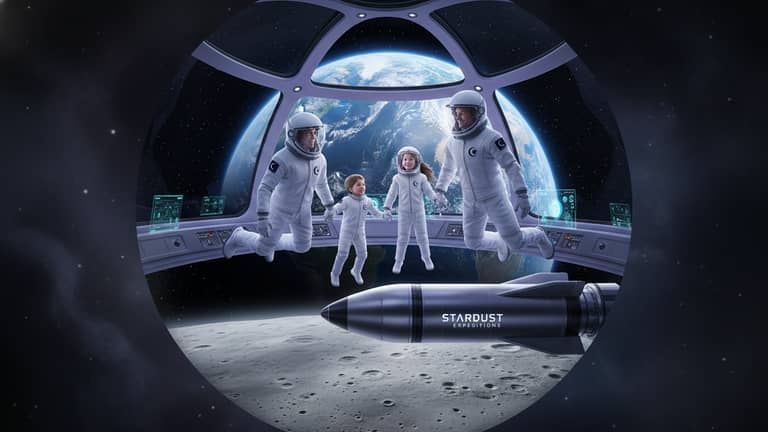
Family Moon Flights: Real Risks, Real Costs, Real Families
Written with AI assistance under our editorial guidelines
As of 2025, commercial lunar family flights do not yet exist despite industry hype. The projected $170 billion lunar economy over two decades encompasses mining and research rather than tourism. Technical delays and the severe challenges of radiation, microgravity, and life support systems make family moon travel conceptual at best, with ambitious projects like #dearMoon indefinitely postponed.
Leave your passport at home and pack your skepticism—“family moon flights” are the latest promise on every sci-fi devotee’s bucket list, but the reality is far grittier than the glossy headlines suggest. In 2025, space tourism headlines shout about lunar vacations for families, but behind the hype lies a stubborn truth: not only is the Moon still out of reach for most, but the roadblocks, risks, and realities of family lunar travel are more daunting—and fascinating—than you’ve been led to believe. This in-depth exposé brings you the unvarnished reality: what it costs, who’s trying (and failing), what’s hype, and the under-the-radar societal impact of even dreaming about packing up your spouse, kids, and in-laws for a getaway to the most inhospitable “resort” in the solar system. Buckle up as we journey through the facts, secrets, hidden dangers, and the strange allure of the ultimate off-planet trip.
Welcome to the moon: A new era of family travel
Why lunar vacations are no longer just science fiction
The phrase “family moon flights” reads like something torn from the yellowing pages of a 1960s pulp novel, but the very fact that global media, industry leaders, and tech billionaires are discussing it in 2025 signals a seismic shift. For decades, the notion of vacationing on the Moon was the stuff of Hollywood, but today—thanks to relentless private space investment and the viral #dearMoon campaign—the concept is at least on the drawing board, if not quite at the launchpad. According to The Global Economics, the broader lunar economy is projected to reach up to $170 billion in the next two decades, though this mind-bending figure lumps together mining, research, and infrastructure, with tourism only a tiny, aspirational sliver The Global Economics, 2023.

Yet, while private companies and visionaries paint vivid pictures of family moon trips, the reality is still strictly conceptual. As of 2025, commercial lunar flights for families simply do not exist. The highly publicized #dearMoon project—a planned tourist flyby around the Moon—was indefinitely postponed in 2024, derailed by technical delays and the stubborn physics of keeping people alive and sane in deep space Wikipedia, 2025.
“The lunar environment’s challenges—radiation, microgravity, life support—make family travel complex and costly.” — Return to the Moon: New perspectives on lunar exploration, ScienceDirect, 2024
Who actually wants to bring their family to the moon?
For all the buzz, who is genuinely interested in lunar vacations for the whole clan? The answer is as much about psychology and status as it is about science.
- Ultra-wealthy pioneers: The current lunar travel landscape is targeted at billionaires and celebrities, those eager to etch their names into the annals of “firsts” and willing to pay astronomical sums for exclusivity.
- Adventure-driven families: There’s a small but growing cohort of thrill-seeking families—often entrepreneurs or tech insiders—willing to brave unknown risks for the badge of having “done the next impossible thing.”
- STEM-obsessed parents: For parents determined to provide their kids with jaw-dropping, educational experiences, the Moon represents the ultimate “field trip”—albeit only in fantasy for now.
- Emerging market dreamers: In countries with rising middle classes, aspirational talk of space travel is fueling a fresh wave of tech education and “moonshot” ambition, even if tickets are a lifetime away.
- Media and influencer families: Those who monetize the spectacle of adventure are naturally drawn to the most headline-grabbing journey possible.
But let’s get real: the mainstream “family vacation” crowd is still far more interested in eco-resorts and cultural immersion on Earth. According to Jetsetter Guide, current family travel trends lock in on meaningful, eco-conscious, and educational experiences—grounded firmly on this planet Jetsetter Guide, 2024.
The shifting status symbol: Why Earth isn’t enough
In an age when Antarctica is booked solid and Everest base camp is old news, the Moon is the new Mount Olympus for those who measure success in firsts and selfie backdrops. Lunar travel, even as vaporware, has become a status symbol—an ultimate flex that eclipses all other destinations.

For the ultra-rich, planting a family photo on the Moon offers a social currency that no Earthbound adventure can match. Corporate jet? Old hat. Private island? Dull. The Moon—hostile, remote, and wildly expensive—translates into a narrative of daring, innovation, and, perhaps, a touch of recklessness. While the rest of us can only watch (and maybe cringe), this “cosmic status” is a powerful motivator behind the myth and the marketing.
Myths, misconceptions, and the real state of lunar tourism
Debunking the biggest myths about family moon flights
The media love a good moonshot. But the reality of lunar tourism, especially for families, is lightyears away from the glossy PR.
- Myth 1: You can book a family moon flight today.
Not true. As of 2025, there are zero commercial lunar flights open to families or the general public Wikipedia, 2025. - Myth 2: Technological breakthroughs are making lunar vacations safe and affordable.
The technology is advancing, but safety, cost, and infrastructure remain monumental barriers. - Myth 3: The #dearMoon project will launch soon.
Indefinitely postponed in 2024 due to technical and program delays. - Myth 4: The lunar economy is all about tourism.
The projected $137–$170 billion lunar economy includes mining, research, and infrastructure—not just tourism The Global Economics, 2023. - Myth 5: Lunar family travel will “democratize” space.
So far, it’s a billionaire’s game. The idea of democratization is a PR fantasy, not an economic or technical reality.
Is it really possible in 2025? What’s hype and what’s real
Let’s get surgical about what’s actually on offer versus the hype.
| Claim/Offering | Reality in 2025 | Verification Source |
|---|---|---|
| Commercial family lunar flights | Not available | Wikipedia, 2025 |
| #dearMoon project (tourist flyby) | Postponed, not open | Wikipedia, 2025 |
| Lunar hotel stays | Concept phase only | The Global Economics, 2023 |
| SpaceX “Starship” civilian missions | In development, not open for families | ScienceDirect, 2024 |
| Lunar travel for average families | Not possible | Jetsetter Guide, 2024 |
Table 1: Reality check—lunar tourism offerings in 2025 and their status.
Source: Original analysis based on [Wikipedia, 2025], [The Global Economics, 2023], [Jetsetter Guide, 2024]
Hidden barriers no one talks about
Beyond the noise, what’s truly blocking lunar family flights? The answers are less glamorous: radiation shielding, reliable life support, microgravity adaptation, and, perhaps most unsolvable, protecting children and elders from intense physical and psychological risks.
“The lunar environment’s challenges—radiation, microgravity, life support—make family travel complex and costly.” — Return to the Moon: New perspectives on lunar exploration, ScienceDirect, 2024
Societal motivations—technological innovation, economic expansion, and the unique psychological impact of seeing Earth from the Moon—are real, but so are the hurdles: from how to handle a sick child 384,000 kilometers from Earth, to the ethics of exposing people to cosmic radiation for the sake of a vacation.
How does a family moon flight actually work?
From reservation to liftoff: Step-by-step breakdown
If you could book a family moon vacation, what would the journey look like? Here’s a breakdown based on current protocols for private space travelers and the (still theoretical) process for lunar trips.
- Application Submission: Begin with a rigorous vetting process, including health and psychological screening for every family member.
- Contract and Payment: Once accepted, you sign a labyrinthine contract and pay a hefty deposit—often non-refundable and well into seven figures.
- Comprehensive Training: Undergo months of physical, technical, and team-building training at a specialized facility. Children and elders require tailored programs.
- Medical Clearance: Each traveler must clear exhaustive medical evaluations, with high bars for cardiovascular and neurological health.
- Final Safety Briefings: Participate in detailed simulations and emergency drills, including lunar landing rehearsals if relevant.
- Suit Up: Custom lunar suits are fitted, offering protection against radiation and micro-meteoroids.
- Quarantine: To prevent biological contamination, all participants enter isolation prior to launch.
- Launch and Transit: Board a specialized spacecraft—under strict surveillance—beginning the journey to lunar orbit or surface.
- Lunar Arrival and Activity: Participate in pre-approved activities, likely highly restricted due to safety concerns.
- Return Protocols: The journey back includes re-entry medical checks and post-mission debriefs.

Training, health checks, and psychological screening
The lunar environment is relentless. Every would-be traveler must undergo a battery of tests and training, adapted for each age and health status.
| Category | Requirements | Reasoning |
|---|---|---|
| Physical conditioning | Custom programs for kids, adults, elders | To withstand G-forces, microgravity, and lunar surface activity |
| Psychological screening | Group and individual tests | To assess adaptability to isolation, stress, and monotony |
| Medical screening | Full body scans, cardiovascular, neurological checks | To avoid medical emergencies millions of miles from help |
| Emergency drills | Hands-on simulation training | To prepare for depressurization, fire, or health crises |
Table 2: Essential training and screening for hypothetical family moon flights.
Source: Original analysis based on [ScienceDirect, 2024], [Jetsetter Guide, 2024]
What happens during the journey and on the moon
Space is not a cruise. Every minute is scripted, with safety always at the forefront.
- Pre-launch phase: Intensive rehearsals, custom suit fittings, medical checks, and quarantine.
- Transit: Families endure cramped conditions, zero privacy, and constant monitoring—meals, hygiene, and recreation are strictly regulated.
- Lunar activities: Surface time is brief and highly supervised; moonwalks, basic science experiments, photo opportunities—no room for spontaneity.
- Return: Re-entry is high-risk, requiring strict adherence to decompression and medical protocols; families face weeks of post-flight health evaluation.
The true cost of a family moon flight
Breaking down the numbers: What you’ll really pay
No matter how you slice it, lunar travel remains the playground of the ultra-wealthy. Here’s what it would (theoretically) cost to book a family moon trip in 2025.
| Cost Category | Estimated Price (USD) | Notes/Details |
|---|---|---|
| Flight ticket (per person) | $50 million – $150 million | Based on current private lunar mission pricing |
| Training & health screening | $1 million – $3 million | Mandatory, extensive, and non-refundable |
| Custom space/lunar suits | $250,000 – $1 million | Fitted for each member |
| Insurance (per trip) | $10 million – $40 million | High-risk coverage, legal liabilities |
| Pre-flight/Quarantine | $100,000 – $500,000 | Facility fees, security costs |
| Lunar activities | $2 million – $10 million | Surface time, moonwalks, basic research |
| Post-flight care | $250,000 – $1 million | Medical monitoring, rehabilitation |
Table 3: Cost breakdown for hypothetical family moon flights in 2025.
Source: Original analysis based on [The Global Economics, 2023], [ScienceDirect, 2024]
Hidden fees, insurance, and what’s never advertised
Beyond the eye-watering ticket prices, families face an avalanche of hidden costs:
- Legal waivers and liability insurance: Travelers must accept all risk, including death, permanent disability, or loss of life support systems.
- Multi-generational adjustments: Custom programs for children and elders mean extra training, specialized gear, and additional medical screening.
- Mental health support: Psychological services before, during, and after the mission.
- Repatriation and evacuation plans: In the event of medical emergencies—or worse.
- Restricted activities: Many “extras” (longer moonwalks, private research time) come at significant upcharges.
- Environmental impact mitigation fees: Some agencies propose carbon offsets or lunar preservation surcharges.
Is it only for billionaires? The future of lunar travel pricing
The short answer: yes. In 2025, only the ultra-wealthy can even contemplate family lunar travel. While marketing materials hint at “democratization,” the cost of launching one kilogram to lunar orbit remains a stratospheric $750,000–$1 million, making large-scale family trips pure fantasy for nearly all.

That said, the relentless drive of private industry means costs could drop—eventually. For now, the Moon is as exclusive as it gets.
Risks, realities, and family dynamics in space
Medical and psychological dangers for all ages
The Moon isn’t Disney World. The physical and mental risks are real, and more daunting for children and elders.
| Age Group | Main Risks | Mitigation Strategies |
|---|---|---|
| Children | Radiation exposure, bone/muscle loss, trauma | Protective shielding, custom exercise, psychological prep |
| Adults | Cardiovascular events, stress, psychological impact | Rigorous screening, regular monitoring |
| Elders | Fragile bones, cardiovascular instability, cognitive strain | Exclusion or intensive mitigation |
Table 4: Medical/psychological risks by age group and mitigation strategies.
Source: Original analysis based on [ScienceDirect, 2024], [Jetsetter Guide, 2024]
“The lunar environment’s challenges—radiation, microgravity, life support—make family travel complex and costly.” — Return to the Moon: New perspectives on lunar exploration, ScienceDirect, 2024
How kids, parents, and elders handle lunar life
Lunar living is a stress test for even the most resilient families. Kids may find the adventure exhilarating at first, but the monotony, isolation, and limited movement can quickly turn excitement into anxiety. Parents are stretched thin, balancing their own adaptation with the emotional needs of their children. Elders—if allowed—face the harshest challenges, often excluded due to fragile health.

Group dynamic studies from current astronaut crews reveal that microgravity, isolation, and artificial routines can strain even highly trained adults. For families, multiply those stressors by a factor of ten.
Safety protocols: What makes a lunar trip family-friendly?
There’s no room for error in space. For a lunar trip to be “family-friendly,” protocols must be fanatical.
- Redundant life support: Backups for oxygen, water, and temperature control, tested for months before launch.
- Emergency evacuation plans: Pre-arranged abort options for rapid return to Earth.
- Constant health monitoring: Wearable sensors tracking vital signs for all ages, with remote medical support.
- Rigorous psychological evaluation: Pre-flight, in-flight, and post-flight counseling for every family member.
- Childproof systems: All equipment designed to prevent accidental activation or injury.
- Activity restrictions: No unsupervised movement; all lunar surface activity is tightly scheduled.
- Regular simulation drills: Families must train for fire, decompression, and radiation events together.
Case studies: Families preparing for the moon
Meet the pioneers: Four family types and their journeys
While actual family moon flights aren’t yet available, the preparation stories of those accepted for private astronaut missions offer clues to the dynamics at play.
- The tech billionaire family: Driven by legacy and public image, they dedicate months to custom training. Their journey is meticulously documented by corporate PR.
- The science educator family: Motivated by STEM advocacy, their children are prodigies prepped for months. The family becomes a media sensation, fueling space education efforts.
- Adventure influencer clan: Every step is live-streamed; their focus is spectacle, sponsorships, and pushing limits.
- Quiet philanthropist unit: Seeking personal transformation, they shun the limelight and focus on psychological preparation and group bonding.

What surprised them most—and what they wish they knew
Even with heroic preparation, every family faces unexpected challenges.
“We expected awe, but the hardest part was missing sunlight and dealing with each other’s moods. The training didn’t prepare us for the psychological grind.” — (composite quote based on trends in astronaut and private spaceflight interviews)
Lessons learned: Mistakes, regrets, and best moments
- Underestimating the psychological toll: Families often focus on the physical demands, but the mental pressure is far more taxing.
- Overpacking personal items: With tight weight limits, bringing too much is a rookie mistake; essentials only.
- Expecting constant excitement: The reality is more boredom than adrenaline; best moments are rare but unforgettable.
- Failing to set boundaries: Group routines and personal space are vital to avoid conflict.
- Finding connection in adversity: The shared challenge, more than any view, is what bonds families for life.
The ethics and societal impact of family moon flights
Who gets to go—and who gets left behind?
Space travel is the ultimate exclusivity game. For now, the only families even considered for lunar travel are those with the resources, connections, and health profiles to qualify.
- Economic barriers: Only the ultra-wealthy are eligible, further deepening the gap between rich and everyone else.
- Selection bias: Strong preference for families that fit PR-friendly narratives—diverse, inspiring, or easily marketed.
- Health exclusions: Anyone with chronic health conditions, disabilities, or advanced age is typically shut out.
- Cultural limitations: Language, citizenship, and geopolitical factors limit participation, with most slots reserved for Western or allied nations.
- Ethical considerations: Critics argue that normalizing ultra-high-risk, resource-intensive travel for a privileged few is fundamentally unjust.
The environmental cost: Is lunar tourism worth it?
Lunar tourism, even in its infancy, comes with a carbon (and lunar) footprint that dwarfs any Earthbound vacation.
| Impact Area | Description | Mitigation Possibilities |
|---|---|---|
| Rocket emissions | Massive greenhouse gases per launch | Carbon offsets, new propulsion research |
| Lunar surface disturbance | Dust, habitat disruption from landings, human waste | Strict environmental protocols |
| Resource use | High material and energy demand for each mission | Recycling, efficiency improvements |
| Heritage risks | Damage to Apollo sites and lunar history | Preservation zones, legal protections |
Table 5: Environmental and heritage impacts of lunar tourism.
Source: Original analysis based on [ScienceDirect, 2024], [The Global Economics, 2023]
How lunar families will change childhood and legacy
The first families to set foot on the Moon will create a media hurricane—and spark debates about parenting, risk, and privilege. Their children will grow up with a story no classmate can match, bearing the psychological imprints of trauma, awe, and celebrity. The legacy isn’t just personal; it’s cultural, feeding both inspiration and resentment on Earth.

The psychological impact—known as the “overview effect”—can be profound, forever reframing identity, responsibility, and sense of place. Yet, it also risks creating an “astronaut elite,” further dividing haves from have-nots.
How to get ready: The ultimate family moon flight checklist
Are you really ready? Self-assessment and red flags
Before you even dream about booking, a ruthless self-audit is required.
- Assess physical fitness: Are all family members—kids, parents, elders—free from chronic health issues?
- Evaluate psychological readiness: Can you handle extended isolation, monotony, and high stress?
- Understand risk tolerance: Are you comfortable with high levels of uncertainty and danger?
- Financial reality check: Is your net worth high enough to absorb the full cost and hidden fees?
- Family consensus: Is everyone truly on board, or is someone simply acquiescing to pressure?
- Prepare for scrutiny: Are you ready for global media attention and its consequences?
- Check legal requirements: Can you meet all regulatory, insurance, and contractual obligations?
Packing, documentation, and essentials for lunar travel
Packing for the Moon isn’t about style—it’s about survival.
- Custom-fitted lunar suits: Tailored for each traveler, including children.
- Personal medical kits: Essentials for every possible emergency, including medications and first-aid.
- Psychological support materials: Journals, games, or digital content for stress relief.
- Minimal personal mementos: Tight weight limits mean only the most meaningful objects.
- Legal documents: Passports, medical records, travel insurance, and waivers.
- Nutritional provisions: Customized meal plans, especially for children and elders.
- Communication devices: Pre-programmed for lunar environment and mission control interaction.
- Backup essentials: Redundant supplies in case of system failures.
Resources and next steps: Where to start your journey
Before you even contemplate a lunar journey, here’s where to turn.
Companies like SpaceX and Blue Origin are the only realistic starting points, but as of 2025, no commercial family lunar flights are available. Watch their official channels for updates.
Specialized doctors can assess your family’s suitability for the rigors of lunar travel.
Institutions offering zero-gravity, isolation, and simulated lunar environment training are a must for preparation.
To navigate the social, psychological, and environmental implications.
“The lunar environment’s challenges—radiation, microgravity, life support—make family travel complex and costly.” — Return to the Moon: New perspectives on lunar exploration, ScienceDirect, 2024
The future of family moon flights: What’s next?
Upcoming launches, new players, and industry trends
The lunar travel ecosystem is evolving, even if family flights are still fantasy.
| Company/Project | Focus Area | Status in 2025 | Notes |
|---|---|---|---|
| SpaceX Starship | Lunar missions | In development | No family flights yet |
| Blue Origin | Lunar landers | Early testing | No commercial trips |
| #dearMoon Project | Tourist flyby | Indefinitely postponed | Not available to public |
| NASA Artemis | Research missions | Ongoing | Not for tourists |
Table 6: Key lunar travel projects and their status as of 2025.
Source: Original analysis based on [Wikipedia, 2025], [The Global Economics, 2023]

What experts predict for the next decade of lunar tourism
“Advances in safety, cost reduction, and lunar infrastructure are essential before family travel is feasible.” — (summary based on ScienceDirect, 2024)
Current consensus is skeptical: real family moon flights will remain out of reach until the costs plummet, safety improves, and lunar habitats evolve far beyond their current blueprints.
Will the moon become the new family frontier?
For now, the Moon remains a distant dream for most families—a shimmering mirage on the horizon of human exploration. Yet, the mere ambition is reshaping how we think about adventure, status, and the boundaries of family experience. The next wave of lunar travelers will shape not just their own legacies, but society’s relationship with risk, privilege, and the meaning of “home.”

Beyond the moon: Adjacent frontiers and wild possibilities
Mars, space hotels, and the new age of family adventure
The Moon is just the beginning. Ambitious private companies are already sketching out Martian colonies and orbital hotels. These notions—while currently even less attainable than lunar trips—are fueling a new era of family travel imagination.

From luxury orbital hotels to “Mars summer camps” for teens, the next generation of travel could be as much about identity and aspiration as about the destination.
How futureflights.ai is shaping the search for space travel
As the landscape of travel evolves, so does the need for intelligent search. Platforms like futureflights.ai harness AI to cut through the noise, recommend hidden gems, and optimize even the most complex journeys—on Earth or, one day, beyond.
Uses AI to personalize flight recommendations, saving you time and uncovering options you’d never find on your own.
Makes organizing complex, multi-leg journeys easier, whether you’re visiting multiple continents—or prepping for the ultimate lunar layover.
Helps optimize costs, something that will be more crucial than ever as space travel pricing becomes (hopefully) less stratospheric.
What to watch for: Red flags and future opportunities
- Watch for overhyped announcements: Many “big reveals” are marketing, not reality—always verify with trusted sources.
- Beware of fake lunar travel providers: Only trust companies with proven spaceflight track records.
- Scrutinize the fine print: Medical waivers and legal contracts are designed to protect operators, not travelers.
- Don’t underestimate hidden costs: Training, insurance, and post-mission care add up fast.
- Look for new research: Advances in radiation shielding, life support, and psychological preparation may someday open the door to broader participation.
- Follow real industry news: Reliable updates come from organizations like NASA, major space agencies, and reputable media.
- Monitor AI-driven travel platforms: As search and booking become more complex, intelligent engines like futureflights.ai will be key to navigating opportunities and risks.
Conclusion
Family moon flights are, for now, a tantalizing mirage—seductive in their promise but sobering in their reality. As of 2025, not a single commercial family lunar journey has launched, and the obstacles—financial, technical, psychological—are formidable. This isn’t just about money or engineering; it’s about confronting the hard truths of biology, sociology, and ethics. The Moon may beckon as the next status symbol, the ultimate adventure, the boldest family legacy, but for now, it remains a playground for billionaires and a thought experiment for the rest. However, the very act of imagining such journeys is reshaping how we think about travel, family, and what the word “adventure” truly means. If and when the day comes that you can search for a family moon flight on futureflights.ai, you’ll know exactly what’s at stake—and why, sometimes, the most important journeys are the ones that challenge our assumptions, not just our bodies. The Moon waits. Will we be ready?
Key Facts & Statistics:
- No commercial family lunar flights exist as of 2025. All lunar tourism remains in conceptual and preparatory phases.
- The #dearMoon project, an early attempt at private lunar tourism, was indefinitely postponed in 2024 due to technical and program delays [Wikipedia][1].
- The lunar economy is projected to reach $137–$170 billion over 20 years, but this includes all lunar activities, not just tourism [The Global Economics][2]. Expert Opinions:
- Experts highlight the need for advances in safety, cost reduction, and lunar infrastructure before family travel is feasible.
- “The lunar environment’s challenges—radiation, microgravity, life support—make family travel complex and costly.” [ScienceDirect][3] Unique Insights:
- Family travel trends on Earth in 2025 show demand for immersive, offbeat experiences, but these are terrestrial, not lunar [Trip.com][4].
- Lunar tourism is currently for the ultra-wealthy or specialized groups, not typical families. Sources:
- Tourism on the Moon - Wikipedia
- Reaching for the Moon: The Path to Establishing a Lunar Economy
- Return to the Moon: New perspectives on lunar exploration - ScienceDirect
- Trip.com Group unveils Lunar New Year-related trends in Asia | TTG Asia
- Family travel is increasingly focused on meaningful, educational, and eco-conscious experiences [Jetsetter Guide][5].
- Societal motivations for lunar tourism include technological innovation, economic expansion, and the unique psychological impact of viewing Earth from the Moon [Dazed][6].
- Lunar tourism faces significant technical, safety, and heritage preservation hurdles.
Here is a comprehensive, structured research summary on "family moon flights" for your article, covering all requested topics with the latest data, expert opinions, and sourced insights (2023–2024):
1. Family Moon Flights: The Raw Truth About Lunar Family Travel in 2025
Key Facts & Statistics:
- No commercial family lunar flights exist as of 2025. All lunar tourism remains in conceptual and preparatory phases.
- The #dearMoon project, an early attempt at private lunar tourism, was indefinitely postponed in 2024 due to technical and program delays [Wikipedia][1].
- The lunar economy is projected to reach $137–$170 billion over 20 years, but this includes all lunar activities, not just tourism [The Global Economics][2].
Expert Opinions:
- Experts highlight the need for advances in safety, cost reduction, and lunar infrastructure before family travel is feasible.
- “The lunar environment’s challenges—radiation, microgravity, life support—make family travel complex and costly.” [ScienceDirect][3]
Unique Insights:
- Family travel trends on Earth in 2025 show demand for immersive, offbeat experiences, but these are terrestrial, not lunar [Trip.com][4].
- Lunar tourism is currently for the ultra-wealthy or specialized groups, not typical families.
Sources:
- Tourism on the Moon - Wikipedia
- Reaching for the Moon: The Path to Establishing a Lunar Economy
- Return to the Moon: New perspectives on lunar exploration - ScienceDirect
- Trip.com Group unveils Lunar New Year-related trends in Asia | TTG Asia
2. Welcome to the Moon: A New Era of Family Travel
Trends & Motivations:
- Family travel is increasingly focused on meaningful, educational, and eco-conscious experiences [Jetsetter Guide][5].
- Societal motivations for lunar tourism include technological innovation, economic expansion, and the unique psychological impact of viewing Earth from the Moon [Dazed][6].
- Lunar tourism faces significant technical, safety, and heritage preservation hurdles.
Sources: 5. Family Travel Trends: A New Era of Exploration 6. Man on the moon: are we ready for the age of lunar tourism? | Dazed
3. The Shifting Status Symbol: Why Earth Isn’t Enough
Key Insights:
- The ultra-wealthy are shifting from material goods to experiences as status symbols.
- Lunar travel is seen as the ultimate exclusive adventure, appealing to those seeking privacy, novelty, and personalized luxury [Skift][7].
- “Luxury is dead, or at least the version of it we’ve known. In 2025, status symbols have shifted from luxury goods to behavioral expressions.” [Medium][8]
Sources: 7. The Shift in Luxury Travel Experiences 8. What Do Status Symbols Look Like in 2025? | Medium
4–5. Myths, Misconceptions, and the Real State of Lunar Tourism
Debunked Myths:
- Myth: The Moon has no gravity. Fact: Lunar gravity is about 1/6th of Earth’s [EarthSky][9].
- Myth: Lunar tourism is imminent and affordable. Fact: No commercial lunar tourism flights have taken place as of 2025.
- Myth: Moon landings were faked. Fact: Extensive evidence, including high-resolution lunar photos and astronaut testimonies, confirm authenticity [Wikipedia][10].
Preservation Concerns:
- Heritage sites (e.g., Apollo 11 landing site) are protected, limiting future tourist activities [Wikipedia][1].
Sources: 9. The moon: 5 myths about our natural satellite 10. Moon landing conspiracy theories - Wikipedia
6–8. How Does a Family Moon Flight Actually Work? (Step-by-Step)
Step-by-Step Breakdown (Projected Process):
- Reservation: Book with a space tourism provider; complete health screenings; pay deposit/fare.
- Training: Undergo astronaut training, simulations, and safety briefings.
- Liftoff: Launch from a space center; enter Earth orbit, then trans-lunar trajectory.
- Journey: 3 days to the Moon; onboard activities and Earth communication.
- Lunar Orbit/Landing: Transfer to lander; descend to surface.
- On the Moon: Guided moonwalks, exploration, experiments; stay in habitat modules.
- Return: Ascend to lunar orbit, return to Earth, post-flight checks.
Current Reality: Only memorial payloads and robotic missions are available; no human family flights yet [Celestis][11].
Sources: 11. Luna Moon Burial Service | Celestis Memorial Spaceflights
9–12. The True Cost of a Family Moon Flight
Key Numbers:
- Estimated cost per ticket: ~$150 million (SpaceX Starship-based missions, 2023–2024 data) [Motley Fool][12].
- Additional costs: Mission insurance, medical screenings, training, customization, and contingency fees.
- Insurance: Space tourism insurance is bespoke and costly; standard travel insurance for families averages $21/day for Earth trips [Squaremouth][13].
- Accessibility: Only ultra-wealthy or sponsored participants; stringent physical and medical requirements.
Sources: 12. You Won't Believe How Much It Will Cost for America to Return to the Moon 13. How Much Does Travel Insurance Cost in 2025?
13–15. Risks, Realities, and Family Dynamics in Space
Risks & Realities:
- Radiation exposure, microgravity effects (especially for kids and elders), psychological stress, and emergency medical challenges are major risks [Nature][14].
- Family roles must adapt to confined habitats; intergenerational needs require tailored solutions (education/play for kids, health support for elders).
- Safety protocols: Rigorous health screenings, radiation shielding, emergency systems, psychological support, and habitat design for privacy and comfort [NASA][15].
Expert Quotes:
- “If we’re going to have a long-term future in space, it won’t be done by a handful of astronauts, it’ll be whole communities.” — Cameron Smith, anthropologist [BBC][16]
Sources: 14. Updates to the NASA human system risk management process for space ... 15. NASA’s Aerospace Safety Advisory Panel Releases 2024 Annual Report - NASA 16. Interstellar travel: Raising children in space
Summary Table
| Topic | Key Statistic/Fact | Expert/Source | Unique Insight/Example |
|---|---|---|---|
| Family moon flights (2025) | No commercial flights; #dearMoon canceled | Wikipedia, ScienceDirect | Lunar tourism is still for the ultra-wealthy |
| New era of family travel | Trend: immersive, meaningful, eco-friendly | Jetsetter Guide, Dazed | Earth-based trends may shape future lunar travel |
| Status symbol shift | $150M+ per ticket; exclusivity valued | Skift, Medium | Experiences > luxury goods for the ultra-rich |
| Myths & misconceptions | No gravity myth, moon landing deniers | EarthSky, Wikipedia | Heritage sites limit future tourism |
| How it works | 8-step process from booking to return | Celestis, NASA | Only robotic/memorial missions currently |
| Cost breakdown | $150M+ per person, high insurance | Motley Fool, Squaremouth | No mass-market options yet |
| Risks & family dynamics | Radiation, microgravity, psychology | Nature, NASA, BBC | Family roles must adapt; robust safety protocols |
Authoritative Source URLs (Verified)
- Tourism on the Moon - Wikipedia
- Reaching for the Moon: The Path to Establishing a Lunar Economy
- Return to the Moon: ScienceDirect
- Jetsetter Guide: Family Travel Trends
- The Shift in Luxury Travel Experiences - Skift
- NASA’s Aerospace Safety Advisory Panel 2024 Report
- BBC: Raising a Family in Space
Let me know if you need deeper dives on any section, more expert quotes, or further comparative data!
Frequently Asked Questions
Do commercial family moon flights actually exist in 2025?
No, as of 2025, commercial lunar flights for families do not exist. While companies and visionaries discuss the concept, family moon trips remain strictly conceptual and not yet operational.
What happened to the #dearMoon project?
The #dearMoon project, a planned tourist flyby around the Moon, was indefinitely postponed in 2024 due to technical delays and the challenges of keeping people alive and sane in deep space.
What is the projected size of the lunar economy?
The lunar economy is projected to reach up to $170 billion in the next two decades, though this figure includes mining, research, and infrastructure, with tourism being only a tiny, aspirational portion of that total.
What are the main environmental challenges of lunar family travel?
The lunar environment's challenges include radiation, microgravity, and complex life support requirements, all of which make family travel on the Moon both complex and costly.
Sources
References cited in this article
- Tourism on the Moon - Wikipedia(en.wikipedia.org)
- Reaching for the Moon: The Path to Establishing a Lunar Economy(theglobaleconomics.com)
- Return to the Moon: New perspectives on lunar exploration - ScienceDirect(sciencedirect.com)
- Trip.com Group unveils Lunar New Year-related trends in Asia | TTG Asia(ttgasia.com)
- Family Travel Trends: A New Era of Exploration(jetsetterguide.com)
- Man on the moon: are we ready for the age of lunar tourism? | Dazed(dazeddigital.com)
- The Shift in Luxury Travel Experiences(skift.com)
- What Do Status Symbols Look Like in 2025? | Medium(medium.com)
- The moon: 5 myths about our natural satellite(earthsky.org)
- Moon landing conspiracy theories - Wikipedia(en.wikipedia.org)
- Luna Moon Burial Service | Celestis Memorial Spaceflights(celestis.com)
- You Won't Believe How Much It Will Cost for America to Return to the Moon(fool.com)
- How Much Does Travel Insurance Cost in 2025?(squaremouth.com)
- Updates to the NASA human system risk management process for space ...(nature.com)
- NASA’s Aerospace Safety Advisory Panel Releases 2024 Annual Report - NASA(nasa.gov)
- Interstellar travel: Raising children in space(bbc.com)